
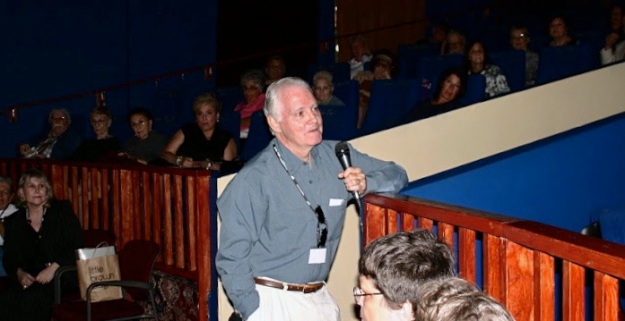
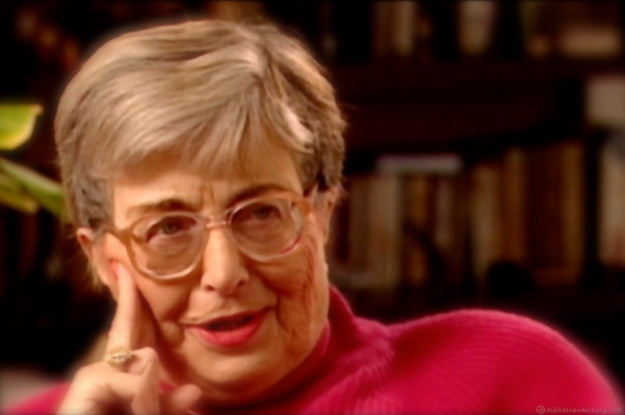
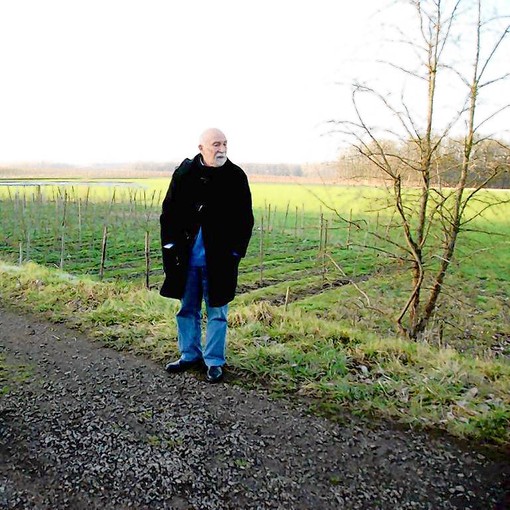
Richard Bloom speaking at the premiere of the film “Transport XX to Auschwitz”
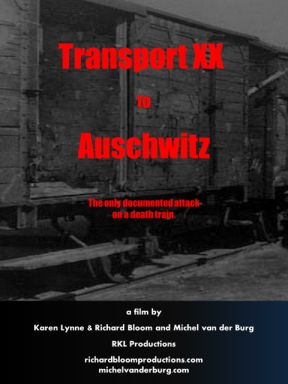
April 19, 2013 — Watch online free below our full documentary “Transport XX to Auschwitz”
– a film by Karen Lynne & Richard Bloom and Michel van der Burg.
The attack on this deportation train in Belgium – by three young men – the rescue, and the many escapes and escape attemps are documented in this film.
Today 70 years ago – on the night of April 19, 1943 – this remarkable heroic rescue occured in Belgium, were 17 people were liberated during an attack on the cattle car train ‘Transport XX’ – crammed with 1631 Jewish passengers, heading for Auschwitz – and another more than 200 others jumped out also.
As of April 19, 2015 the orginal version of the film is replaced above with a new – second – edition of the documentary with updated statistics.
For free watching this new (second) version of our film directly at YouTube follow one of these 2 links : youtu.be or youtube.com
During the Nazi occupation of Belgium 28 train convoys with over 25,000 Jews and 351 Roma left Mechelen towards the Auschwitz extermination camp.
On the night of April 19, 1943, the 20th transport headed East with 1631 Jewish passengers crammed into 40 cattle cars.
This ‘Transport XX’ left the Mechelen transit camp ‘Kazerne Dossin’ at 10 pm. and was attacked and stopped some 30 minutes later outside Brussels – near Boortmeerbeek.
Armed with only 1 pistol, pliers and an improvised red hurricane lamp the three young Belgians Robert Maistriau, Jean Franklemon, and Youra Livschitz – old schoolmates – stopped the train by putting the red lamp in the middle of rails. They were able to open one of the cattle cars and liberated 17 men and women. Another more than 200 prisoners escape from the train before the German border. Many were shot and 26 were killed. Eventually, half of them succeeded to escape.
The attack, rescue, and many escapes and escape attemps from this 20th deportation train in Belgium are documented in this newly released film “Transport XX to Auschwitz” by the first-hand accounts of one of the attackers, people that jumped from the train and survivors who returned from Auschwitz.
This attack by three young man, who follow their heart, is the only documented attack on a death train during the Shoah.
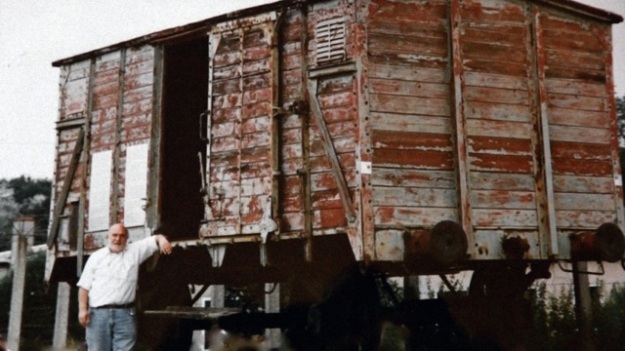
The film “Transport XX to Auschwitz” documents the attack and rescue story of one of the attackers, Robert Maistriau, and several escape attempts and escapes of the deportees: Régine Krochmal, Louis de Groot and his brother, the 11 year old Simon Gronowski, Lilly Wolkenfeld Schwartz and her friends, Gunther and Marie Mendel, Willy Berler, Louis Micheels who as doctor in charge of patients decided not trying to escape – and others…
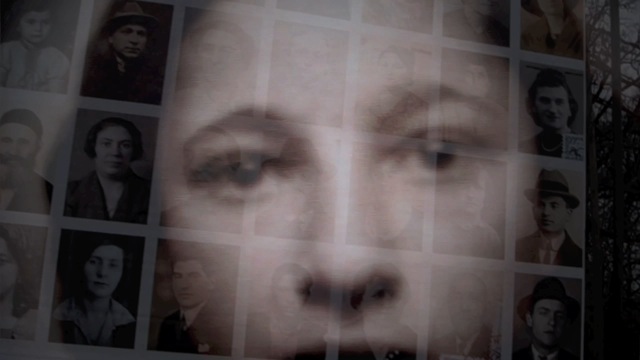
Régine Krochmal had been active in the resistance and was a nurse. She had to escort together with a doctor the more dead then alive deportees in the ‘hospital’ car. Just before she went into the car she was warned by the Jewish camp doctor of the Dossin barracks, who gave her a knife with the words: “Cut the bars, jump, because they will burn you“.
Régine, had to fight off the accompanying doctor in her car who was trying to prevent her from sawing through the bars of the small vent in order to escape. She jumped out the very same moment the train was attacked and stopped.
Then when the train stops, the attacker Robert Maistriau cuts the barbed wire on the sliding door of one of the cars, opens the door and calls “Fliehen Sie, Fliehen Sie!” At first people are confused and scared – but then 17 people jumped out and escaped, while the Germans were shooting. He next starts working on a second car, but the train began moving…
Transport XX to Auschwitz – trailer
In every car the Germans had appointed one prisoner responsible for preventing and reporting attempts to escapes. Louis de Groot – was one of these appointed ‘guards’ and was told “When anybody escapes, or you let anybody escape, everybody is killed!“. He, however, calmed down the scared people in his car. “They did not want to let me out of that – they were so afraid – that I – that we will be killed. So, I say ‘no – I arrange it for you’. I was quite an acrobat. So, we broke open that little air thing…“. He, together with some others managed to break open the little ventilation window. Louis then took a girl with him when he jumped – together with his brother Abraham and two boys.
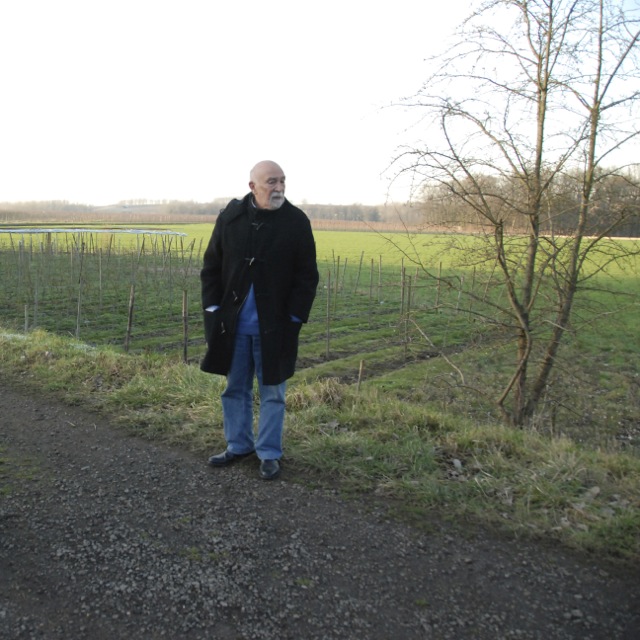
Simon Gronowski was only 11 years old when he was helped by his mother to jump from the train, and survived – unlike his mother who was gassed at Auschwitz. Simon was ‘lucky’. He was taken care of by the Belgian gendarme Jean Aerts and his wife, and not betrayed. That salvation was no exception: almost all refugees from the deportation train survived with the help of the Belgian population. Simon Gronowski was the youngest person to ever escape from a death train.
Lilly Wolkenfeld Schwartz had to push her Belgian friend Lilian to jump from the train. The train was moving fast when guys in the compartment of Lilly and her friends Bella and Lilian managed to open the doors. Bella and a lot of other people jumped, but Lilian said “…I can’t“. So Lilly pushed her to jump, and jumped after her. Lilly: “…and as I jumped I had a bullet here, which I found out later…”
Both Gunther Mendel and Marie (Neufeld) Mendel too managed to escape via the little ventilation window and jumped. Gunther: “I went out foot first…you have to throw yourself backwards, because the train was doing maybe 30-40 miles an hour..“. Marie: “..I jumped out – I let myself out – and I lost a shoe…”
Louis Micheels had thought of escaping, but as he was responsible for the seriously ill patients in the hospital car – then thought “how can I, as a doctor in charge of patients in this transport, how can I desert and escape?“. Upon arrival in Auschwitz however “my patients were dragged out, thrown on the truck like they were cattle, dead cattle..”
When Willy Berler was about to jump off the train, he saw that the unfortunate man who had jumped before him, was stuck to the train with his head crushed like a melon. Willy did not jump. “If I had known …. about Auschwitz …. I would have jumped.“
These are remarkable stories of the heroic rescue, escapes, and escape attempts from Transport XX to Auschwitz, which occurred on April 19, 1943 – the first night of Passover – when, at the same time, also the Warsaw Ghetto uprising began, some 720 miles away.
During the Shoah, the Nazis, in their quest for the ‘final solution’ of the Jewish question, utilized thousands of such trains from Germany and the occupied countries to transport 3,000,000 Jews to the concentration and death camps.
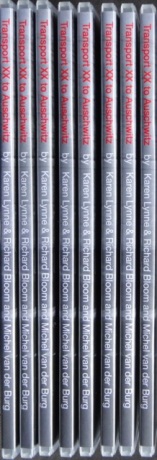
This documentary is available – distributed for free – for Jewish and other film festivals as well as holocaust education programs.- T
For more info contact: Richard Bloom (Richard Bloom Productions – USA) or Michel van der Burg (michelvanderburg.com)
Currently (as of Jan. 2013) the film is available for viewing in the world holocaust museums and centers:

Premiere Saturday October 27 , 2012 — The film “Transport XX to Auschwitz” premiered at the Fort Lauderdale International Film Festival (FLIFF) 2012 – screened first 27 October at the main film festival theatre Cinema Paradiso in Fort Lauderdale, and again in November 3rd in Sunrise, Florida.
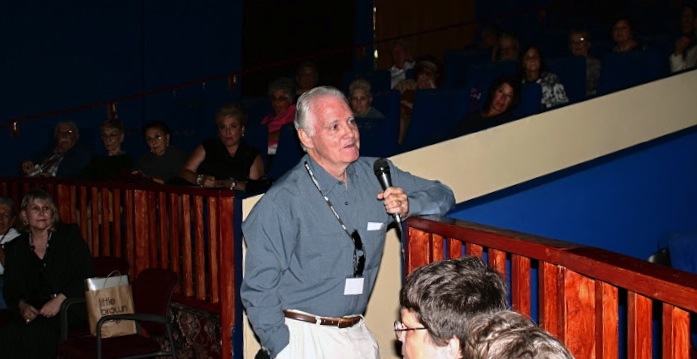
April 2013 — Early this month screenings at Jewish community centers followed in commemorations of Yom HaShoah – Holocaust Remembrance Day – in Florida and the Greater Washington area
April 2014 — Screening “Transport XX to Auschwitz ” April 2, 2014 with guest speaker Richard Bloom in Temple Anshei Shalom – Delray’s Vibrant Synagogue of the Future – Florida , US

April 2014 – Screening at the Jewish Heritage Festival – News Journal Center – Daytona Beach, Florida
May 2014 – Festival of Tolerance in Zagreb, Croatia, May 18-24, Cinema Tuškanac – European Theater Premiere. Screening with both Croatian subtitles and English subtitles. The audience gave the film a very good average grade of 4.3 (out of 5).

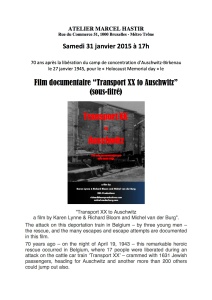
Jan 2015 – Brussels, Belgium. On January 31, the historic Atelier Marcel Hastir hosted the special screening (and Belgium premiere) of the documentary « Transport XX to Auschwitz » for International Holocaust Remembrance Day – 70 years after the liberation of Auschwitz concentration camp on January 27, 1945. The screening was introduced by filmmaker Michel van der Burg with a few words on the history of this special place – the Atelier Marcel Hastir – and the important role of the Atelier in the planning of the attack on the 20th train to Auschwitz.
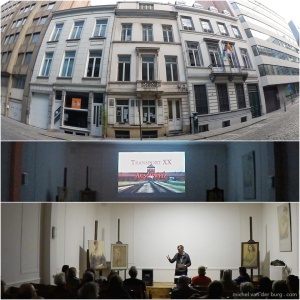
After the screening in a discussion lead by Laura Muris (Atelier Marcel Hastir), Michel van der Burg talked with the audience about the film, about these people’s stories, and also the many new stories that emerged since the film came out – more on this site via this link.
March 2015 – JIFF , Australia – The Holocaust Film Series 2015 of the Jewish International Film Festival in Australia hosted the Australian premiere Sunday March 15, 2015 simultaneously in both Sydney (Event Cinemas, Bondi Junction) and Melbourne (Classic Cinemas). In both cities the film was shown a second time – in Sydney March 24 , and in Melbourne March 19, 2015. The audience feedback was overwhelming.

April 2015 – Screening on April 12, 2015 at Young Israel of Hollywood, Fort Lauderdale, Florida , USA with guest speakers Philippe Renette (Belgium) and filmmaker Richard Bloom (USA) to lead a discussion and Q&A after the film screening. The event – as part of the Holocaust Remembrance Week – was hosted by The Foundation for Holocaust Education Projects & Young Israel of Hollywood-Fort Lauderdale. More info on this site. This screening was in the news before in the Joyce Kaufman talk show on the 850 WFTL Florida radio station on March 25, 2015 (see report on this site).

April 2015 – Atelier Marcel Hastir (Brussels, Belgium) showings on demand on a large-screen display from April 11 to April 19 2015 on weekend days 14-20h with a Q&A by the team of the Atelier. More info on this site.
September 2017 – Screening for new volunteers of ‘ASF België / Belgique‘ September 2017 in Brussels, Belgium. The Belgian ASF is part of the international network of Aktion Sühnezeichen Friedensdienste – in english called : ‘Action Reconciliation Service for Peace‘. The Belgian ASF one year ‘Service for Peace’ volunteers work a year in both social projects with the elderly, migrants, people with disabilities, and socially vulnerable children , and also historical and educational projects, in eg. museums and memorials , like Kazerne Dossin.

Further details on this site via this link.
Richard Bloom (Richard Bloom Productions – USA)
Michel van der Burg (michelvanderburg.com)
Following the news of the film other stories are emerging.
When Rachelle Bashe was a child, she dreamed about her father’s escape from a train carrying Belgian Jews to Auschwitz. Bashe, 77, of Boynton Beach was reminded of her dreams when a reporter called to talk about the documentary film “Transport XX to Auschwitz.” The film will be screened at the Fort Lauderdale International Film Festival later this month and in early November.
“It’s just unbelievable,” an emotional Bashe said when she realized that her father was one of the more than 200 persons on the 20th train convoy who escaped on the night of April 19, 1943 during a daring attack by three Resistance fighters carrying a red railroad lamp, a pair of pliers and a pistol.
Bashe said her mother told her that her father escaped from a train but never returned home. She eventually learned that he was captured later, survived three concentration camps and died in 1945 during a death march. “It does help in a way that I am realizing that what is in my subconscious is not really a dream or a nightmare,” Bashe said.
April 28, 2014 – Isabella Weinreb Castegnier was three-months pregnant that night on April 1943 in Belgium, when she jumped from the fast moving 20th Train heading for Auschwitz. Isabella escaped with a broken wrist and bruises all over her body, but otherwise without major injuries. Her daughter Viviane – meaning “full of life”, and named so for her will to live and hold tight in her mother’s womb – was born six months later on October 30, 1943.
Last month, Viviane first learned about our documentary “Transport XX to Auschwitz” and e-mailed me…”I couldn’t believe while searching online that I would find an actual movie made, telling the story of this famous, unique escape from a death-train!” After watching the documentary, she wrote to me “it was so well-made…I even wished it were longer”…Viviane also shared with me that at one point in the film, she got tears in her eyes, as her mother’s face appeared in a flash on the screen, while Lilly (Wolkenfeld Schwartz) – her mother’s friend was telling the story…”and Bella jumped” … this was so unexpected, she said “it took me by surprise!”
One year ago – on Holocaust Remembrance Day, April 7, 2013 – her mother passed away at the age of 93. Today, 71 years after that unique escape, on Holocaust Remembrance Day 2014, and her mother’s yahrzeit, Viviane shares her story here on this site. Continue reading >
…that night of April 19th, 1943 in Belgium , Elias Gnazik helped jump the pregnant Isabella Weinreb from the fast moving 20th train heading for Auschwitz. Viviane – meaning ‘full of life’ – was born 6 months later…
Full story announced in post Oct 2017

Viviane’s Story – Escape from Transport XX…Born 6 Months Later by Viviane Yarom-Castegnier & Michel van der Burg
Published April 19, 2019
e-Book (ePub) ISBN 9789493147003
Miracles.Media
NEWS
The greatest escape / film ‘Transport XX to Auschwitz’ by Richard Bloom, Karen Lynne and Michel van der Burg
THE BULLETIN issue 16 – Apr 20, 2012 – by Sarah Ehrlich and Edmund Day photos by Dieter Telemans
Escaping the train to Auschwitz
BBC News – 19 April 2013 – By Althea Williams and Sarah Ehrlich
This day in Jewish history / Daring escape from an Auschwitz-bound train
HAARETZ – Apr.19, 2013 – By David B. Green
The Survivor Mitzvah Project
Films
Jan 30, 2014 – Lilly (Wolkenfeld) Schwartz passed away this week.
Aug 30, 2014 – The “Transport XX to Auschwitz” film is now included – for future screenings – in the collections of the Atelier Marcel Hastir (Rue du Commerce 51, Brussels, Belgium) and the Fondation Robert Maistriau (Belgium/Congo)
Atelier Marcel Hastir
Fondation Robert Maistriau
December 2014 – Bulletin ATELIER MARCEL HASTIR – Belgian Theater Premiere – Saturday 31 jan 2015 – Screening Film “Transport XX to Auschwitz” – ATELIER MARCEL HASTIR, Rue du Commerce 51, 1000 Bruxelles – Métro Trône , Belgium – see post Dec 16th on this site
March 25, 2015 – The Florida radio talk show host Joyce Kaufman and holocaust education director Avi Mizrachi discussed the upcoming special screening of the film “Transport XX to Auschwitz” – a transcription (in part) and podcast link are available on this site via this link.
April 19, 2015. A new edition of our documentary “Transport XX to Auschwitz” is now publicly available online. This new – 2nd – edition with the YouTube title Transport XX to Auschwitz – current version has the latest statistics on the escapes and other updates available. This second edition is now embedded above in this post , and replaces the first edition posted here exactly two years ago, on April 19, 2013.
May 2017. Wikipedia NL “Twintigste treinkonvooi” now shows Trailer Transport XX to Auschwitz (2012)
Updates
– post updated April 20 by adding News section and news items
– Aug 2013 : USHMM updated per august 2013 the catalog info of the DVD “Transport XX to Auschwitz” in their DVD collection
– Aug 2013 : added – a recently acquired – photo of Richard Bloom speaking at the premiere of the film at the Cinema Paradiso in Florida
– Jan 2014 : added News item – the Survivor Mitzvah Project – Films
– Jan 30, 2014 : added News item – obituary Lilly (Wolkenfeld) Schwartz
– April 2014 : added news screenings & reaction / story Isabella Weinreb (“Bella”) and daughter Viviane
– May 2014 : added news European Theater Premiere at Festival of Tolerance in Zagreb, Croatia
– August 2014 : news section : collections Atelier Marcel Hastir / Fondation Robert Maistriau
– December 2014 : added news Belgian Theater Premiere in Atelier Marcel Hastir bulletin – Film 31 Jan 2015 « Transport XX to Auschwitz »
– April 2015 : added news screenings in Australia (Holocaust Film Series) and Atelier Marcel Hastir in Belgium
– April 2015 : new edition (2nd ed) of our documentary embedded and links added / news of screening Florida (April 12) and showings on demand in Atelier Marcel Hastir (April 11-19) added / in News section added Florida radio talk Joyce Kaufman and publication of the 2nd edition of our documentary April 19, 2015
– November 2015 : new link to collection Kazerne Dossin
– July/August 2016 : 2012 news item (THE BULLETIN) and July 2016 Media collection Yad Vashem’s International School for Holocaust Studies
– May 2017 : added News item Dutch Wikipedia NL “Twintigste treinkonvooi” now shows Trailer Transport XX to Auschwitz (2012)
– October 2017 : 3 minor text updates (in the first line of the introduction, below the embedded film, and in the first line of ‘Film festivals & holocaust education programs‘ section to underline that our full documentary is (and always has been) distributed for free , and via this post available for free online watching.
Any offering you may perhaps find elsewhere on the internet for watching ‘a paid version’ of the ‘full movie’ is criminal use by others.
– October 2017 – news screening for new volunteers of ‘ASF België / Belgique‘ September 2017 in Brussels, Belgium.
– Jan 16, 2019 – Updated and added details , in section ‘New Stories … reactions’ mostly.
– Nov 8, 2019 – Update DVD available in world holocaust museums and centers / Viviane’s Story e-Book (ePub) ISBN 9789493147003 published April 19th 2019
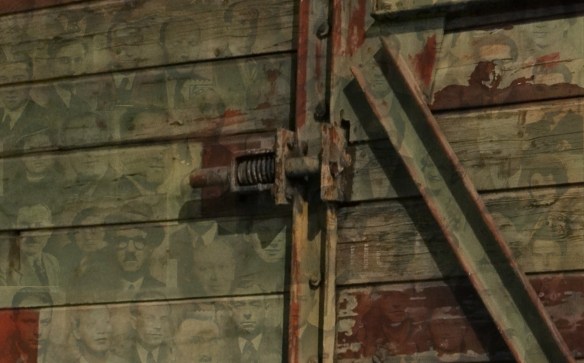
“Rescue during the Holocaust” is the theme this year of the International Holocaust Remembrance Day – Jan 27, 2013 – and an important theme in the work of historian Tanja von Fransecky.
Tanja von Fransecky has done research over the past years in France, Belgium, Holland, and Israel on the rescue, escape attempts, and escapes from the deportation trains during the Holocaust.
It is a relatively unknown chapter of the Jewish resistance during the Holocaust, that many deportees from death trains fled, and often were rescued by others – neighbors – at the risk of their own life.
Tanja von Fransecky’s work is news this weekend in the latest edition (Jan 26) of the “Süddeutsche Zeitung” – the largest German national newspaper – in the report by Stephan Stracke, entitled: “Wir haben das Recht zu flüchten” – translated here as “We have the right to escape”.
Below my summary of this article on Tanja von Fransecky’s work (with some additions by myself) Continue reading “We have the right to escape”

“Rescue during the Holocaust” is het thema dit jaar van de International Holocaust Remembrance Day – 27 Jan 2013 – en een belangrijk thema in het werk van geschiedkundige Tanja von Fransecky.
Tanja von Fransecky heeft de afgelopen jaren onderzoek verricht in Frankrijk, België, Nederland en Israel, naar de reddingsacties en vele vluchtpogingen en ontsnappingen uit de deportatietreinen tijdens de holocaust.
Het is een nog vrij onbekend hoofdstuk uit de geschiedenis van het Joods verzet tijdens de holocaust, dat veel gedeporteerden uit de doodstreinen gevlucht zijn, en vaak ook door anderen – omwonenden – met gevaar voor eigen leven gered zijn.
Tanja von Fransecky’s werk is nieuws dit weekend in de laatste editie (26 jan.) van de “Süddeutsche Zeitung” – het grootste Duitse nationale dagblad – in het artikel van Stephan Stracke, getiteld: „Wir haben das Recht zu flüchten“ – hier vertaald als “Wij hebben het recht te vluchten”.
Hieronder mijn samenvatting van dit artikel over Tanja von Fransecky’s werk (met enige eigen notities) Continue reading “Wij hebben het recht te vluchten”
April 2008 * – As you or your friends celebrate Passover this April 19th, I hope you will remember another April 19th. This one was in 1943 and it was also the first night of Passover.

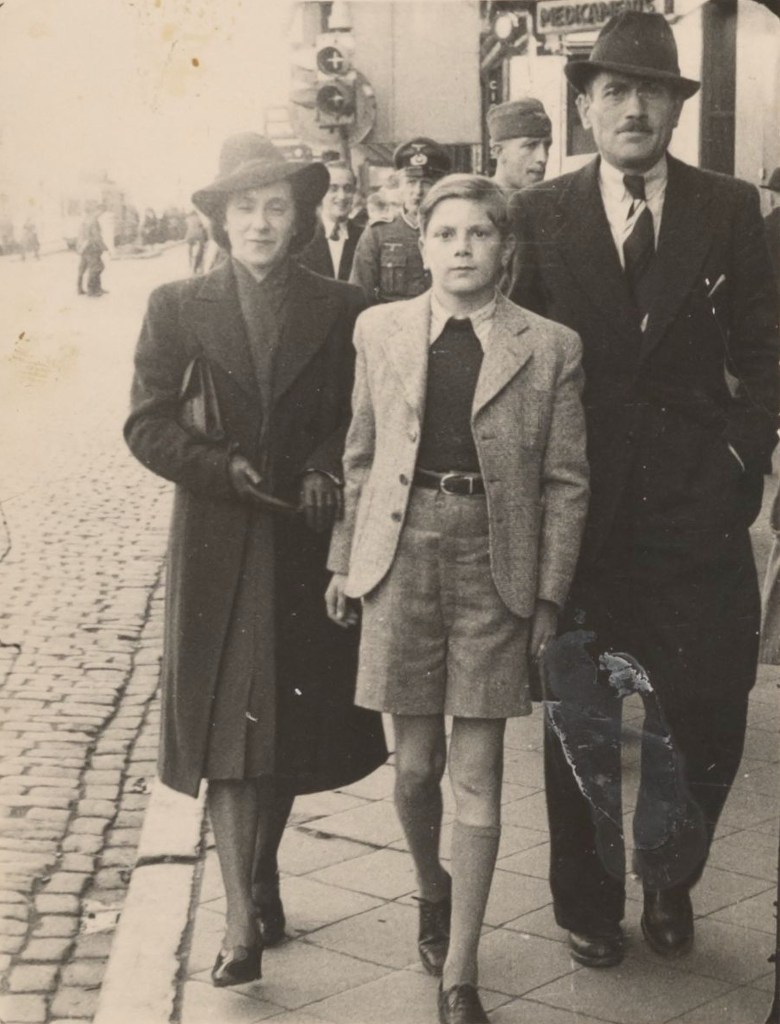
The boy was born in Vienna, Austria, to middle-class Jewish parents; his mother was also born in Vienna and his father in Poland. They led an uneventful life until Hitler came to power. Following Kristallnacht in 1938, they fled to Antwerp, Belgium, and eventually settled in Brussels. In February 1943, the family was denounced. The boy and his parents were arrested and sent to Malines, a deportation camp in Belgium where the Nazis would collect Jews until they had enough for a transport to Auschwitz. For two months they waited; they were barely fed and the boy’s father was severely beaten up by a German guard in front of the boy for a minor infraction.
On the night of April 19, 1943, the family was part of Convoy XX – 1,631 Jews being shipped by cattle car to Auschwitz. They were numbers 722, 723, and 724 on the Nazis’ inventory of this shipment. A Nazi officer gave the boy’s father a white flag and a whistle, and told him that he was in charge of the particular car in which they were being loaded. He was told that if anyone tried to escape he was to alert the Nazis; if he did not the family would be killed. The father decided that the family would have to jump from the train because he would not turn in his fellow Jews.
In events that are stranger than life, on the train were some Dutch acrobats, who with the use of an old man’s cane, managed to open the latched window of the train. As the train barreled toward the German border, the family prepared to jump. The man pushed his wife from the train, and the boy watched as his mother appeared to roll toward the train’s wheels.
The boy was next. He did not want to be pushed, so he jumped on his own and scrambled up the track’s embankment. As he stood up at the top of the embankment, he felt a needle-like pain in his upper chest. He saw blood and realized he has been shot. Putting a handkerchief on the wound, he went searching for his parents, amidst the dead bodies of others who had been shot jumping from the train.
The boy wandered around in the dark, hurt and scared and eventually found his mother, but he did not want to tell her he was shot. Later that night they found the father, who had been shot in the leg. The family sought refuge in a nearby barn, where the boy finally told his mother he had been shot by a bullet that glanced his chest.
In the morning, the boy, who could speak Flemish better than his parents, approached the farmhouse owner and sold his parent’s wedding rings for aid. The farmer gave the family money, helped clean them up, and drove them to the train station where the family intended to take the train back to Brussels.
The parents sensed danger and they decided to separate. They told the boy to get off the train at the next stop, hoping that by being alone, he would not be caught. Without knowing if he would ever see his parents again, and unable to say any farewells, the boy got off the train. By now his gunshot wound was extremely painful, so alone and not knowing what to do, the boy approached a Belgian policeman. He told him that he was a 14-year-old Jew who had been shot escaping from the train to Auschwitz. The police officer took pity on the boy, brought him to the police station, and called a doctor who treated the gunshot wound. The officer gave the boy some money, and directed him toward the safest way back to Brussels, where he was reunited with his parents.
The boy was my father, Robert Rogers. He and my grandparents, Bertha and Eddy Rottenberg, went into hiding until they were finally liberated in September 1944. In 1949, they emigrated to the United States, a country they embraced with gratitude. They have all since passed away, and only two things remain of that night. One is the shirt my father was wearing, which my grandmother kept until she died. I have it now, and you can still see the neatly sewn up bullet holes and the very faintest trace of blood. The other is the memory of what happened 65 years ago that has seared through two generations of my family.
Audrey Rogers Furfaro
Chappaqua, NY
A new finding – published at the current 236 exhibition in Brussels – is the location were the family escaped – they were numbers 722, 723, and 724. The Rottenberg family jumped close to Houppertingen, just before the site Simon Gronowski jumped, before Borgloon. That map is showing in a recent video of the vernisage of the ‘236’ project:
236 Land(es)capes 20th convoy | 20230126
More on the Brussels’ 236 exhibition here
https://michelvanderburg.com/2023/01/21/escape-landscapes-from-the-20th-convoy-236-photo-exhibition/
Published Nov. 12, 2012 on this site (michelvanderburg.com) – updated Nov. 14, 2012 – and next updated and a photo-set of Robert’s shirt added Nov. 23, 2012 by Michel van der Burg / Audrey Rogers Furfaro. Photo’s taken Nov. 19, 2012 by Audrey Rogers Furfaro and edited by Michel van der Burg (michelvanderburg.com). Detail of the neatly sewn up bullet holes is shown in the bottom-right image.
In 2008 the story was first posted (with minor differences) in the “peepleofthebook” blog as “A Story of the Warsaw Ghetto, April 19, 1943 by Audrey Rogers Fufaro, 2G“
Nov. 23, 2012 by Michel van der Burg– Note that during a daring attack on this ‘Transport XX to Auschwitz‘ by the three young Belgians — Robert Maistriau, Jean Franklemon, and Youra Livschitz — Maistriau succeeds in opening one car with the circa 50 prisoners with numbers 736-788. Maistriau next tried to open a second car and cut the barbed wire securing the door before the train began moving again, and he had to cease his efforts to open this car too.
That car may well have been a neighbouring car with Robert and his parents – with transport numbers 722, 723, and 724.
Added portrait of Bobby and his parents in Bruxelles, 1941.
Info added : The Rottenberg family jumped close to Houppertingen ( source : vernisage – map of the ‘236’ project )
 Lees online in:
DeWereldMorgen.be
Lees online in:
DeWereldMorgen.beFilm vertelt het verhaal van een gewaagde aanval op trein naar Auschwitz .
Zaterdag 27 oktober 2012 – eerst gepubliceerd in DeWereldMorgen.be
De film ‘Transport XX to Auschwitz’ vertelt het verhaal van de gewaagde aanval op een trein naar Auschwitz.
Zo kopt het artikel in de Florida Jewish Journal naar aanleiding van de première – zaterdag, 27 oktober – van de film op het Fort Lauderdale International Film Festival (FLIFF) – en de Jewish Journal reporter vervolgt… (vertaald):
Rachelle Bashe was nog een kind toen ze droomde over haar vader’s ontsnapping uit een trein vol Belgische joden naar Auschwitz. Basche nu een vrouw van 77 jaar in Florida moest aan haar dromen denken toen een reporter haar belde om te praten over de documentaire film “Transport XX to Auschwitz.”
De film wordt vertoont op het Fort Lauderdale International Film Festival in Florida, als premiere eind deze maand, en daarna nogmaals begin November.
“Het is gewoon niet te geloven” zei Bashe emotioneel, toen ze begreep dat haar vader één van de meer dan 200 mensen was, die ontsnapten uit het 20ste trein konvooi in de nacht van 19 april 1943.
Haar moeder had Basche verteld dat haar vader ontsnapte uit een trein maar nooit meer is thuis gekomen. Later kwam zij te weten dat hij weer gevangen genomen was, drie concentratiekampen overleefde, en stierf in 1945 tijdens een dodenmars. “In zekere zin helpt het mij dat ik mij nu realiseer dat wat in mijn onderbewuste leefde geen droom of nachtmerrie is”, zei Bashe de reporter.
Lees – onder andere over ‘het maken van de film’ – verder in deze reportage van Jewish Journal reporter David Schwartz via deze link hier.
Tijdens de Holocaust (Shoa) hebben de Nazis — op zoek naar wat zij noemden “de definitieve oplossing van het Jodenprobleem” — duizenden treinen ingezet vanuit Duitsland en de bezette landen om 3 miljoen Joden weg te voeren naar de concentratie- en dodenkampen.
De documentaire film ‘Transport XX to Auschwitz’ van Karen Lynne & Richard Bloom en Michel van der Burg vertelt het verhaal van één van de meest gedurfde en heldhaftige reddingspogingen, die plaatsvond op 19 April 1943, de eerste nacht van het joods paasfeest, en toevallig ook gelijktijdig met het begin van de opstand in het Getto van Warschau.
Die nacht vertrok de 20ste trein – het “Transport XX” – vanuit Mechelen om 10 uur ‘s avonds met beestenwagons volgepropt met 1631 joodse mannen, vrouwen en kinderen op weg naar het kamp Auschwitz II – Birkenau.
Een half uur na vertrek echter, werd de trein gestopt door drie jonge Brusselaars — Jean Franklemon, Youra Livschitz en Robert Maistriau — slechts gewapend met een pistool, tangen en een stormlamp. Dit is – voor zover bekend – de enige aanval op een dodentrein tijdens de Holocaust.
Wat er gebeurde voorafgaande-, tijdens-, en na afloop van deze buitengewone reddingspoging wordt in deze film van bijna 1 uur getoond met beeldmateriaal uit archieven in binnen- en buitenland, en met reportages en interviews van overlevenden in verschillende talen: zoals engels, en – met engelse ondertiteling – ook vlaams, hollands, duits, en frans.
Veel geinterviewden zijn inmiddels overleden. Régine Krochmal – een moedige verzetsvrouw – die in de film over haar spectaculaire ontsnapping uit de trein vertelt, is enige maanden geleden op hoge leeftijd in Brussel overleden. Hiervan werd eerder verslag gedaan in dewereldmorgen.be door Jan Hertogen en ook door mij met een speciale video als eerbetoon op de dag van haar overlijden , op dezw site XX en in dewereldmorgen.be
http://www.dewereldmorgen.be/blogs/imichel/2012/05/30/regine-krochmal-eerbetoon-aan-een-moedige-verzetsvrouw
Een van de overlevenden is Simon Gronowski, advocaat en activist, die als jongen van 11 jaar van de trein sprong. Hij werd door mij geinterviewd en gefilmd op de verschillende locaties van zijn ontsnappingstocht gedurende die nacht en volgende dag.
Tijdens die filmreportage van Michel van der Burg werd gezamenlijk met partizaan Max De Vries en Marc Van Roosbroeck en met toevallige hulp van een lokale tractorbestuurder de exacte locatie ontdekt – het talud vlak voor Kuttekoven – waar Simon destijds uit de trein sprong en met een ‘rolleke-bolleke’ weer op zijn voeten onderaan het talud belandde.
De foto boven (een productie ‘still’ genomen door Marc van Roosbroeck tijdens de filmreportage) toont de scene van de film ‘Transport XX to Auschwitz’ waar Simon Gronowski zojuist voor het eerst weer op de plek staat, waar hij bijna 70 jaar eerder van de trein sprong vlak voor Kuttekoven— terwijl zijn moeder verder moest met de trein naar Auschwitz.
Film – TRANSPORT XX TO AUSCHWITZ – FLIFF
Fort Lauderdale International Film Festival (FLIFF)
Premiere – zaterdag 27 oktober 2012 in het ‘Cinema Paradiso’ theater in Fort Lauderdale, Florida, USA
Volgende vertoning – zaterdag 3 november 2012 in het ‘Sunrise Civic Theatre’ in Sunrise, Florida, USA
Meer informatie – FLIFF festivalpagina – https://bit.ly/miraclesmedia20121015
Engelstalige Jewish Journal post van 24 october 2012 via deze link.
Jan,16, 2019 – Artikel overgenomen met kleine aanpassingen van mijn oorspronkelijke blog post ‘Film vertelt het verhaal van een gewaagde aanval op trein naar Auschwitz ‘ gepubliceerd Zaterdag 27 oktober 2012 in DeWereldMorgen.be
20240507 – Verouderde links naar Jewish Journal site en FLIFF festival site updated naar Wayback archief pagina van die sites.
