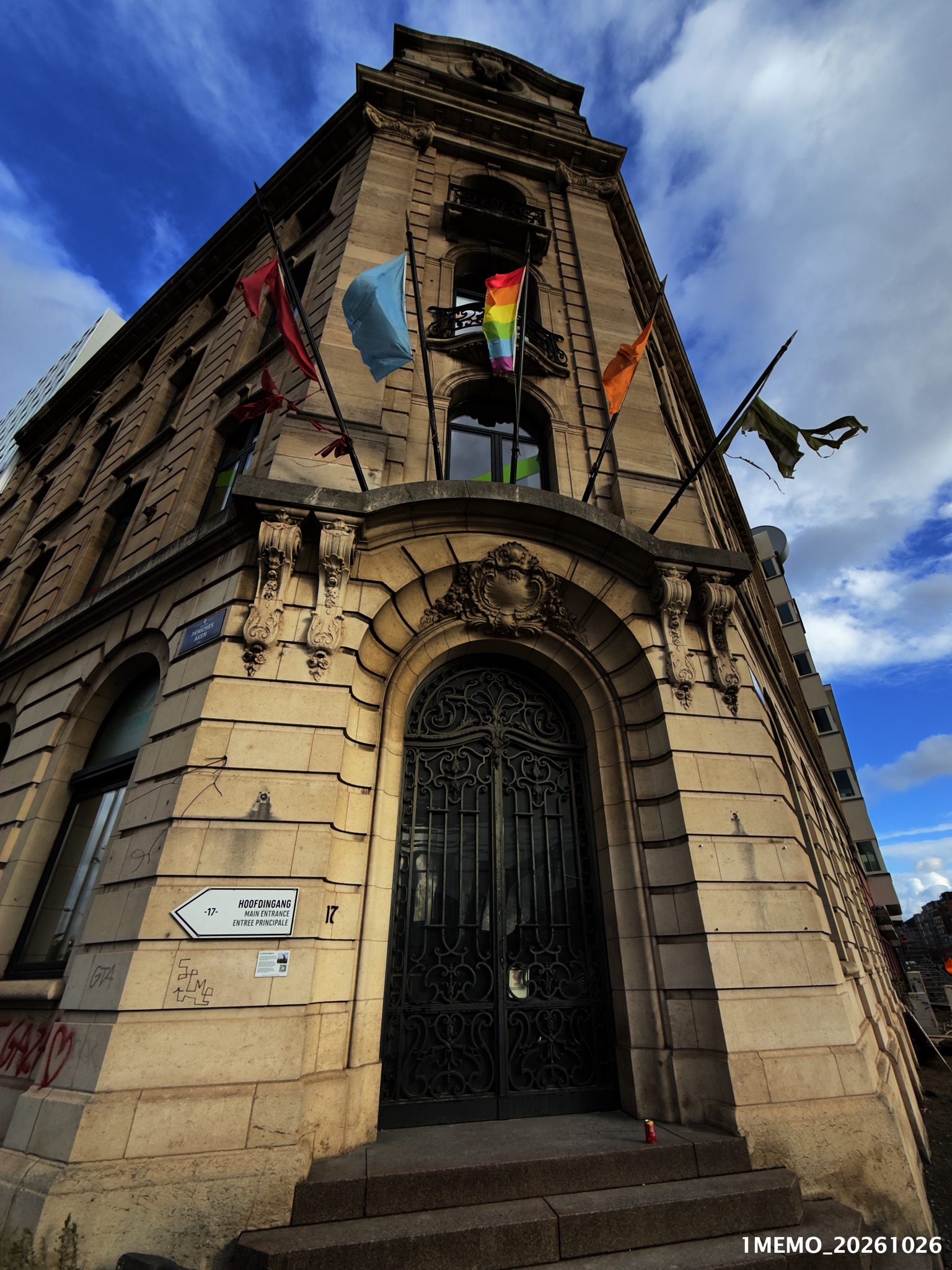
Humans House Brussels • 1MEMO_20261026 • Michel van der Burg • Miracles•Media • TakeNode • Resistance Talk Nico Wouters & Simon Gronowski with host Dany Neudt of society Helden van het verzet (Heroes of the Resistance), Thursday 22 October 2026 in Brussels’ community center ‘huisvandeMens’ — House of the Human
Save Archive #SaveSafe • @1MEMO_20261024 • Michel van der Burg • Miracles•Media • Save Our Safe — The greatest challenge for the future is keeping our growing digital archives accessible. It is costly and time-consuming, but essential: storage formats change rapidly, and obsolete files cannot simply be opened.
Meanwhile, large sums are being invested in AI to produce ever more digital knowledge, yet it draws only on the heritage that is already available in digital form. It is five to twelve: the analogue archives and digital knowledge are in danger of growing apart. What exists only on paper is no longer being made accessible. I see that in science, in the biomedical field where I used to work, where much of the paper library is not available digitally and is, in effect, being lost: consulting purely analogue sources cannot compete with the rapid digital knowledge-gathering for the new generation of researchers.
In this way, our history risks being abandoned through short-sightedness and replaced by an impoverished summary of whatever knowledge happens to be digitally available today. Text reworked and translated with the help of Claude.
NL — Save de Safe (bewaar en red de kluis) — De grootste uitdaging voor de toekomst is het toegankelijk houden van onze groeiende digitale archieven. Dat is kostbaar en tijdrovend, maar onmisbaar: opslagformaten veranderen snel en verouderde bestanden zijn niet zonder meer te openen.
Intussen gaat er veel geld naar AI, dat méér digitale kennis produceert, maar daarbij put uit het erfgoed dat al digitaal beschikbaar is. Het is vijf voor twaalf: de analoge archieven en de digitale kennis dreigen van elkaar te vervreemden. Wat alleen op papier is vastgelegd, wordt niet meer ontsloten. Ik zie dat in de wetenschap, op biomedisch gebied waar ik eerder werkte, waar een groot deel van de papieren bibliotheek niet digitaal beschikbaar is en daardoor in feite verloren gaat: het raadplegen van uitsluitend analoge bronnen kan niet op tegen de snelle digitale kennisvergaring voor de nieuwe onderzoeker.
Zo dreigt onze geschiedenis uit kortzichtigheid te worden opgegeven en vervangen door een verschraalde samenvatting van de kennis die nu toevallig digitaal beschikbaar is. Tekst herwerkt en vertaald met behulp van AI Claude.
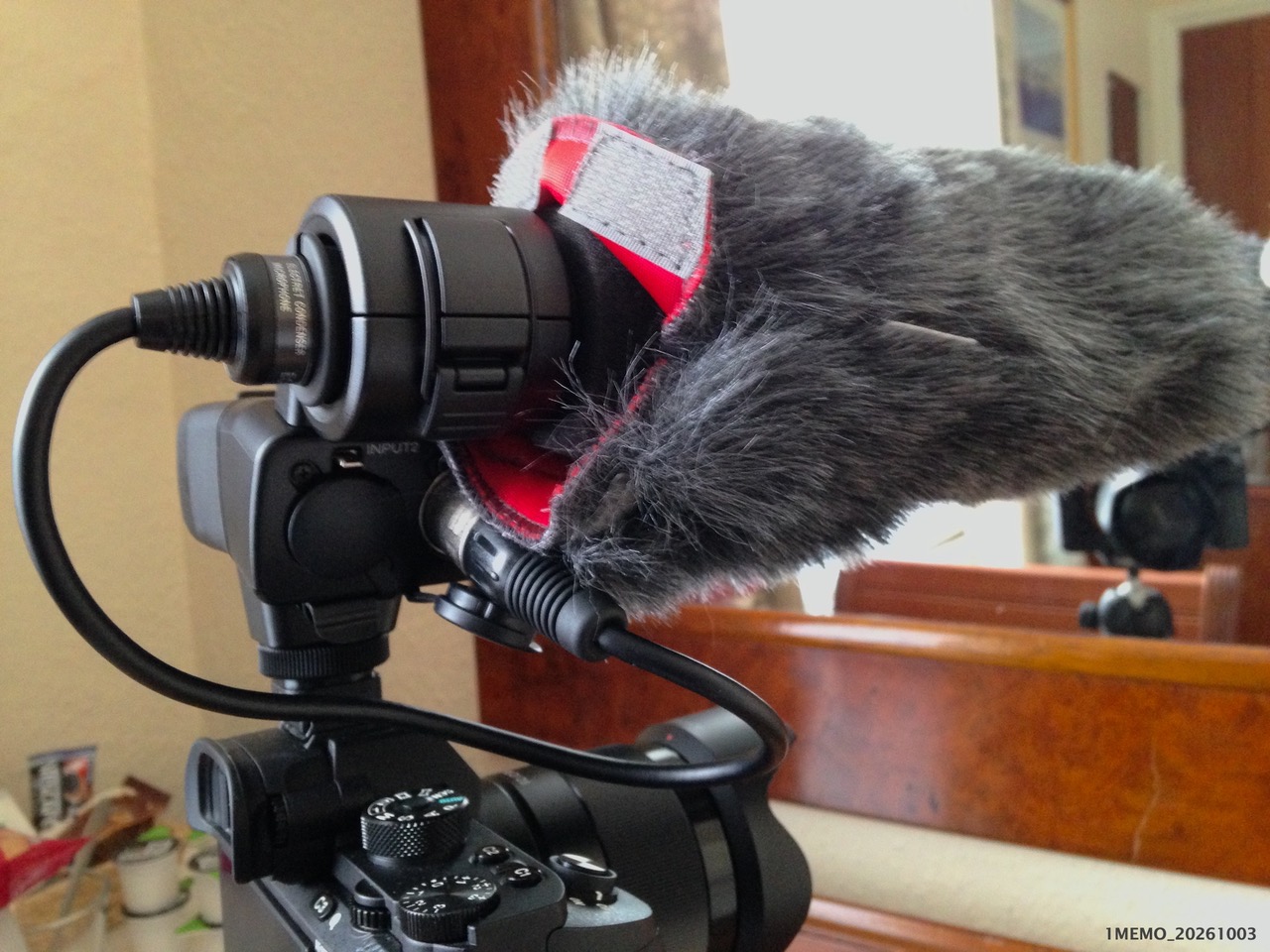
Camera Audio • 1MEMO_20261003 • Michel van der Burg • Miracles•Media • Morning of October 2 2016, Northern Hotel, Bexhill-On-Sea, England, UK . TakeNode 05f4ec68-19e3-4bcb-8d49-5973e841549c
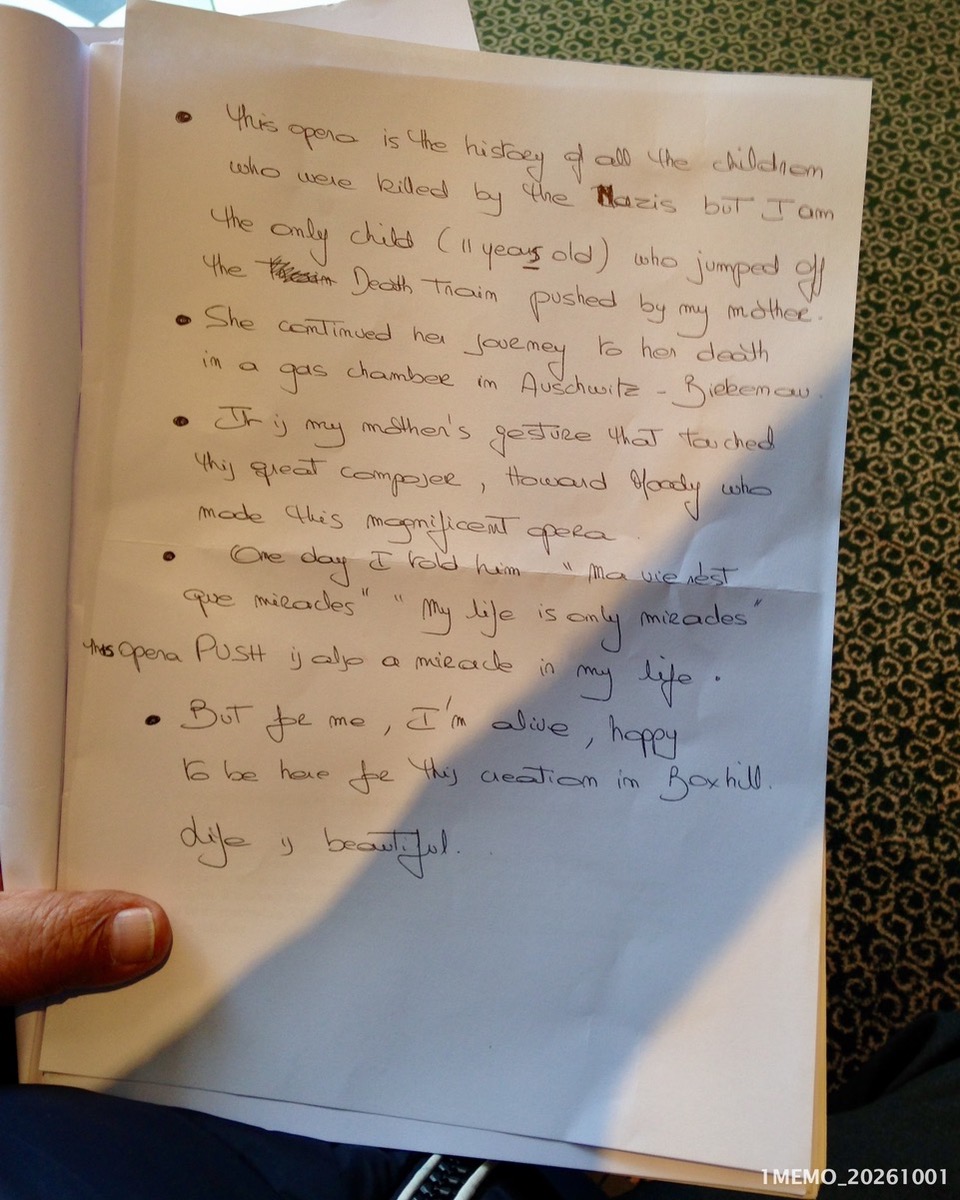
Simon’s PUSH Speech • 1MEMO_20261001• Michel van der Burg • Miracles•Media • TakeNode 9090fea3-0bcc-4c73-9eaa-ceb7bee0790e • Simon Gronowski preparing his speech in the lounge of The Northern Hotel in Bexhill on Sea, while waiting for the start of the first premiere performance of Howard Moody’s community opera PUSH that Saturday afternoon the 1st of October 2016 in the nearby De La Warr Pavilion at the Marina in Bexhill-On-Sea, England, UK .
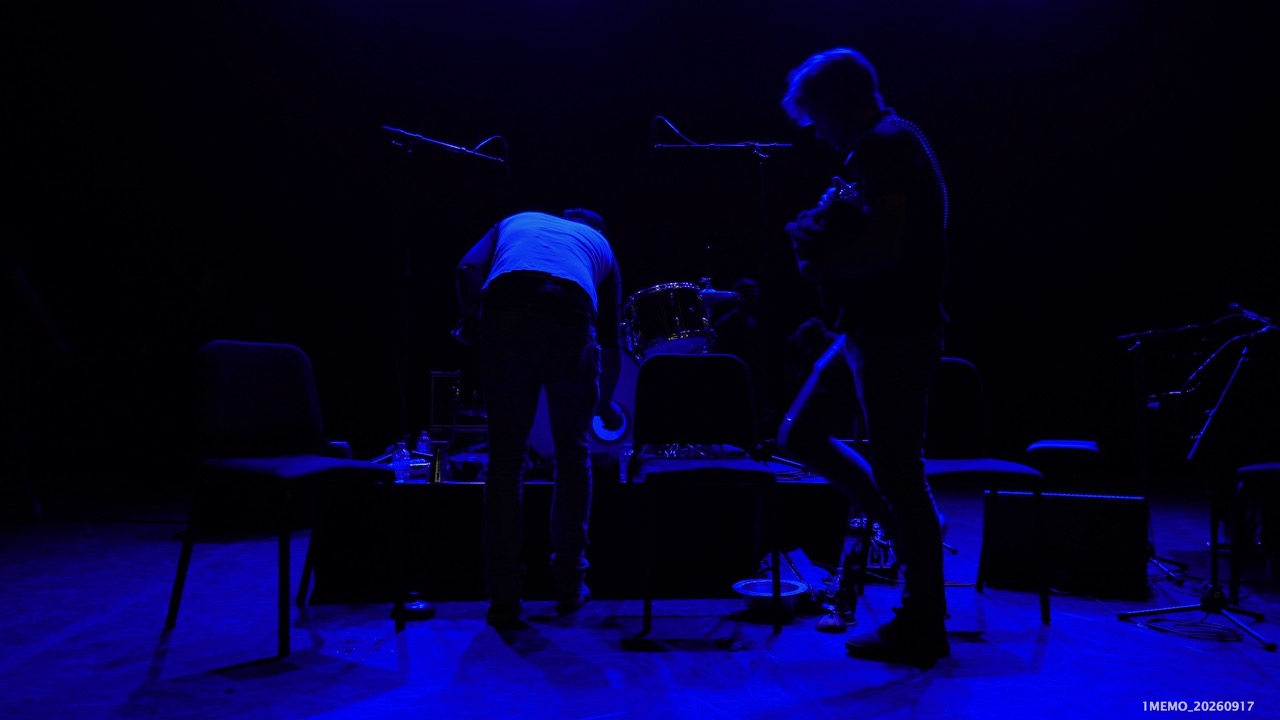
Stage Crew • Frame 54511 • Miracles Dailies #1 • 1MEMO_20260917 • Miracles.Media • TakeNode 298a2009-8dad-43c2-ada6-3d14eccf9430 • Stagehands after the show of Woody Allen with Simon Gronowski and The Eddy Davis New Orleans Jazz Band, 22 June 2019, BOZAR, Brussels, Belgium.
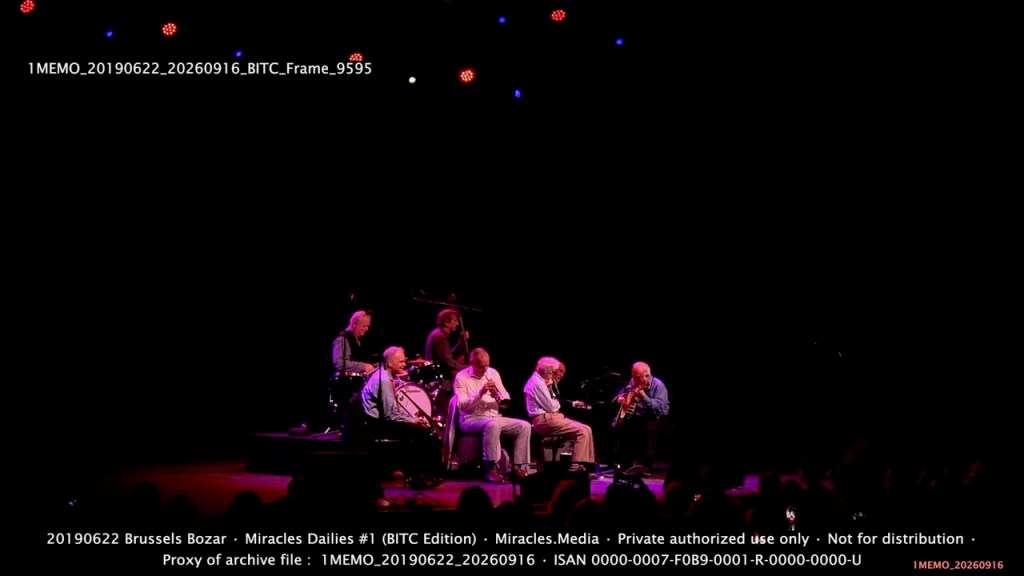
Proxy 9595 • Miracles Dailies #1 • Miracles.Media • 1MEMO_20260916 . Still number 9595 from proxy video edition of Miracles Dailies #1 , with Simon Gronowski at the piano together with Woody Allen & The Eddy Davis New Orleans Jazz Band, 22 June 2019 in the Henry Le Boeuf Hall of the Centre for Fine Arts (BOZAR) in Brussels, Belgium.
Miracles project
For the Miracles project, I have so far—spanning from 2009 to the present—recorded video from approximately 150 ‘events’ and stored them in an equal number of ‘video libraries’.
Video Archive
The aim of the Miracles Dailies series is to create a single video for each of these libraries—compiling all the raw clips from every ‘take’—to establish a more accessible archive. This makes it easier to review the material and, if desired, share it for use in other productions.
Miracles Dailies #1
Today , with Miracles Dailies #1, the design and format have now been finalized, based on that video library I recently used to create the short film ‘Swing’ (1).
Editorial Proxy with Burn-In Timecode (BITC)
A ‘proxy’ video (a smaller copy) has been created from the high-quality Miracles Dailies #1 archive footage; this version features burned-in information, including a frame counter. Pictured above is a still from that proxy version of Miracles Dailies #1: frame number 9595.
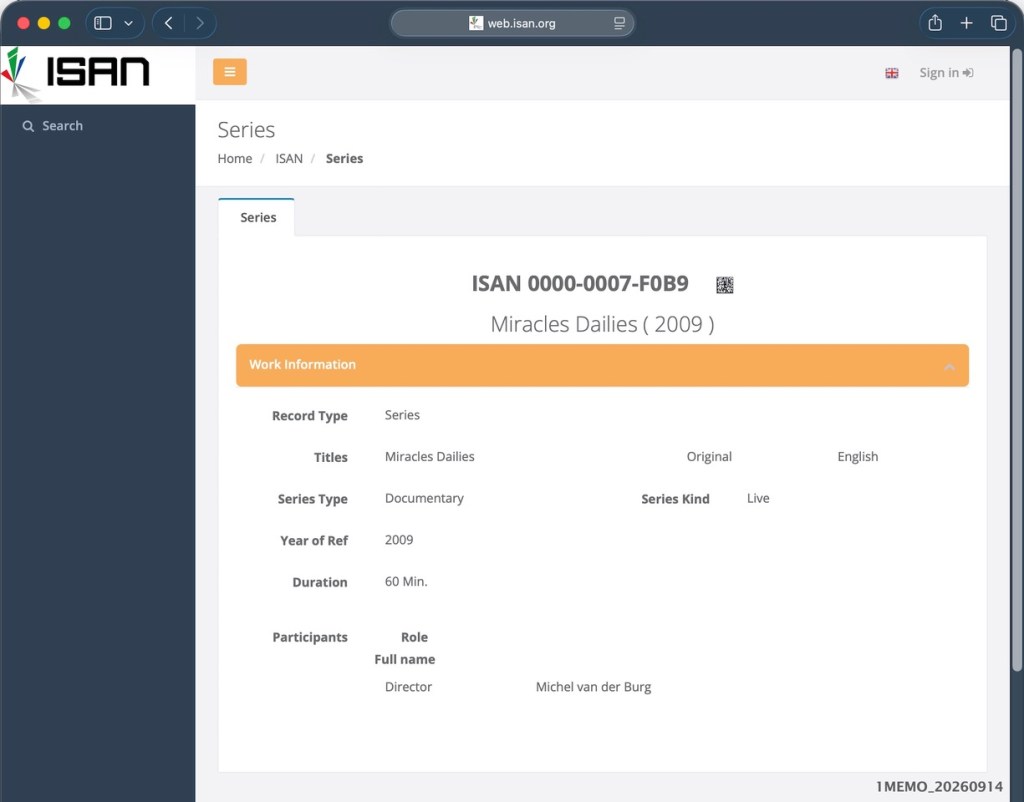
Miracles Dailies • 1MEMO_20260914 • Michel van der Burg • Miracles.Media • Starting the series of Miracles Dailies , and dailies.news . TakeNode 0ba191a7-6442-44dd-933f-7c90e71380bd • @MiraclesDailies @dailiesnews