Deportation of Dutch Roma to Auschwitz – 19 May 1944 • 9-year-old Anna Maria (Settela) Steinbach was deported together with 244 other Roma from Westerbork to Auschwitz (1,2) • Source : Settela•Com • Collection Auschwitz Museum • URL https://fb.watch/Hgg5lusc-8/
The Auschwitz Museum acquired the short film ‘Settela’ from Settela•Com (1) in the Auschwitz Memorial Collection (3), and is succesfully screening the film each year since 2019 on the 19th May at the Auschwitz Memorial / Muzeum Auschwitz facebook page .
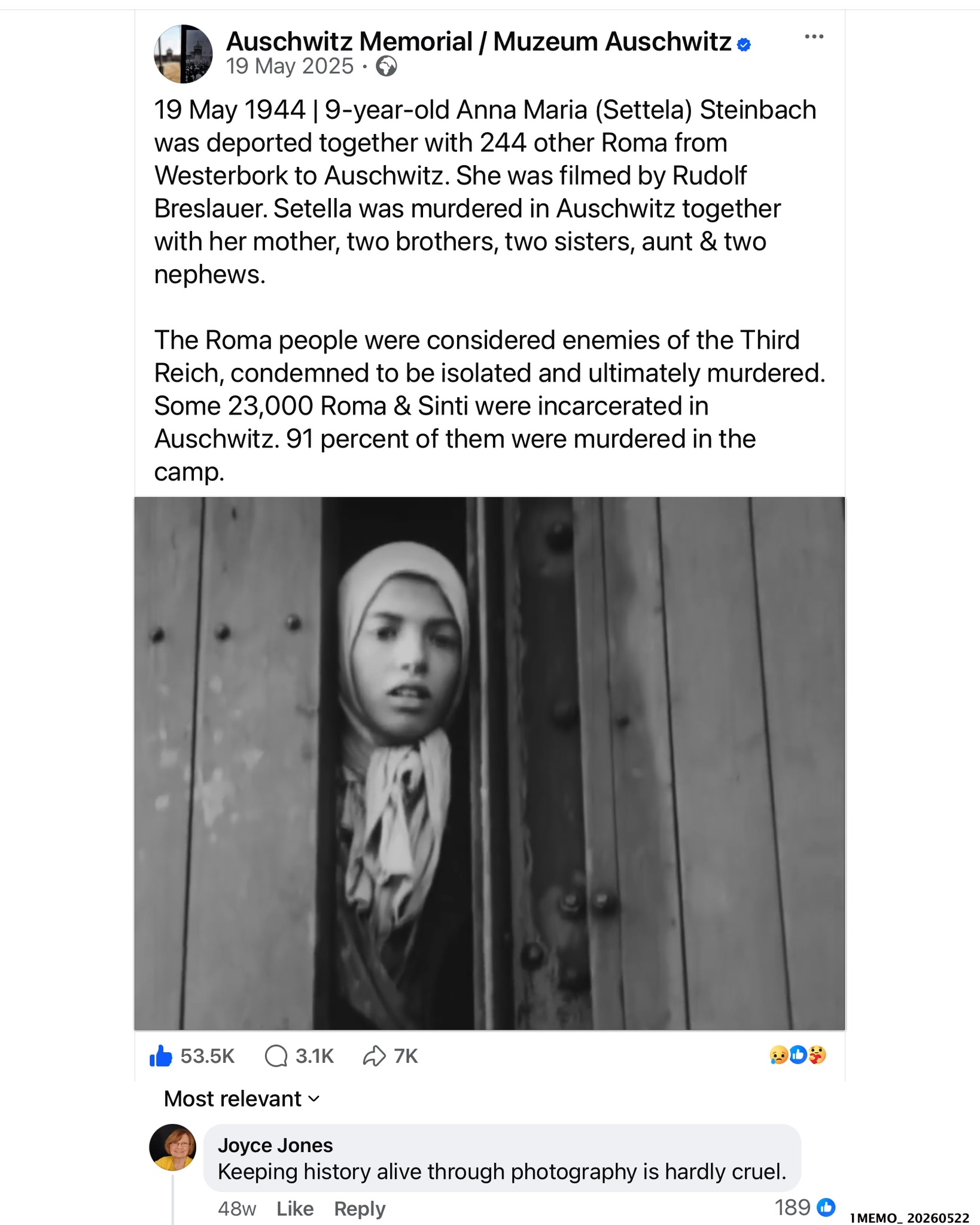
Last year’s post of the film ‘Settela’ , 19th May 2025 at the Auschwitz Memorial / Muzeum Auschwitz facebook page, accumulated by now one million views, and over 3000 comments (Image 1MEMO_20260522).
The film was created in an attempt to keep the scene on screen longer on the one hand, and to preserve the natural and historical original on the other. Thus a compilation was created, showing the same scene twice. The film ends with the original 3 seconds clip selected from the Westerbork film footage shot by Jewish prisoner Rudolf Breslauer (4), and the film starts with that same clip , digitally slowed down 10× in post-production.
This film was created and first online in 2017 (5) , and published (antedated) as the first post (1) shortly after the start May 19, 2019, of the online journal Settela•Communications — short Settela•Com (6).
More on the Roma in Auschwitz , online at the Auschwitz Museum (7).
Citation info : Settela Film Auschwitz Museum • 20260522 | Michel van der Burg | Settela•Com | ISSN 2949-9313 | CC BY 4.0 | URL https://settela.com/2026/05/22
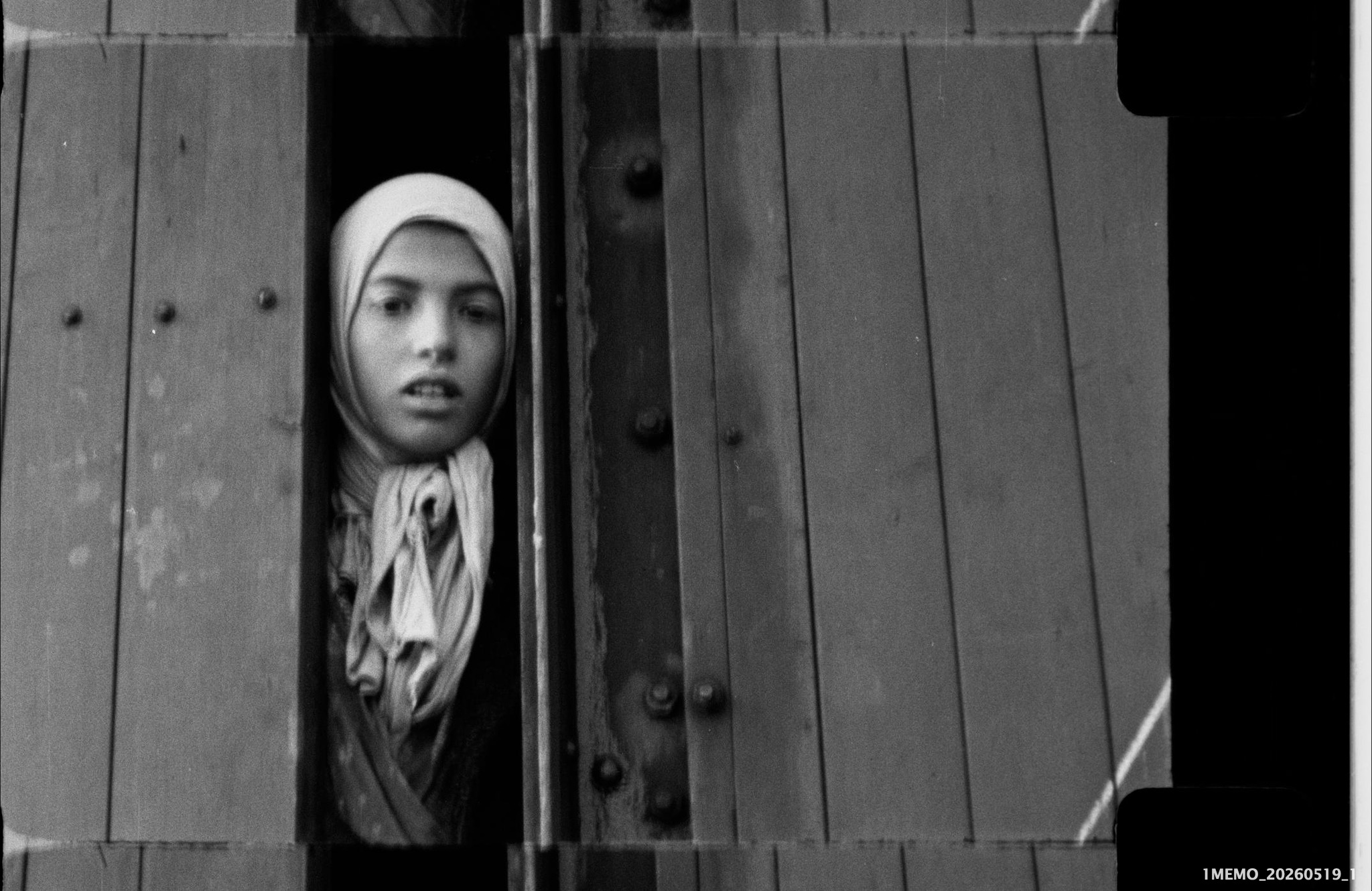
Settela Steinbach — The Girl with the Headscarf • 1MEMO_20260519_1 • Settela•Com • Frame from camera original film reel of the Westerborkfilm (1).
On May 19, 1944, at the Westerbork transit camp, a glimpse of Sinti girl Settela Steinbach wearing a headscarf appears between the sliding doors of a cattle car awaiting deportation to Auschwitz (1,2,3). In May 1945, her father, Moeselman Steinbach, wrote to “Repatriation” in the Netherlands: “…I very politely request you to inform me whether my wife and 10 children have arrived, or only children (Gypsy children) from the Auschwitz concentration camp in Poland.” (4).
The 9-year-old dutch Sinti-girl Anna Maria ‘Settela’ Steinbach peeks outside , at the last moment just before the sliding door is closed , standing inside a cattle car with 74 people on May 19 , 1944 in the Westerbork transit camp in Holland , when this deportation train leaves for Auschwitz-Birkenau – where Settela is murdered a few months later in one of the gas chambers (5).
While Settela peeks outside , her mother cries behind her in that cattle car : “Get out of there, or soon your head gets in between!”
She is wearing a headscarf made from a torn sheet because the Nazis shaved her head upon arrival at Westerbork transit camp on May 16, 1944, following the “Gypsy raid” carried out that same day at the Zwaaikom caravan site in Eindhoven, the Netherlands (6).
Settela Film • 20220630
Settela was filmed only a few seconds by the Jewish prisoner filmmaker Rudolf Breslauer as part of a documentary film being made in 1944 on the Westerbork camp .
Those seconds , also in slow-motion are shown in the 2022 Settela Film • 20220630 (7)
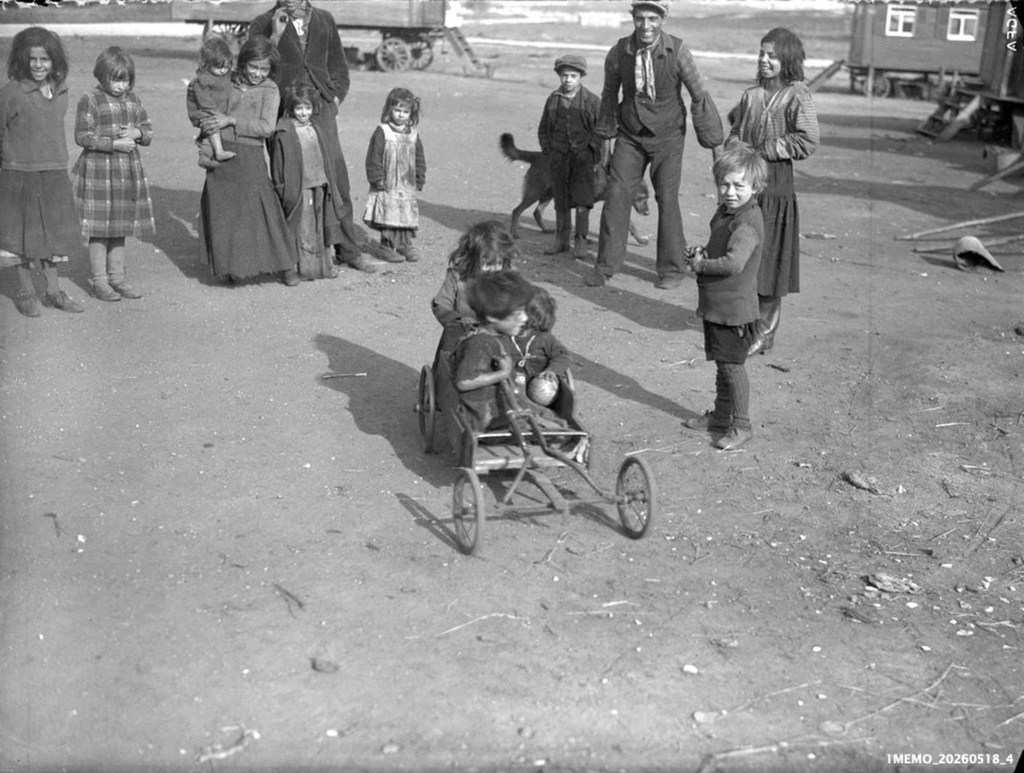
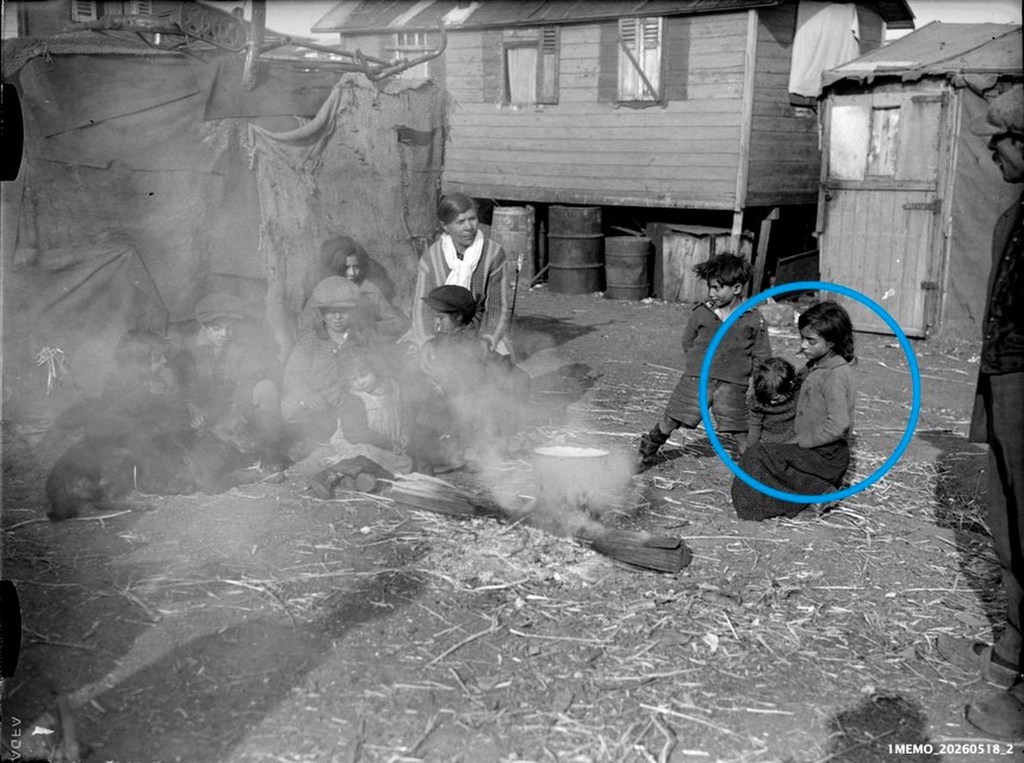
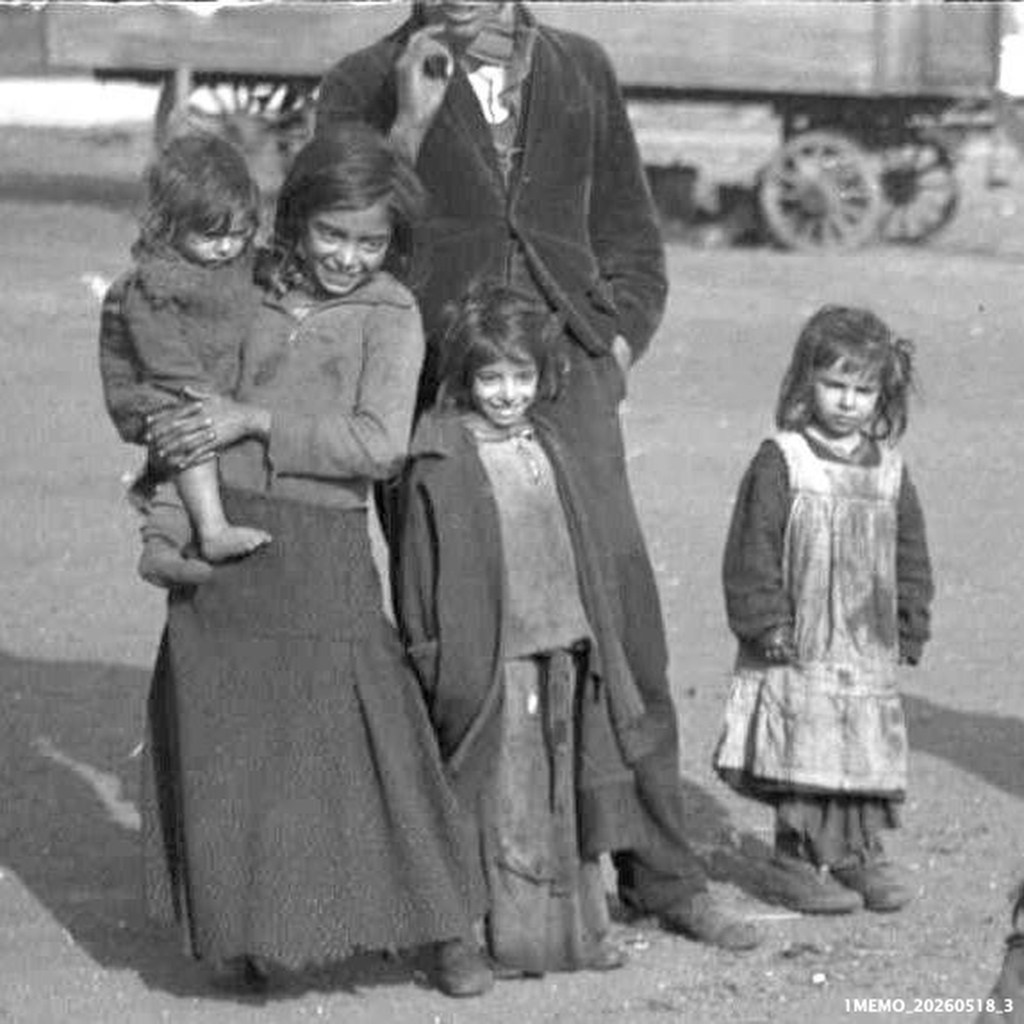
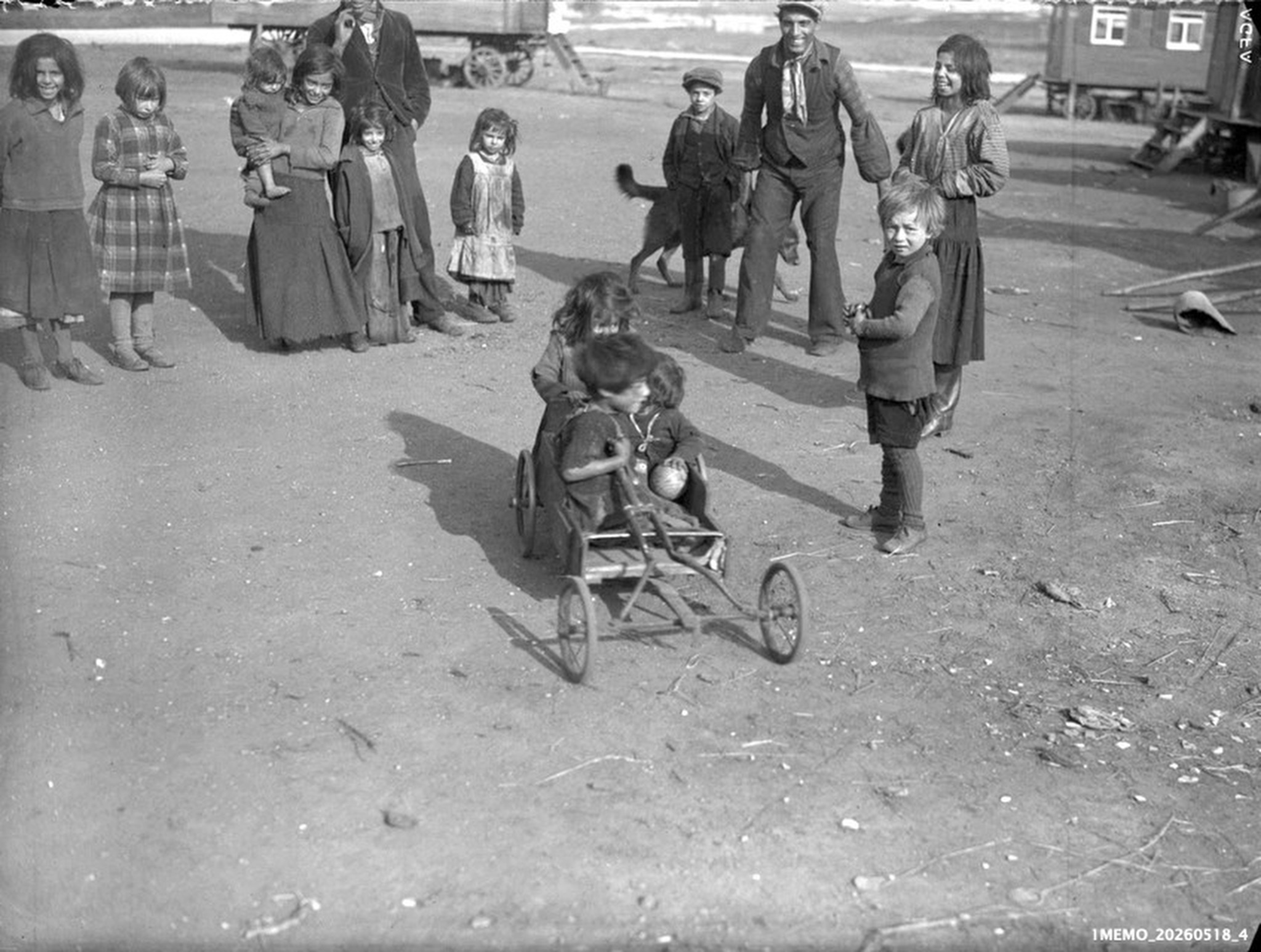
The toddler Settela in the arms of her older sister Elisabeth Steinbach at the Heksenberg Sinti caravan site in 1935 • Photo Jan de Jong • 1MEMO_20260518_4
Anna Maria (‘Settela’) Steinbach was born 23 December 1934 in Buchten, Netherlands, and photographed at age ~1 , in the arms of her older sister Elisabeth Steinbach, with others of the Steinbach family, and other families, at the nearby Sinti caravan site ‘Heksenberg’, October 1935, by photographer Jan de Jong (8) • 1MEMO_20260518_4
Settela was deported together with her brothers and sisters (Willy “Celestinus”, Willem, Elisabeth, Johanna, Philibert, Florentina, Willem, Anna), and mother Toetela (Emilia) Steinbach (born 23 March 1902 in Antwerp, Belgium), with other Steinbach and other nomad families – all together ca 245 Sinti and Roma and ca 450 Jews – on May 19th 1944 from the dutch Camp Westerbork to the Auschwitz and Bergen-Belsen camps (5,6).
Toetela’s eldest child Moekela (Magdalena; born 14 Sep 1922) had gone to Belgium and had been deported earlier – 15 Jan 1944 – with her 6 months old baby Jeanette – Toetela’s granddaughter – on the Z-Transport from transit camp Kazerne Dossin in Mechelen to Auschwitz, were they were murdered on arrival.
Settela’s father Heinrich (‘Moeselman’) Steinbach (born Nov 11, 1901 in Gründorf in Germany) died alone of grief June 6, 1946 in Maastricht in the Netherlands – his wife and 10 children had not survived the camps.
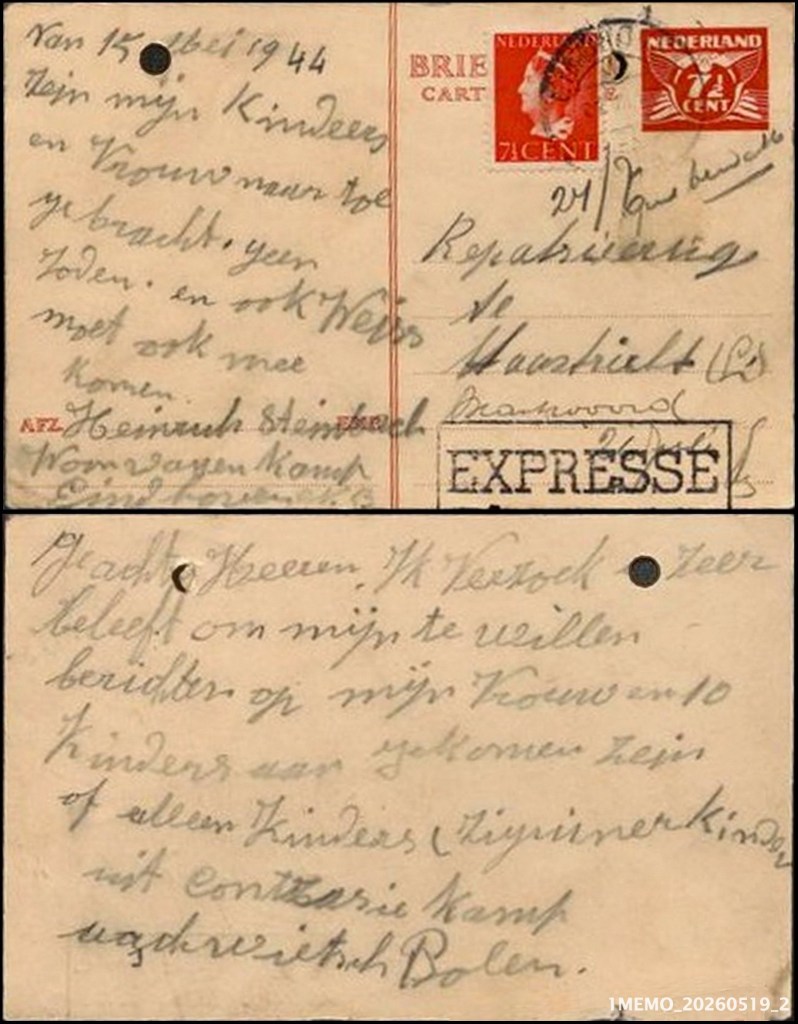
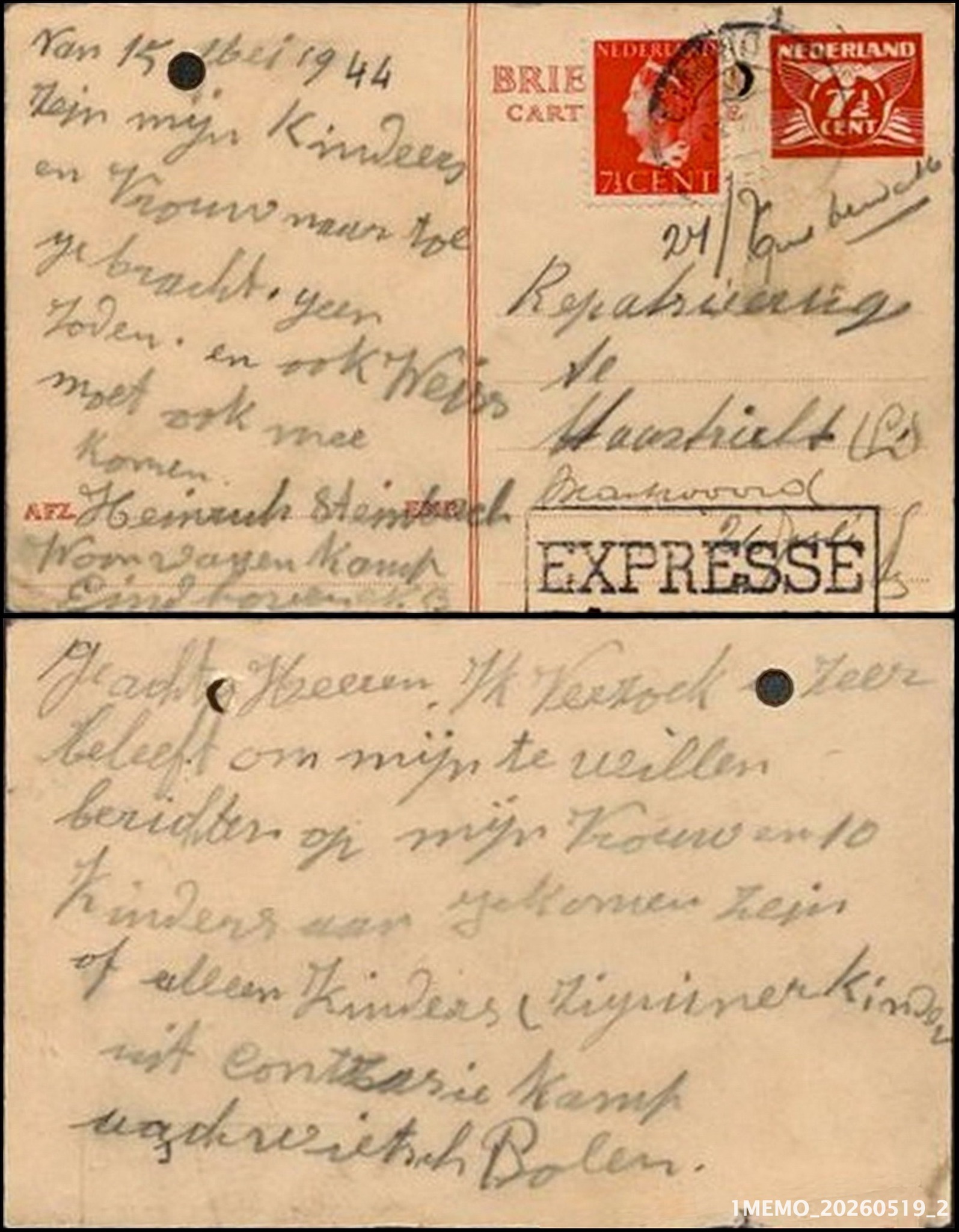
To : “Repatriation” in Maastricht (Netherlands) — “Dear Sirs, I very politely request you to inform me whether my wife and 10 children have arrived, or only children (Gypsy children) from the Auschwitz concentration camp in Poland. From May 15, 1944, my children and wife were taken there; no Jews. And Weiss had to come along too. — Heinrich Steinbach. Caravan site Eindhoven , North Brabant” • 1MEMO_20260519_2 • Settela•Com
One year earlier , May 22, 1945, two weeks after the liberation of Holland, Heinrich Steinbach — living at the caravan site in Eindhoven (North Brabant, Netherlands) — inquires about the fate of his wife and ten children on a postcard written to the “Repatriation” in Maastricht (Netherlands). The text on the postcard reads — translated from dutch (4) :
“Dear Sirs, I very politely request you to inform me whether my wife and 10 children have arrived, or only children (Gypsy children) from the Auschwitz concentration camp in Poland.
From May 15, 1944, my children and wife were taken there; no Jews. And Weiss had to come along too.
4 – May 1945 Postcard Heinrich Steinbach • 1MEMO_20260519_2 • Settela•Com | ISSN 2949-9313 | Source : Collectie HCL, archief Militair Gezag, Maastricht.
‘Moeselman’ Heinrich Steinbach — living at the caravan site in Eindhoven (North Brabant, Netherlands) — inquires about the fate of his wife and ten children on a postcard written to the “Repatriation” in Maastricht (Netherlands). The dutch text on the postcard reads :
“Geachte Heeren, Ik verzoek u zeer beleeft om mijn te willen berichten op mijn vrouw en 10 kinders aan gekomen zein of alleen kinders (zigeunerkinders) uit contrasie kamp uaschwietsch Polen.
Van 15 mei 1944 zein mijn kindeers en vrouw naar toe gebracht, geen joden. En ook Weiss moet ook mee komen. Heinrich Steinbach. Woonwagenkamp Eindhoven N.B.”
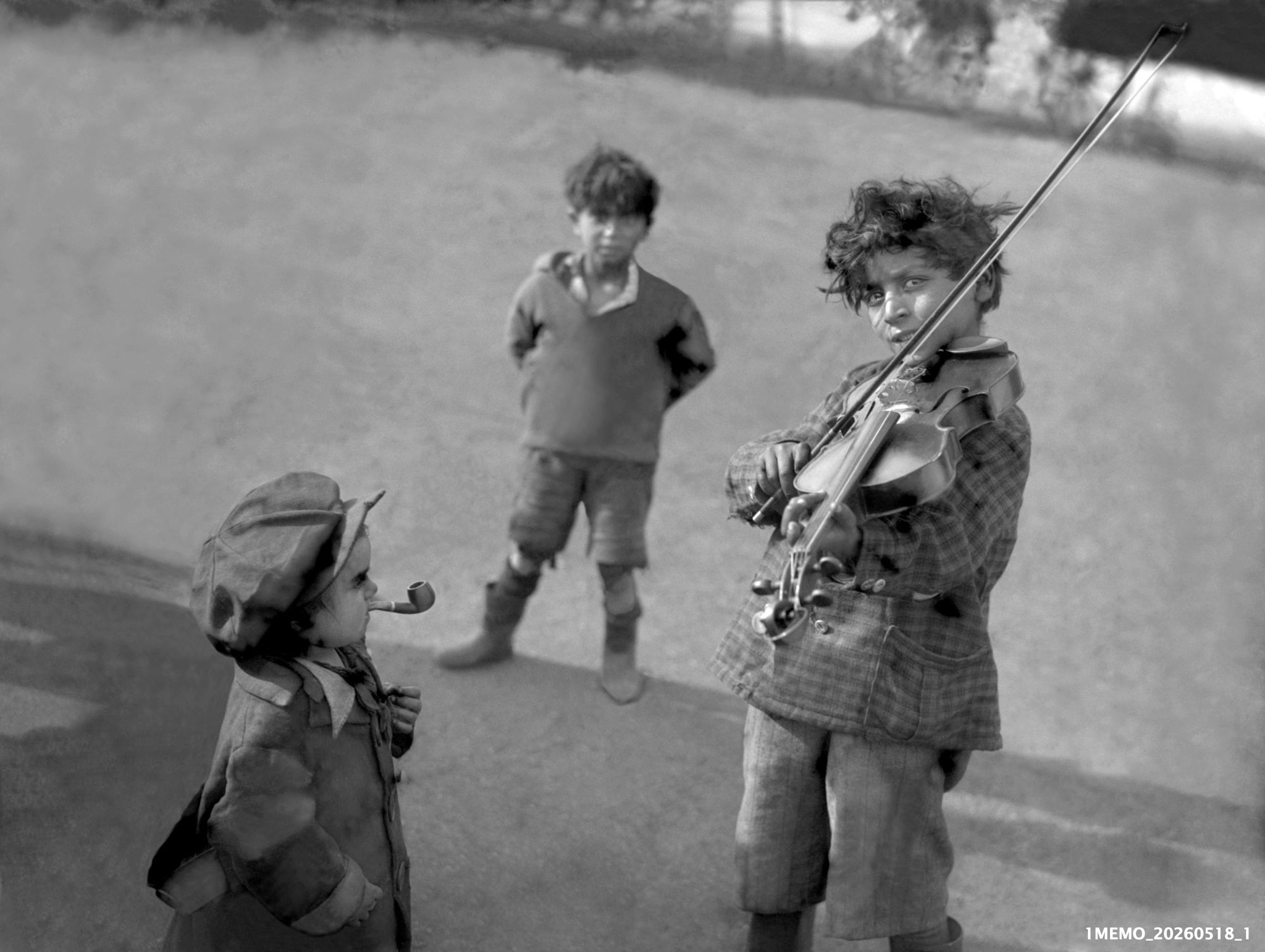
Willy Steinbach plays the violin at the Sinti caravan site Heksenberg in 1935 • Photo Jan de Jong • 1MEMO_20260518_1
In 1935 the nomadic Sinti families Steinbach — musicians — were photographed by Dutch photographer Jan de Jong at their caravan pitch on the heath around the Heksenberg hill in Brunssum, Limburg, Netherlands (1).
The boy with the violin is Willy Steinbach, an older brother of Settela Steinbach. The other 3 prints from the glass negatives that Jan de Jong made at the Heksenberg site in 1935 also show the Steinbach family, among others, with toddler Settela in the arms of her older sister Elisabeth Steinbach.
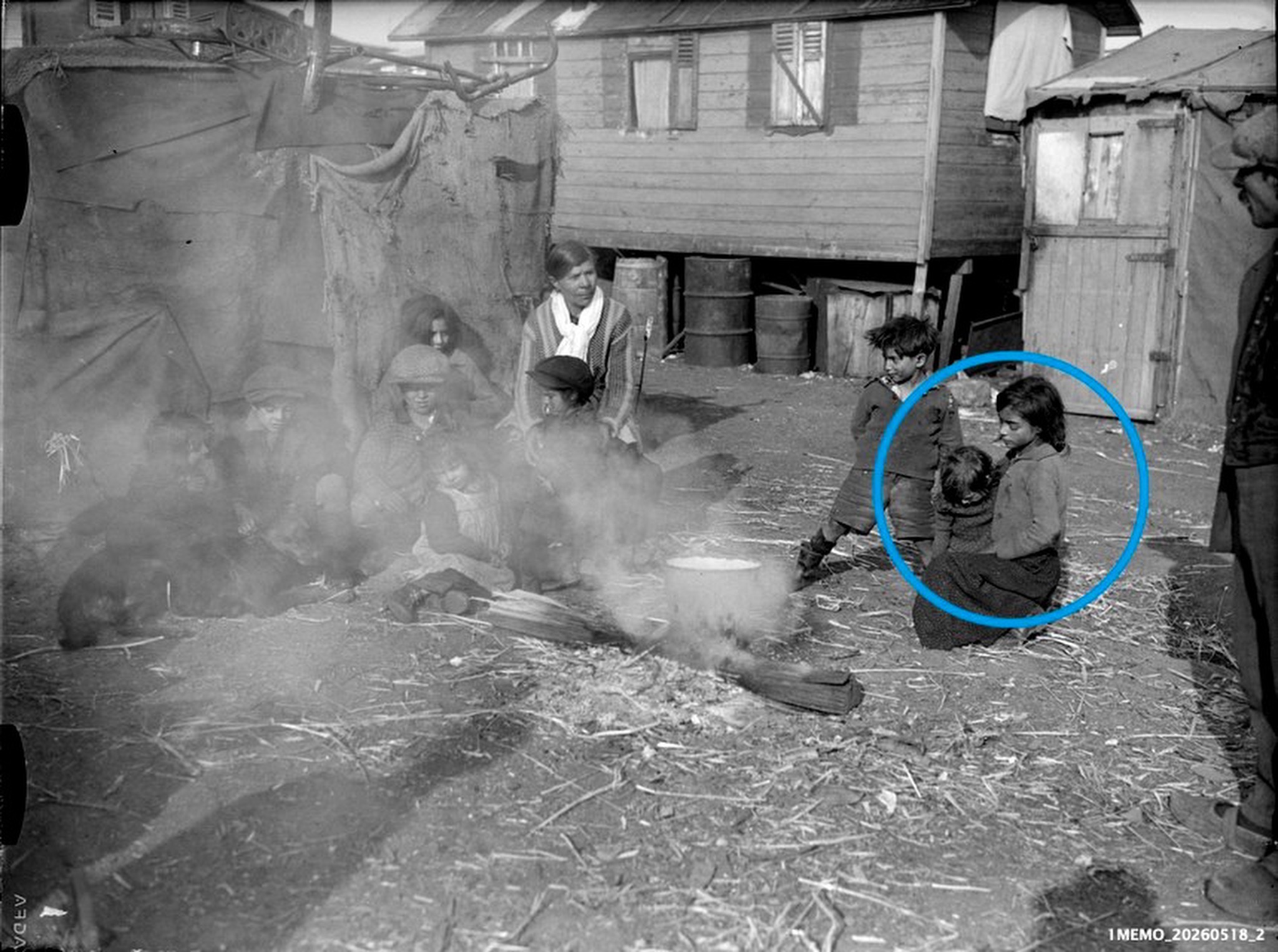
The toddler Settela in the arms of her older sister Elisabeth Steinbach (circled in blue) at the Heksenberg Sinti caravan site in 1935 • Photo Jan de Jong • 1MEMO_20260518_2
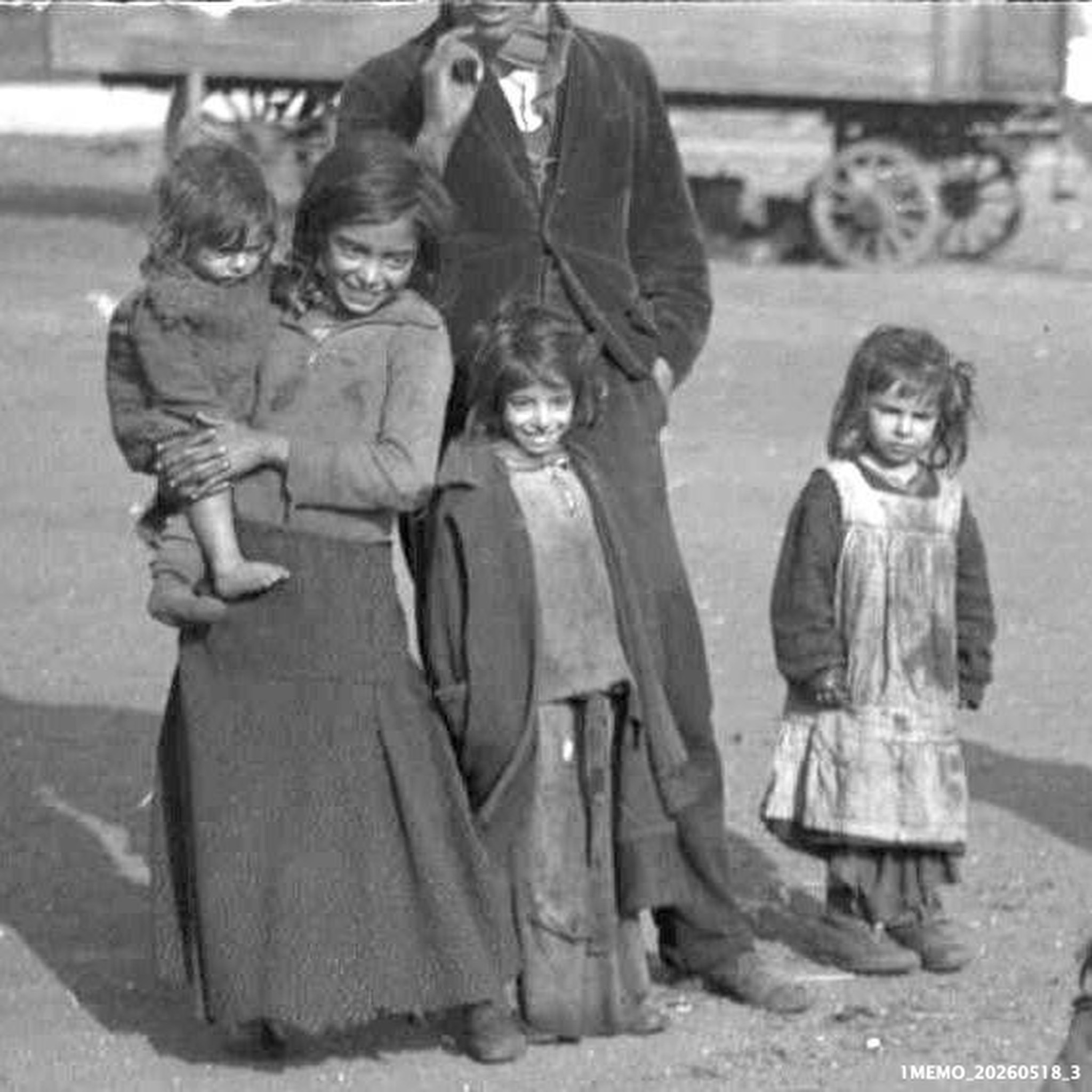
The toddler Settela in the arms of her older sister Elisabeth Steinbach at the Heksenberg Sinti caravan site in 1935 • Photo Jan de Jong • 1MEMO_20260518_3
The toddler Settela in the arms of her older sister Elisabeth Steinbach at the Heksenberg Sinti caravan site in 1935 • Photo Jan de Jong • 1MEMO_20260518_4
Settela Steinbach became known as the girl with the headscarf, featured a few seconds in the Westerbork film by Werner Rudolf Breslauer showing the deportation of the Steinbachs’ and other nomad families — all together ca 245 Sinti and Roma, and ca 450 Jews — on May 19th 1944 from the dutch transit camp Westerbork to Auschwitz (1,2).
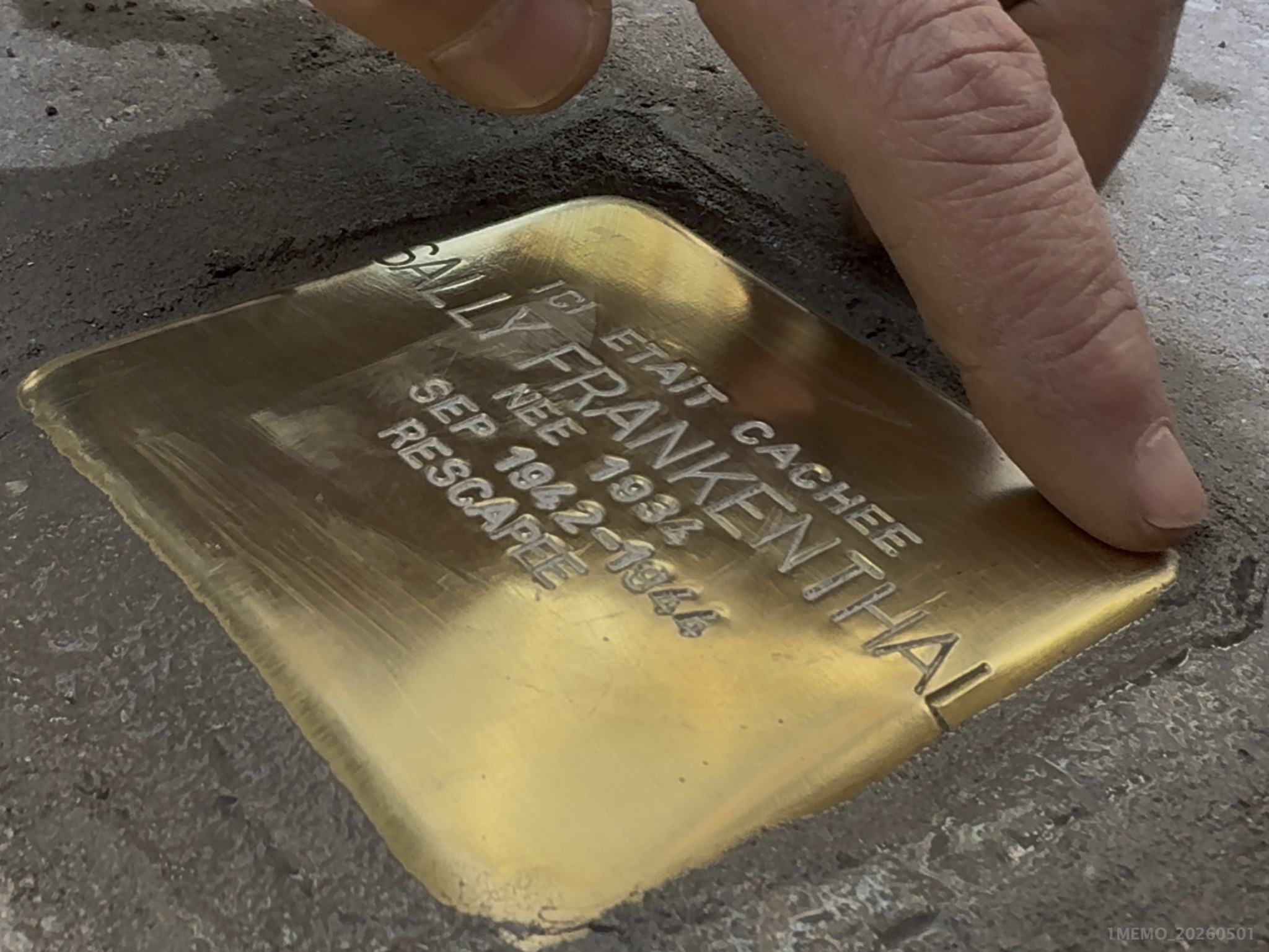
Sally Stumbling Stone • @1MEMO_20260501 • Michel van der Burg • Miracles•Media •
Stumbling stone placed Friday , April 11, 2025. Stolperstein street art monument by Gunter Demnig. Rue Marie-Therese 13 , Brussels, Belgium . Update image for post Settela.Com/2025/04/11
Moments from a vibrant testimony and jazz by Simon Gronowski at the Saint-Sépulcre school in Liège, Belgium, 19 november 2013.
The Institut Saint-Sépulcre (now S2J School Center) hosted 3 sessions with Simon Gronowski that day for different age groups, including adults in the evening — and, in between, an intimate jazz moment was created in the surreal ambience of the school’s chapel.
Thanks to friends Philippe Renette (co-producer), Simon Gronowski, Koenraad Tinel (Photo Dieter Telemans featured in Die Welt , Saturday 16th Nov 2013 – Feinde wie wir, by Felix Stephan) and Patrick (assisting with sound), staff Marc Belleflamme and André Hérin, and teachers Christine Marchal, Ingrid Lothe, others, and the Saint-Sépulcre students. Special thanks to the students Hélène, Charline, Tristan, Kimberley, Elodie, Farah, Esther, Estelle, Laetitia, Catherine, Tracy, and Pauline for making possible the unique events that month in 2013 for this Miracles film project.
Filmed by Michel van der Burg at the Station Liège-Guillemins, and Institut Saint-Sépulcre , Liège, Belgium, 19 november 2013.
French talks with English subtitles in open captions (OC).
Miracles Docs #8 :
The first French edition was published in 2022 as Simon Stompin’ at the Saint Sépulcre | Miracles•Media | 20221119 | ISAN 0000-0007-329C-0008-C-0000-0001-0 .
The here presented, second, edition is titled ‘Saint Sepulcre Moments’ and has open captions (burned in) showing English subtitles.
Citation info : Saint Sepulcre Moments | Miracles Docs #8 | Miracles•Media | 20250918 | ISAN 0000-0007-329C-0008-C-0000-0000-1 | TakeNode 3cb541dc-0806-4a0e-bafb-7cbf4387f6ca
Tuesday , November 19, 2013, Simon Gronowski arrives at Station Liège-Guillemins on his way to give a series of testimonies all day at the Saint Sépulcre school in Liège, Belgium. When he gets off on the platform, and teacher Philippe Renette and I – while filming – welcome him, Simon surprises us, showing me last Saturday’s news in the German national daily newspaper Die Welt (The World) at the front page of the weekly supplement Die Literarische Welt (The Literary World).
Unlikely Friends • Feinde Wie Wir
In the article ‘Feinde wie wir’ (Enemies like us) in the German newspaper Die Welt of November 16, 2013 (1), cultural journalist Felix Stephan reports on his conversation in Berlin with Simon Gronowski and Koenraad Tinel, which took place after their presentation there at the 13th International Literature Festival Berlin (2) of their book (3,4) ‘Enfin libérés’ / ‘Eindelijk bevrijd’ (Finally liberated) — the story of their history as children of war and the special friendship since their first meeting a year earlier, in 2012 (5).
The lead of the story reads as follows (my translation):
A story of reconciliation: Belgians Simon Gronowski and Koenraad Tinel were children during World War II: one a Jew whose family was murdered, the other the son of a committed Nazi. Decades later, they discover how close their lives were and send an emphatic message to Europe.
French, German, with English subtitles.
Enemies like us • Miracles•Media • 20250915_1 • TakeNode d6238cf6-2521-42fe-9323-a90d521a94f6
2. Finally Free after 70 years. Simon Gronowski and Koenraad Tinel (Belgium). internationales literaturfestival berlin (13.ilb), Sep 7, 2013.
3. Ni victime, ni coupable, enfin libérés. French edition (2013) by Simon Gronowski, Koenraad Tinel, David Van Reybrouck. Renaissance du livres ISBN 978-2507051051
4. Eindelijk bevrijd – geen schuld, geen slachtoffer. Dutch edition (2013) by Simon Gronowski, Koenraad Tinel, David Van Reybrouck. Hannibal ISBN 978-9491376405 . Reissue (2021) 978-9464366204
6. Enemies like us • Miracles•Media • 20250915_1 • TakeNode | Still (frame 340) Simon Gronowski shows Die Literarische Welt at Station Liège-Guillemins, Nov 19, 2013 , with a portrait photo of Simon Gronowski and Koenraad Tinel by Belgian photographer Dieter Telemans – https://www.dietertelemans.com
Citation info : News | Miracles Moment #5 | Miracles•Media | 20250915 | ISAN 0000-0007-36B4-0005-4-0000-0000-P | TakeNode 49f6c290-d00e-4969-9fec-fa1163517991
Propaganda on the windows of the shop ‘Goedkoope Winkel’ (Cheap Shop) at Lange Elisabethstraat 2 in Utrecht, Holland, photographed by Wim Bruschwiler , ca 1943.
Nazi anti-semitic slogan ‘JOOD’ (Jew) on one window.
On the other window, the “V” symbol — standing for the English (Anti-Nazi) “Victory” slogan or the later Nazi edition “Victorie”.
On top of that window on the left a small pamphlet showing O…Z…O – W… – V…V – … … … … .
OZO originally was the anti-Nazi slogan ‘Oranje Zal Overwinnen’ (transl. : Holland Will Win). Here probably the Nazi version of OZO was posted (compare image in Notes 1) :
Orde Zal Overwinnen – Want – V=Victorie – Duitschland Wint Voor Europa! .
Translation :
Order Will Win – Because – V=Victory – Germany Wins For Europe!