Tonight (Dec 13, 2013) is Candle Night in the Dutch town “Gouda”.
Best film quality on MOBILEs via this YouTube link
Every year, mid December, “Kaarsjesavond” (Candlenight) is celebrated at the Market place (Markt) in Gouda (Holland), when the ordinary electric lighting gives place to innumerable candles. That same night filmed December 16, 2008 was very, very cold.
Carillon played by Boudewijn Zwart.
Gouda people, Thanks!
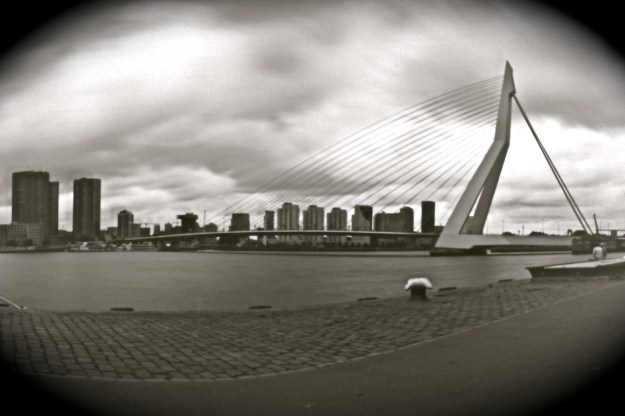
HOLLAND. Rotterdam. September 11, 2011. Taking a pinhole photo of the Erasmus bridge, using a pinhole in a tin can loaded with photographic paper. Darkroom work was done in the SKVR BeeldFabriek – that also supplied the custom made tin can pinhole cameras.
Using a 2nd camera the process was captured for the 1 minute film “tin can pinhole photo”, with original sound and added music called ‘Sonatina Piccola’ (Jan Masséus, composer) performed by the nearby playing Nederlands Jeugd Accordeon Orkest directed by Marc Belder – during this ’24 uur cultuur’ Rotterdam event.
Credits
SKVR BeeldFabriek – Tin can pinhole camera and darkroom
Nederlands Jeugd Accordeon Orkest directed by Marc Belder – Sonatina Piccola (Jan Masséus)
24 uur cultuur Rotterdam
Erasmus Bridge (Erasmusbrug) on the river ‘Nieuwe Maas’ designed by Ben van Berkel
Film and pinhole photography : Michel van der Burg (michelvanderburg.com)
April 2008 * – As you or your friends celebrate Passover this April 19th, I hope you will remember another April 19th. This one was in 1943 and it was also the first night of Passover.
Shirt the 14 year old Robert was wearing when shot in his chest as he jumped April 19, 1943 from the 20th convoy – together with his parents Bertha and Eddy Rottenberg. Detail of the neatly sewn up bullet holes is shown in the bottom-right image. Photo’s taken Nov. 19, 2012 by Audrey Rogers Furfaro and edited by Michel van der Burg (michelvanderburg.com).
On that night, a 14-year old boy and his parents were loaded onto a cattle car that headed for Auschwitz. This is the story of that night.
The boy was born in Vienna, Austria, to middle-class Jewish parents; his mother was also born in Vienna and his father in Poland. They led an uneventful life until Hitler came to power. Following Kristallnacht in 1938, they fled to Antwerp, Belgium, and eventually settled in Brussels. In February 1943, the family was denounced. The boy and his parents were arrested and sent to Malines, a deportation camp in Belgium where the Nazis would collect Jews until they had enough for a transport to Auschwitz. For two months they waited; they were barely fed and the boy’s father was severely beaten up by a German guard in front of the boy for a minor infraction.
On the night of April 19, 1943, the family was part of Convoy XX – 1,631 Jews being shipped by cattle car to Auschwitz. They were numbers 722, 723, and 724 on the Nazis’ inventory of this shipment. A Nazi officer gave the boy’s father a white flag and a whistle, and told him that he was in charge of the particular car in which they were being loaded. He was told that if anyone tried to escape he was to alert the Nazis; if he did not the family would be killed. The father decided that the family would have to jump from the train because he would not turn in his fellow Jews.
In events that are stranger than life, on the train were some Dutch acrobats, who with the use of an old man’s cane, managed to open the latched window of the train. As the train barreled toward the German border, the family prepared to jump. The man pushed his wife from the train, and the boy watched as his mother appeared to roll toward the train’s wheels. The boy was next. He did not want to be pushed, so he jumped on his own and scrambled up the track’s embankment. As he stood up at the top of the embankment, he felt a needle-like pain in his upper chest. He saw blood and realized he has been shot. Putting a handkerchief on the wound, he went searching for his parents, amidst the dead bodies of others who had been shot jumping from the train.
The boy wandered around in the dark, hurt and scared and eventually found his mother, but he did not want to tell her he was shot. Later that night they found the father, who had been shot in the leg. The family sought refuge in a nearby barn, where the boy finally told his mother he had been shot by a bullet that glanced his chest.
In the morning, the boy, who could speak Flemish better than his parents, approached the farmhouse owner and sold his parent’s wedding rings for aid. The farmer gave the family money, helped clean them up, and drove them to the train station where the family intended to take the train back to Brussels. The parents sensed danger and they decided to separate. They told the boy to get off the train at the next stop, hoping that by being alone, he would not be caught. Without knowing if he would ever see his parents again, and unable to say any farewells, the boy got off the train. By now his gunshot wound was extremely painful, so alone and not knowing what to do, the boy approached a Belgian policeman. He told him that he was a 14-year-old Jew who had been shot escaping from the train to Auschwitz. The police officer took pity on the boy, brought him to the police station, and called a doctor who treated the gunshot wound. The officer gave the boy some money, and directed him toward the safest way back to Brussels, where he was reunited with his parents.
The boy was my father, Robert Rogers. He and my grandparents, Bertha and Eddy Rottenberg, went into hiding until they were finally liberated in September 1944. In 1949, they emigrated to the United States, a country they embraced with gratitude. They have all since passed away, and only two things remain of that night. One is the shirt my father was wearing, which my grandmother kept until she died. I have it now, and you can still see the neatly sewn up bullet holes and the very faintest trace of blood. The other is the memory of what happened 65 years ago that has seared through two generations of my family.
Audrey Rogers Furfaro Chappaqua, NY
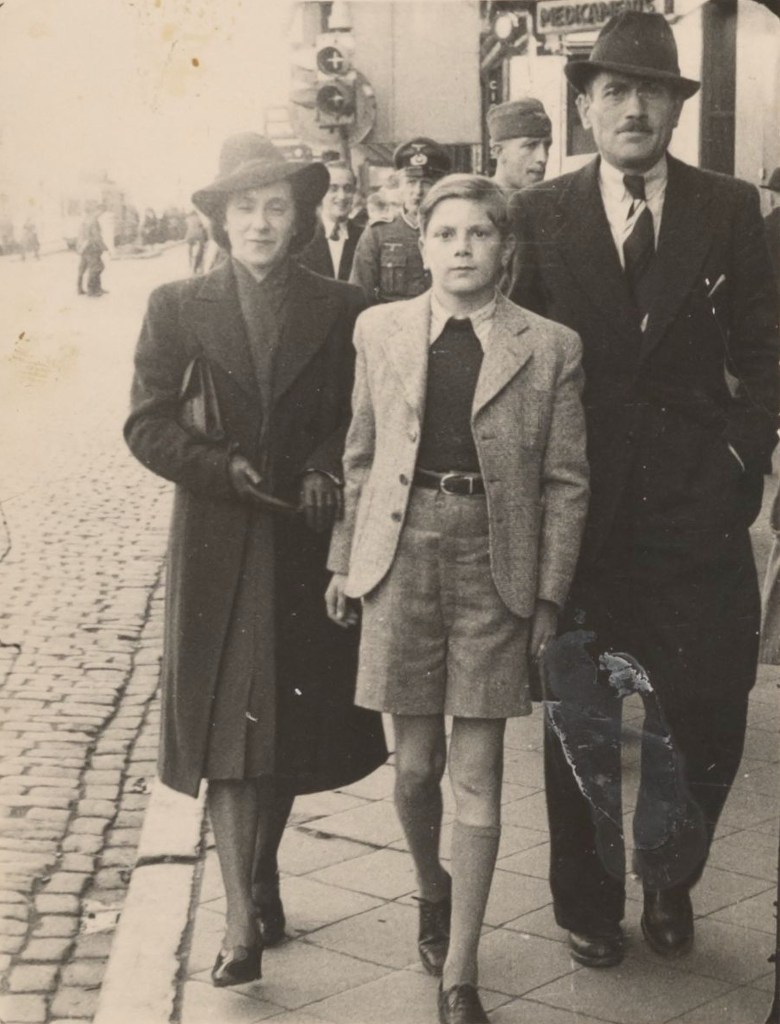
Bobby and his parents in Bruxelles, 1941 | 20230409 | Miracles•Media | Source : United States Holocaust Memorial Museum Collection, Gift of Audrey Rogers Furfaro and Scott Rogers | USHMM Rottenberg Brussel 1941 2018.661.1_001_006_0007.jpg
Houppertingen
A new finding – published at the current 236 exhibition in Brussels – is the location were the family escaped – they were numbers 722, 723, and 724. The Rottenberg family jumped close to Houppertingen, just before the site Simon Gronowski jumped, before Borgloon. That map is showing in a recent video of the vernisage of the ‘236’ project:
Published Nov. 12, 2012 on this site (michelvanderburg.com) – updated Nov. 14, 2012 – and next updated and a photo-set of Robert’s shirt added Nov. 23, 2012 by Michel van der Burg / Audrey Rogers Furfaro. Photo’s taken Nov. 19, 2012 by Audrey Rogers Furfaro and edited by Michel van der Burg (michelvanderburg.com). Detail of the neatly sewn up bullet holes is shown in the bottom-right image.
Nov. 23, 2012by Michel van der Burg– Note that during a daring attack on this ‘Transport XX to Auschwitz‘ by the three young Belgians — Robert Maistriau, Jean Franklemon, and Youra Livschitz — Maistriau succeeds in opening one car with the circa 50 prisoners with numbers 736-788. Maistriau next tried to open a second car and cut the barbed wire securing the door before the train began moving again, and he had to cease his efforts to open this car too. That car may well have been a neighbouring car with Robert and his parents – with transport numbers 722, 723, and 724.
20230409 Update
Added portrait of Bobby and his parents in Bruxelles, 1941.
Info added : The Rottenberg family jumped close to Houppertingen ( source : vernisage – map of the ‘236’ project )
One minute, October 2009, at the border of the Silent Rhine (‘Stille Rijn’) in Leyden (‘Leiden’) Holland, from under the Fish-bridge (‘Visbrug’) at the confluence of the Old and New Rhine (Oude Rijn & Nieuwe Rijn) — where Leyden was born. License: Creative Commons Attribution
Dutch:
Een minuut, oktober 2009, aan het water bij de Stille Rijn in Leiden vanaf het bruggetje onder de Visbrug, waar de Oude Rijn en Nieuwe Rijn samenkomen — en Leiden ontstaan is.
Candlelight night “Kaarsjesavond” in Gouda, Dec 16, 2008. Carillon : Boudewijn Zwart . Mensen in Gouda, bedankt!
Gouda people, Thanks!
Film – Dec 13, 2011, Michel van der Burg | michelvanderburg.com – Creative Commons Attribution 3.0 Unported License.
Posted by michelvanderburg – Tuesday, December 13, 2011
Republished 20220621 by Michel van der Burg | michelvanderburg•com , from imichel•com | imichel•blogspot•com | 20111213
Credit (2022 format)
Candlelight Gouda – Kaarsjesavond | 20111213 | Michel van der Burg | michelvanderburg•com – CC BY 3.0
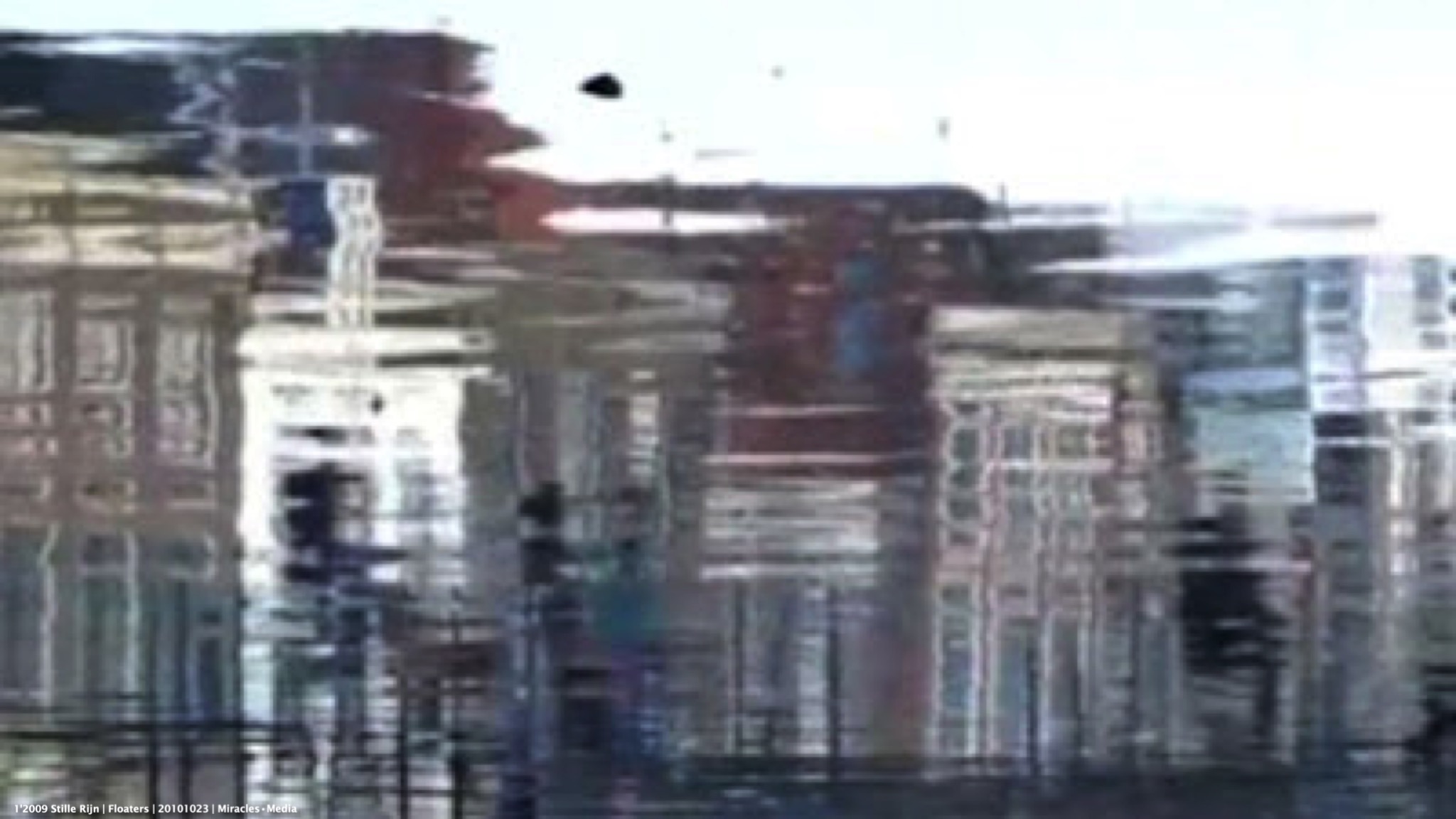
1’2009 Stille Rijn – Leiden – Holland — (Dutch below / ‘Nederlands onderaan’) — One minute, October 2009, at the border of the Silent Rhine (‘Stille Rijn’) in Leyden (‘Leiden’) Holland, from under the Fish-bridge (‘Visbrug’) at the confluence of the Old and New Rhine (Oude Rijn & Nieuwe Rijn) — where Leyden was born
NL
1’2009 Stille Rijn – Leiden – Holland
Een minuut, oktober 2009, aan het water bij de Stille Rijn in Leiden vanaf het bruggetje onder de Visbrug, waar de Oude Rijn en Nieuwe Rijn samenkomen — en Leiden ontstaan is
Posted by michelvanderburg – Saturday, October 23, 2010
Republished 20220620 by Michel van der Burg | michelvanderburg•com , from imichel•com | imichel•blogspot•com | 20101023
20220616 Note – Embedded video
Floaters ~ One minute at the border of the Silent Rhine from under the ‘Fish-bridge’ at the confluence of the Old and New Rhine, where Leyden was born, October 2009, Leyden, Holland.
First published in 2010 (20101023) via my now obsolete YouTube channel iClip , as : 1’2009 Stille Rijn – Leiden – Holland. Next remade and submitted as ‘floaters’ for The One Minutes Collection (# 3877 , file mvdb20120829_floaters ) August 31, 2012. That version upscaled for the 20200513 online version here.
Film : Floaters (20101023 – 20120831 – 20200513) Michel van der Burg | michelvanderburg.com | miracles.media
Credit (2022 format)
1’2009 Stille Rijn | Floaters | 20101023 | Michel van der Burg | michelvanderburg•com – CC BY SA 3.0

 Recorded Gouda, December 16, 2008. Film “Candlelight Gouda” © 2011 Michel van der Burg — Some Rights Reserved – license Creative Commons Attribution 3.0 Unported License.