Afghans & Belgians « We want justice »

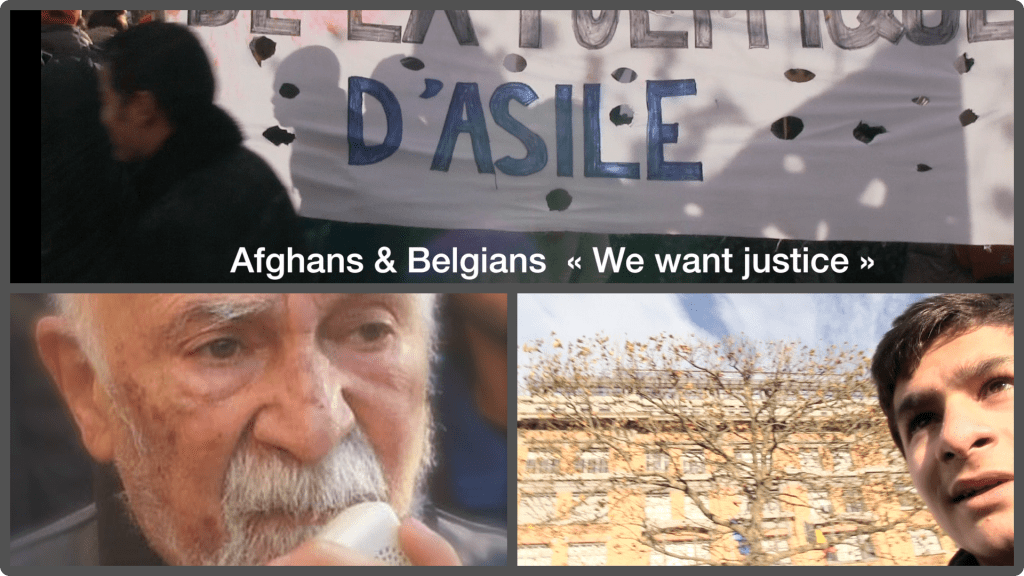
Afghans & Belgians  « We want justice »  Belgen en Afghanen eisen rechtvaardigheid. Zij eisen van België een rechtvaardiger asielbeleid. Image Rémi Dalvio / Michel van der Burg
Afghans & Belgians « We want justice » Belgen en Afghanen eisen rechtvaardigheid. Zij eisen van België een rechtvaardiger asielbeleid. Image Rémi Dalvio / Michel van der Burg

Video with English captions | sous-titres Français | Nederlandse ondertitels:


Start video
>> click ‘CC’ >> ON
>> option English  /  FR & NL (Français + Nederlands)

Or – for better quality  on mobile devices   watch on YouTube HERE

NL – Belgen en Afghanen eisen rechtvaardigheid. Zij eisen van België een rechtvaardiger asielbeleid. Toespraken Amir Mohammad Jafari (12 jaar, scholier en Afghaanse vluchteling in België) & Simon Gronowski (advocaat, 82, Belg) 20 nov 2013 bij aankomst van de stille solidariteitsmars voor Afghaanse vluchtelingen in Brussel (België). Foto (Gronowski) : Rémi Dalvio. Bedankt Philippe Renette (België) voor de vertaling in het Frans van de speech van Amir. Reportage – video : Michel van der Burg (michelvanderburg.com)

EN – Belgians and Afghans demand justice. They demand Belgium changes its asylum policy.
Speeches by Amir Mohammad Jafari (12 y, student and Afghan refugee in Belgium) & Simon Gronowski (Belgian lawyer) 20 nov 2013 on the arrival of the silent solidarity march for Afghan refugees in Brussels (Belgium). Photo (Gronowski) : Rémi Dalvio. Thank you Philippe Renette (Belgium) for the translation of the speech of Amir in French. Report – video : Michel van der Burg (michelvanderburg.com)

FR – Des Belges et Afghans demandent justice. Ils demandent la Belgique modifie sa politique d’asile. Discours par Amir Mohammad Jafari (12 ans, élève et réfugié Afghan à la Belgique) et Simon Gronowski (avocat, 82, Belge) 20 novembre 2013 sur l’arrivée de la Marche silencieuse de solidarité pour les réfugiés Afghans à Bruxelles (Belgique). Photo (Gronowski) : Rémi Dalvio. Merci Philippe Renette (Belgique) pour la traduction du discours de Amir en français. Reportage – vidéo : Michel van der Burg (michelvanderburg.com)

NL – Speech (toespraak) Amir Mohammad Jafari**

Geachte mevrouw De Block en alle inwoners van dit land.

Ik ben Amir Mohammad Jafari, 12 jaar.

Ik ben de stem van alle kinderen en jongeren zonder papieren.

Inwoners van dit land, mevrouw De Block, eigenlijk wil ik maar één ding: meeleven!

Graag nodig ik jullie uit om :

– één dag in mijn schoenen te staan

– één dag in een vreemde taal naar school te gaan

– één dag in de wenende ogen van mijn mama te kijken

– één dag niet zeker te zijn of je die dag iets te eten zal hebben

– één dag schrik te hebben dat de politie je uit het huis zal zetten

– één dag de afschuwelijke beelden uit ons thuisland op tv te zien

– één dag het gevoel te hebben dat niemand naar je luistert

– één dag mijn nachtmerries te hebben

– één dag je post niet te willen lezen

– om één dag de enige te zijn die het slechte nieuws aan je ouders kan vertellen

– om één dag illegaal genoemd te worden.

Maar ook één dag…
één dag hier gelukkig te mogen zijn.

Alvast bedankt!

FR – Traduction du discours de Amir Mohammad Jafari en français

Chère madame De Block – habitants de ce pays.

Je m’appelle Amir Mohammad Jafari. J’ai 12 ans.

Je suis la voix de tous les enfants et de tous les jeunes sans papiers.

Habitants de ce pays, Madame De Block, en fait, je ne souhaite qu’une seule chose : de la compassion!

Je vous invite volontiers à :

– partager mon sort pendant rien qu’une journée

– suivre pendant une seule journée les cours dans une langue étrangère

– regarder pendant une seule journée dans les yeux en larmes de votre maman

– vous demander un jour si vous aurez à manger le lendemain

– ressentir pendant une seule journée la peur de vous faire expulser par la police

– voir un jour des images affreuses de votre pays d’origine à la télévision

– avoir rien qu’un jour le sentiment que personne ne vous écoute

– faire pendant une seule journée les cauchemars que je fais

– ne pas vouloir lire sa correspondance

– etre un jour le seul qui peut annoncer la mauvaise nouvelle à ses parents

– etre appelé un jour illégal.

Mais aussi un jour …
un seul jour être heureux ici.

Merci d’avance! “

Speech  – declaration – delivered (in French) by Simon Gronowski in Brussels, Nov 20, 2013**
FR – Discours – déclaration – par Simon Gronowski à Bruxelles, le 20 Novembre 2013

“Je m’appelle Simon Gronowski.

Depuis des années, je témoigne partout contre la barbarie nazie.

Partout je dis que mon père, en 1920, a quitté sa Pologne natale, fuyant l’antisémitisme et la misère et est entré en Belgique en fraude, en clandestin.

C’était un “sans papier” avant la lettre, un réfugié politique et économique.

A l’époque, il a été bien accueilli en Belgique et rapidement régularisé.

Voilà pourquoi je dis partout que je suis solidaire des “sans papiers”.

Ils ne viennent pas ici pour leur plaisir mais car dans leur pays ils ont faim ou ils ont des problèmes politiques.

Mais ils n’ont rien fait de mal et il ne faut pas les mettre en prison, dans des centres appelés “127Bis”.

Et surtout pas les enfants, car moi on m’a mis en 1943 à onze ans dans une prison: la Caserne Dossin à Malines.

Je suis solidaire de la situation actuelle des Afghans en Belgique.

La sécurité dans leur pays est loin d’être vérifiée et leur vie y serait en danger, surtout quand en 2014 les troupes internationales partiront.

En attendant il faut suspendre l’expulsion de tous les Afghans et leur accorder un permis de séjour, pour eux, leur famille et leurs enfants.

Beaucoup de jeunes Afghans sont déjà scolarisés depuis des années, ne connaissent plus leur pays d’origine, mais seulement leur seul pays, la Belgique.

Je demande que mon pays, la Belgique, conformément à sa tradition, les traite avec humanité et leur assure une vie paisible dans la dignité.”

Continue reading “Afghans & Belgians « We want justice »”

Defending Holocaust History – documentary released by Richard Bloom

Defending Holocaust History - documentary released by Richard Bloom
… dedicated to the Jewish partisans …

November 9 – marking the 75th anniversary of Kristallnacht – Richard Bloom Productions is releasing “Defending Holocaust History” which focuses in with razor sharpness on the 1941 onset of actual genocide in Eastern Europe, particularly Lithuania and Latvia, and which is now the subject of a massive state campaign to rewrite history to confuse the issues. Further details and contact info at Richard Bloom Productions

This documentary is available for you to watch here.
Note: on mobile devices only low resolution for now

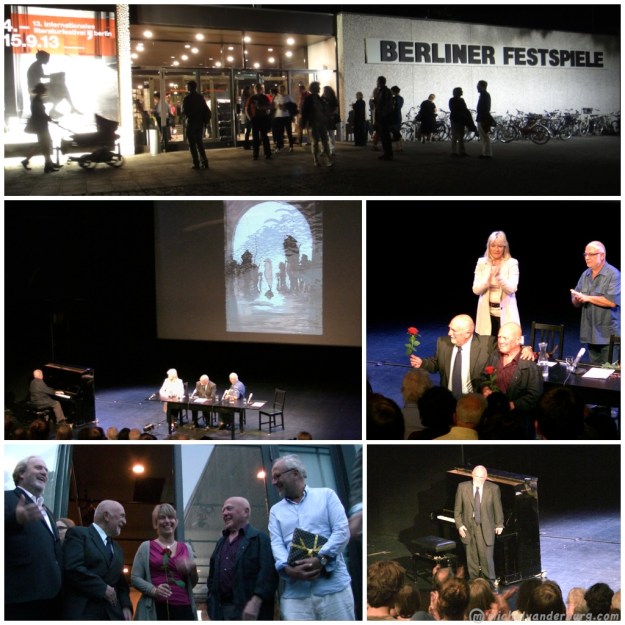
Simon Gronowski & Koenraad Tinel – Internationales Literaturfestival Berlin – Photo report

Simon Gronowski and Koenraad Tinel present "Finally Free after 70 years" on Sept. 7, 2013 at the 13th Internationales Literaturfestival Berlin
Simon Gronowski and Koenraad Tinel present “Finally Free after 70 years” on Sept. 7, 2013 at the 13th Internationales Literaturfestival Berlin – with Vincent von Wroblewsky (interpreter) and Christine Eichel (host), Joachim Sartorius (Berliner Festspiele), Ulrich Schreiber (festival director), and Joke Schauvliege (Flemish Minister for Culture) in the Haus der Berliner Festspiele.
Photo report (BUM10022V01): Michel van der Burg – michelvanderburg.com

“Auschwitz and forgiveness” by Simon Gronowski (English translation)

Simon Gronowski & Koenraad Tinel in Auschwitz
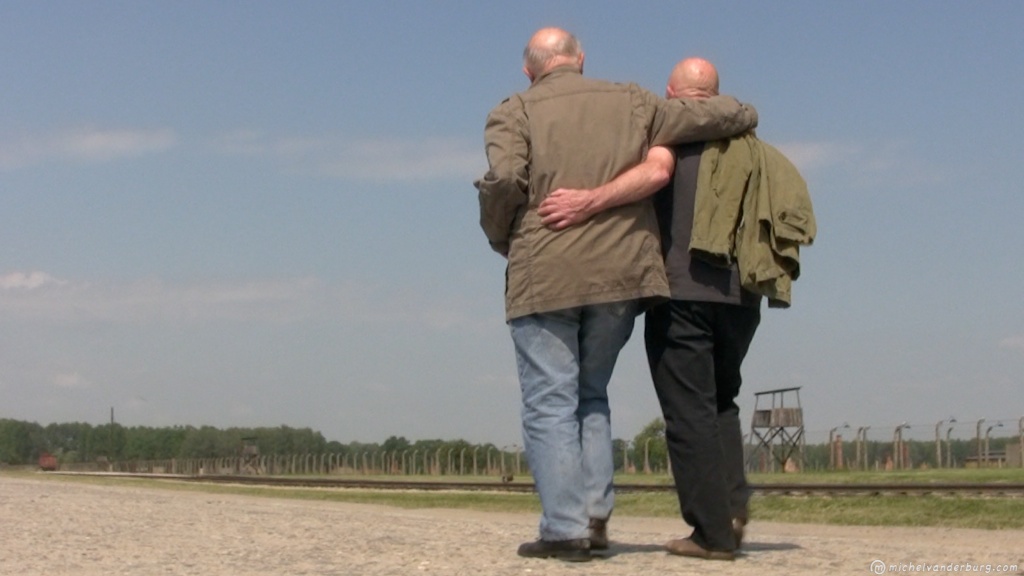
Simon Gronowski and Koenraad Tinel together in the Auschwitz camp, May 2012.
(image BUM10010V01 – michelvanderburg.com)

“Auschwitz and forgiveness” – a letter by Simon Gronowski (lawyer) was published in French originally as “Auschwitz et le pardon” in Le Monde (France) on Sept. 20, 2013.

Below the English translation of Simon Gronowski’s letter by Michel van der Burg

Auschwitz and forgiveness  

I lost my mother and sister in the gas chambers of Auschwitz – Birkenau and my father died in despair, in July 1945.
I myself was 11 years old when, on 17 March 1943, the Nazis took me, threw me into a dungeon, the basement of the Gestapo on the Avenue Louise in Brussels, then in a big prison, the Dossin barracks in Mechelen, the ‘Belgian Drancy‘. A month later, April 19, 1943, they put me in a cattle car of the 20th Convoy to Auschwitz. Miraculously, I jumped off the train and escaped death. And all this for what? Because my parents were born Jews.

It took me 60 years to tell the drama of my childhood (L’enfant du 20e convoi [tr. The child of the 20th convoy], ed. Luc Pire, 2002, reprinted Renaissance du Livre, 2013). It took sixty years for Koenraad Tinel to tell his own history of a son of a Flemish Nazi. He did this courageously by extraordinary drawings in a book titled Scheisseimer (Lannau, 2009); he is an artist, a sculptor, and he draws.

Forgiveness

His father adored Hitler. He had his two elder sons in the Waffen SS, the oldest one to the eastern front, the other, at sixteen and a half years old too young to fight, in the Flämisch Wachzug (Flemish Guard), a subsidiary of the Gestapo, camp guards of Breendonk and Mechelen. Fortunately, Koenraad was only 6 years old when Hitler came into Belgium, otherwise he would have imitated his brothers. He has rejected completely the ideology of his father.

We met by chance in February 2012. A 16 year old boy I did not know but who knew our two stories, brought us together. Koen said at that time: “When I read your story, I cried.” I replied: “Children of the Nazis are not responsible.” A great friendship is born between us. We were two children crushed by a war we did not understand at all, one on each side of the fence, I at the side of the victims, he the side of the executioners.

For sixty years, he has carried the burden of his father’s fault. Our grief is not comparable but I understand his. He has freed himself of it first by his book Scheisseimer, then by our friendship.

We made a book on this: Neither victim, nor guilty, FINALLY LIBERATED (Ni victime, ni coupable, ENFIN LIBÉRÉS; Renaissance du Livre, 2013): I wrote, Koenraad drew with ink. In January, Koenraad told me: “My brother knows your history, he wants to see you“, this brother, guardian at the Dossin barracks (Kazerne Dossin) when I was detained there, took me at gunpoint into the wagon of death.

So he regretted what he had done and asked me to forgive.
When I saw him, we hugged each other without saying a word, in tears. I forgave him only on my own behalf, not on behalf of other victims and I forgave him alone, not all Nazis. I did it especially for me, feeling I transcended it.

Forgiveness does not mean forgetting. On the contrary, it gives the memory greater prominence, a larger dimension. Our memory is essential: we must know the barbarism of the past to defend democracy today. Democracy is a struggle every day.

Amnesty is unacceptable : it is a blind collective measure that absolves all culprits without requiring them to repent.
Forgiveness is a religious virtue. For Buddhists, it is an act of liberating wisdom.
The bigger the crime, the greater forgiveness.

Some say they would not be able to forgive: – this statement does not make sense because they have never been asked as I have been and it is unlikely they will ever be, but if it happened to them, what would they do ? – 70 years later, they still suffer from their wounds and their resentment when they should love life and believe in happiness, out of respect for the deceased relatives.

When the culprit repents and asks for forgiveness, the victim not only can but must forgive, for refusing means maintaining hatred from both sides. Some criticize my friendship for Koenraad and my forgiveness for his brother.
They want to keep the children and descendants of victims and perpetrators separated forever into two enemy camps.

They are often victims of Nazism. This is normal, they have suffered terrible trauma in their body and in their soul. But they freeze in their victim posture, locked in their bitterness.
Aren’t they thinking too much of their own pain, and not enough of that of the other? Some, born after the war and who have not suffered the Holocaust, are not less hateful.

Such an attitude opens the way to new animosities, new wars, new suffering for our children.
It is not because children of victims and children of offenders for long, for generations, unconsciously, carry the stigma of absolute evil, that they must stay pitted against each other.
Men should not be divided but brought closer together, one must go toward the other to progress and grow together for a better world of peace and mutual respect. This is a message of hope and happiness.
I who lost my family by criminal hate, I do not hate. Despite the tragic events of yesterday and today, because even today in the world there are peoples who suffer, men who suffer, I keep my faith in the future because I believe in human goodness.

Long live peace and friendship between men !

Simon Gronowski (Lawyer)

Simon Gronowskiescaped from the 20th convoy – received the 2006 Grand Prix Condorcet-Aron for democracy – is a former president of the Union of Jews deported from Belgium (Union des Déportés Juifs de Belgique).

Notes –  by Michel van der Burg
– English translation (with help from Richard Bloom) by Michel van der Burg
– I inserted some extra links
– “Auschwitz and forgiveness” – a letter by Simon Gronowski (lawyer) was published in French originally as “Auschwitz et le pardon” in Le Monde (France) on Sept. 20, 2013. (I left out the photo published with the Le Monde letter)
– The image in this post is a frame from video I captured during the visit of Simon Gronowski and Koenraad Tinel in the Auschwitz-Birkenau State Museum, Oświęcim, Poland on May 24, 2012. (image BUM10010V01 – michelvanderburg.com)

Update – Full letter – Sept. 27. Now the translation of the (final) 2nd part of the letter was added (after it became publicly available for all on the website of Le Monde today). This second part starts with: Forgiveness does not mean forgetting. On the contrary,…….
Also the last sentence of the first part was altered.

The Litvak Connection – documentary

Richard Bloom’s latest version of the documentary “The Litvak Connection”.

During the Shoah, Nazi collaborators from Lithuania and Latvia, helped murder more than 275,000 Jews – their neighbours – many of them known as Litvaks, 96% of those countries Jewish population, the highest percentage rate in any European country.
The film explores the search for these collaborators, the efforts to prosecute them and the refusal of countries to bring their citizens to justice.
More info at richardbloomproductions.com