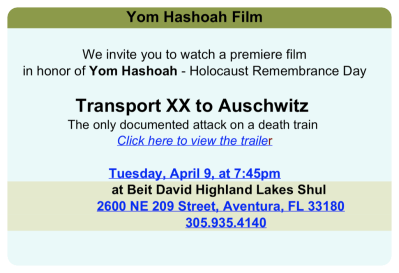
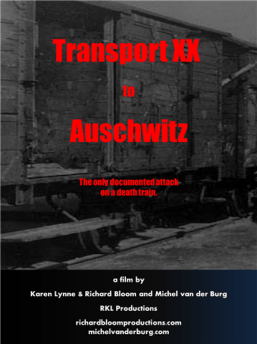
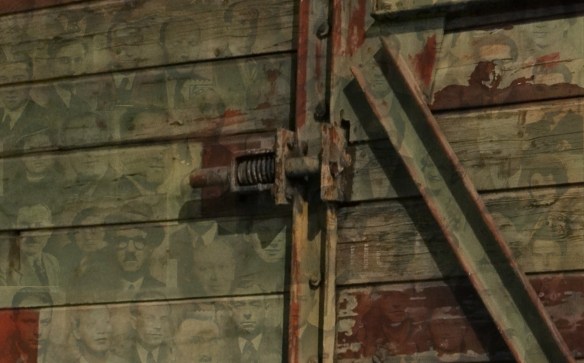
Februari 2013 verscheen online in de Digitale Bibliotheek voor de Nederlandse Letteren (DBNL) het sublieme boek “De cirkel” van Marja Pinckaers, een hommage aan haar grootmoeder Marie Hertzdahl – Bloemgarten, die 19 april 1943 met Transport XX vanuit Mechelen naar Auschwitz werd gedeporteerd, en de verschrikkingen van het kamp overleefde.
‘BEN JIJ WEL EENS IN AUSCHWITZ GEWEEST?’ e-mailde mijn jongste nichtje Stéphanie. Op mijn ontkennend antwoord kwam prompt de vraag of ik met haar mee wilde.
….
Al jaren dacht ik over een bezoek aan Auschwitz, de plek waar mijn oma, Marie Hertzdahl-Bloemgartenz, bijna twee jaar gevangen had gezeten. Waar mijn grootvader, Salomon Victor Hertzdahl, was vermoord.
….
Ik wilde Blok 10 zien, het experimentenblok, waar mijn grootmoeder ‘werkte’ als Schwester Marie. Daar was zij toeverlaat voor vrouwen op wie de kampartsen de vreselijkste medische experimenten uitvoerden en die ze uiteindelijk ook zelf onderging. …. Ik wilde die verschrikkelijke gevangenis zien waar mijn oma zo lang verbleef en die ze, wonder boven wonder – ze was immers al zesenveertig jaar toen ze in Auschwitz arriveerde – overleefde. Ook de rails wilde ik zien, waarover in april 1943 het transport XX uit het Belgische Mechelen eindstation Auschwitz binnenliep. Het transport met oma, oom Sylvain en Ima Spanjaard; aan boord. Over datzelfde spoor was mijn opa een jaar eerder gearriveerd in Auschwitz. Weggevoerd vanuit Nederland met één van de eerste transporten uit Westerbork ‘naar het oosten’.
Feb. 3, 2013 – Dossin barracks, Mechelen (Belgium) – Collecting Transport XX these months 70 years ago. Photomontage: Michel van der Burg (michelvanderburg.com)
In any war, children are the most tragic victims. The recent images reaching us every day from Syria and other places in the world prove this once more. World War II was not different.
“Finally liberated” (Enfin libérés) – Simon Gronowski, Koenraad Tinel, David Van Reybrouck.
War children Simon Gronowski and Koenraad Tinel
Both the lawyer Simon Gronowski and the artist Koenraad Tinel have spent their childhood during the Second World War. The first born in a Jewish family in Belgium, and the second born in a Belgian (Flemish) family of ‘flamingant’ nazi collaborators.
The two men met early past year at the initiative of Sacha Rangoni, a 16 year old boy and member (monitor) of the UPJB, the Union of Progressive Jews of Belgium at a meeting of the UPJB early last year.
They have recently become close friends, and together made a special book – a genuine plea for humanity.
The story and budding friendship of these two ‘children’ who survived the horrors of this dark chapter in our history was first told in the last year’s documentary “Oorlogskinderen” (War children) from Marianne Soetewey.
Simon Gronowski and Koenraad Tinel are nine and six years, respectively, as the Second World War broke out, and experienced because of their different origins the war completely different.
Simon Gronowski grew up in Brussels (Belgium) in a Jewish family and ends up together with his mother and sister in 1943 in the Dossin barracks in Mechelen (Belgium). From there starts the transport to Auschwitz. Simon at the age of eleven years can narrowly escape from this 20th convoy by jumping from the train. His mother and sister did not return from Auschwitz. His father died shortly after the war sick and broken by sorrow.
The sixteen years old Sacha Rangoni first learns the story of the artist Koenraad Tinel while watching his theatre show “Scheisseimer” (‘shit-bucket’) where Koenraad Tinel told with the help of his ink drawings his fate as a son and brother of Nazi collaborators.
Koenraad Tinel grew up in a family of hard-core nazi-minded Flamingants (Flemish nationalists) . His father encouraged his older brothers to join the Waffen-SS and work as a camp guard in the Dossin barracks. At the end of the war he fled with his family to Germany, for fear of the possible consequences of the Nazi sympathies of his father Tinel.
Sacha then organised a meeting between Koenraad Tinel and Simon Gronowski…
These children of war, Simon and Koen, have long felt the burden of the past. Until after nearly 70 years this special event in their lives, brought them together. This unlikely encounter has born a steadfast friendship – and is testified also now in the soon to be released book they made, called “Enfin libérés” (Finally liberated).
Neither victim nor guilty, finally liberated – “Ni victime, ni coupable, enfin libérés”
“Neither victim nor guilty, finally liberated” is the translation of the full title of the French edition of this book “Ni victime, ni coupable, enfin libérés” – a testimony of this healing friendship depicted by Koenraad Tinel’s drawings, put into words by Simon Gronowski and Filip Rogiers, and put into perspective in an essay by historian and writer David Van Reybrouck. The book’s release is expected April 18th, 2013 by the publisher “La Renaissance du Livre“.
Reportage “Quai des Belges : Enfin libérés”
On the occasion of this upcoming book release – is shown today on Belgian TV (ARTE Belgique) both a rerun of the 2012 documentary ‘War children’ (Oorlogskinderen), and also a brand new reportage, called “Quai des Belges : Enfin libérés” (filmed by A. Bourgeois and P. Navez) of the interview of Sacha Rangoni and Simon Gronowski that took place early this month in Kazerne Dossin (Kazerne Dossin – Memorial, Museum and Documentation Centre on Holocaust and Human Rights in Mechelen, Belgium) together with Herman Van Goethem, historian and conservator of the museum, and the historian and writer David van Reybrouck.
Broadcast and online video excerpt
Broadcasting on Belgian TV is both today (13/03) via ARTE Belgique in the Quai des Belges Magazine, and later again on 23/04 via the Belgian VRT ‘Canvas’ channel and on 25/04 via the RTBF ‘la deux’ channel.
Online video “Quai des Belges : Enfin libérés” Online is a 3 min excerpt (Video: A. Bourgeois and P. Navez) of this new interview of Sacha Rangoni and Simon Gronowski that took place early this month in Kazerne Dossin (Kazerne Dossin – Memorial, Museum and Documentation Centre on Holocaust and Human Rights in Mechelen, Belgium).
Sources used for this post:
Personal communication (unpublished reports) – Simon Gronowski and Koenraad Tinel
First published March 13, 2013 First update March 15
– changed introductory lines
– removed redundant text, and made other minor corrections Update May 9
– section below on ‘Books available now..’
– section below ‘Report book presentation’
Books available now (update May, 2013):
Dutch version of the book
Eindelijk bevrijd. Geen schuld, geen slachtoffer.
Simon Gronowski / Koenraad Tinel / David Van Reybrouck
Hannibal publisher (www.uitgeverijkannibaal.be)
French version of the book
Ni victime, ni coupable. Enfin libérés.
Simon Gronowski / Koenraad Tinel / David Van Reybrouck
Publisher “La Renaissance du Livre” (www.renaissancedulivre.be)
Book presentation 30 April 2013 in the Filigranes library Brussels
New on this site a photo report of the book presentation on 30 April 2013 in the Filigranes library in Brussels by Herman Van Goethem (Conservator Kazerne Dossin) and the authors Simon Gronowski and Koenraad Tinel.
Tribute to Régine Krochmal, with translation (subtitles) of her speech at the Transport XX commemoration in Boortmeerbeek on May 15, 2011 [ on tablets like the iPad and phones watch subtitles here at YouTube ].
“Never forget that nothing is so powerful as life! Life gives us gifts continually: Our heart to love – our soul to find true joy – and our conscience to increase our joy, by flexibility of our heart. Each of us should let his inner wealth flourish. Like Robert Maistriau, Youra Livschitz and Jean Franklemon have done. For which we are grateful to them, to this day.”
“Rescue during the Holocaust” is the theme this year of the International Holocaust Remembrance Day – Jan 27, 2013 – and an important theme in the work of historian Tanja von Fransecky.
Tanja von Fransecky has done research over the past years in France, Belgium, Holland, and Israel on the rescue, escape attempts, and escapes from the deportation trains during the Holocaust.
It is a relatively unknown chapter of the Jewish resistance during the Holocaust, that many deportees from death trains fled, and often were rescued by others – neighbors – at the risk of their own life.
Tanja von Fransecky’s work is news this weekend in the latest edition (Jan 26) of the “Süddeutsche Zeitung” – the largest German national newspaper – in the report by Stephan Stracke, entitled: “Wir haben das Recht zu flüchten” – translated here as “We have the right to escape”.
Below my summary of this article on Tanja von Fransecky’s work (with some additions by myself) Continue reading “We have the right to escape”→