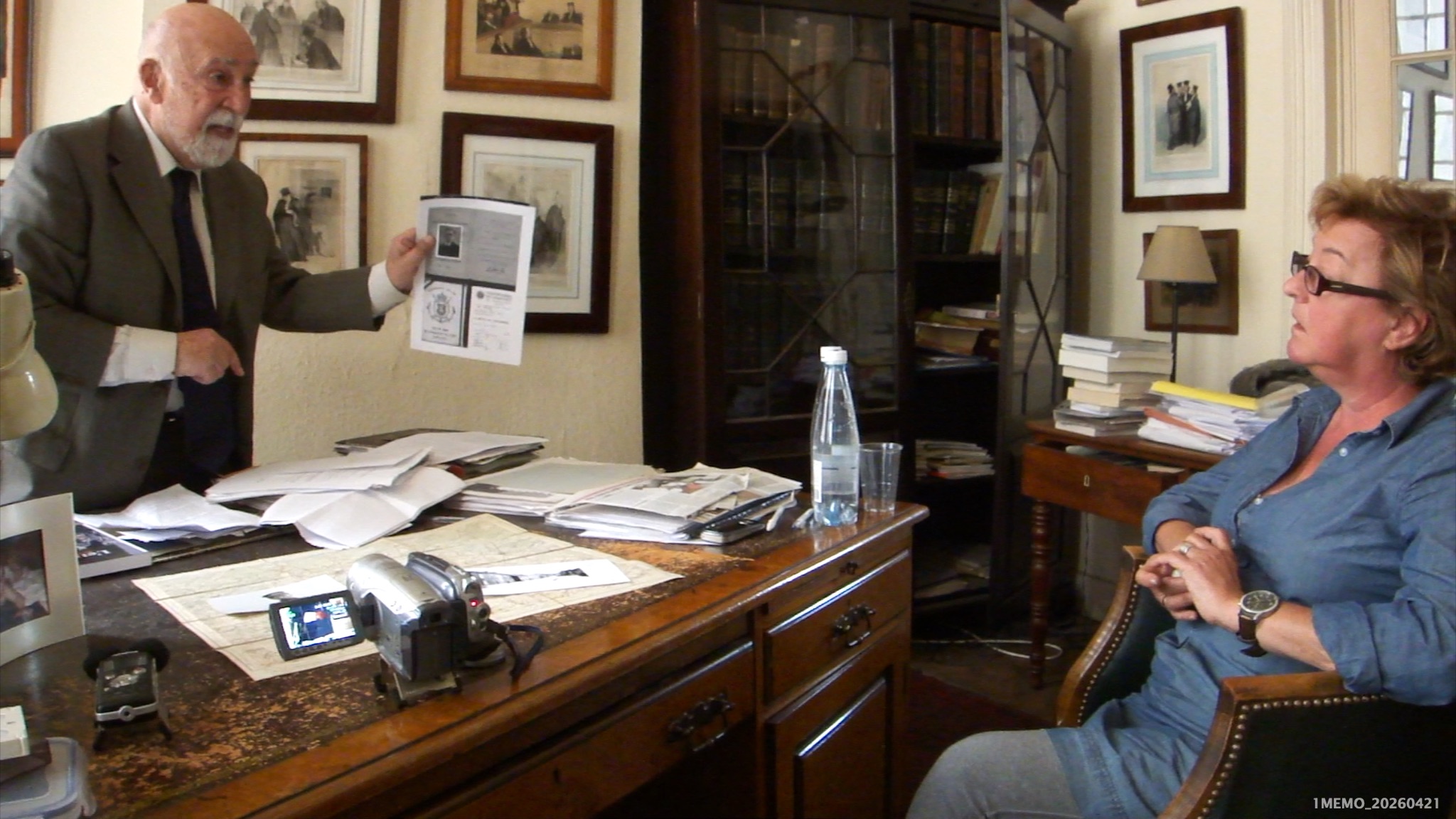
Interview Simon Gronowski • Transport XX • 1MEMO_20260421 • Michel van der Burg • Miracles•Media • Today 15 years ago, April 21, 2011, filming my 1st interview with Simon Gronowski at his office in Brussels, with Anna Longin (interpreter) — while working on our documentary film Transport XX to Auschwitz.
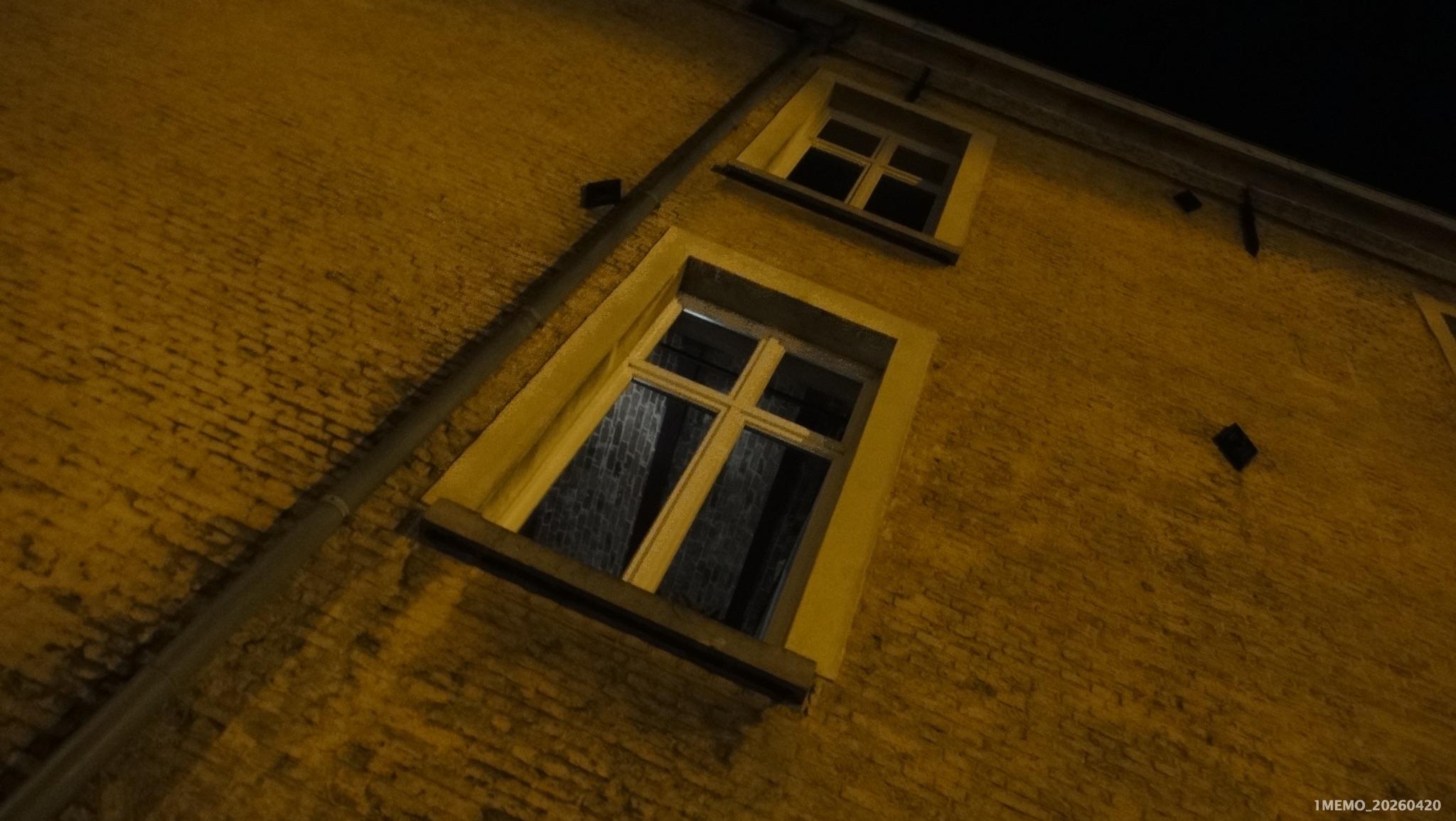
Kazerne Dossin • Transport XX • 1MEMO_20260420 • Michel van der Burg • Miracles•Media • Today 15 years ago, the night of April 20, 2011 , at the Courtyard of the former Dossin barracks (Kazerne Dossin) , Mechelen, Belgium , preparing for my 1st interview with Simon Gronowski scheduled the next day, April 21, 2011 at his office in Brussels — while working on our documentary film Transport XX to Auschwitz.
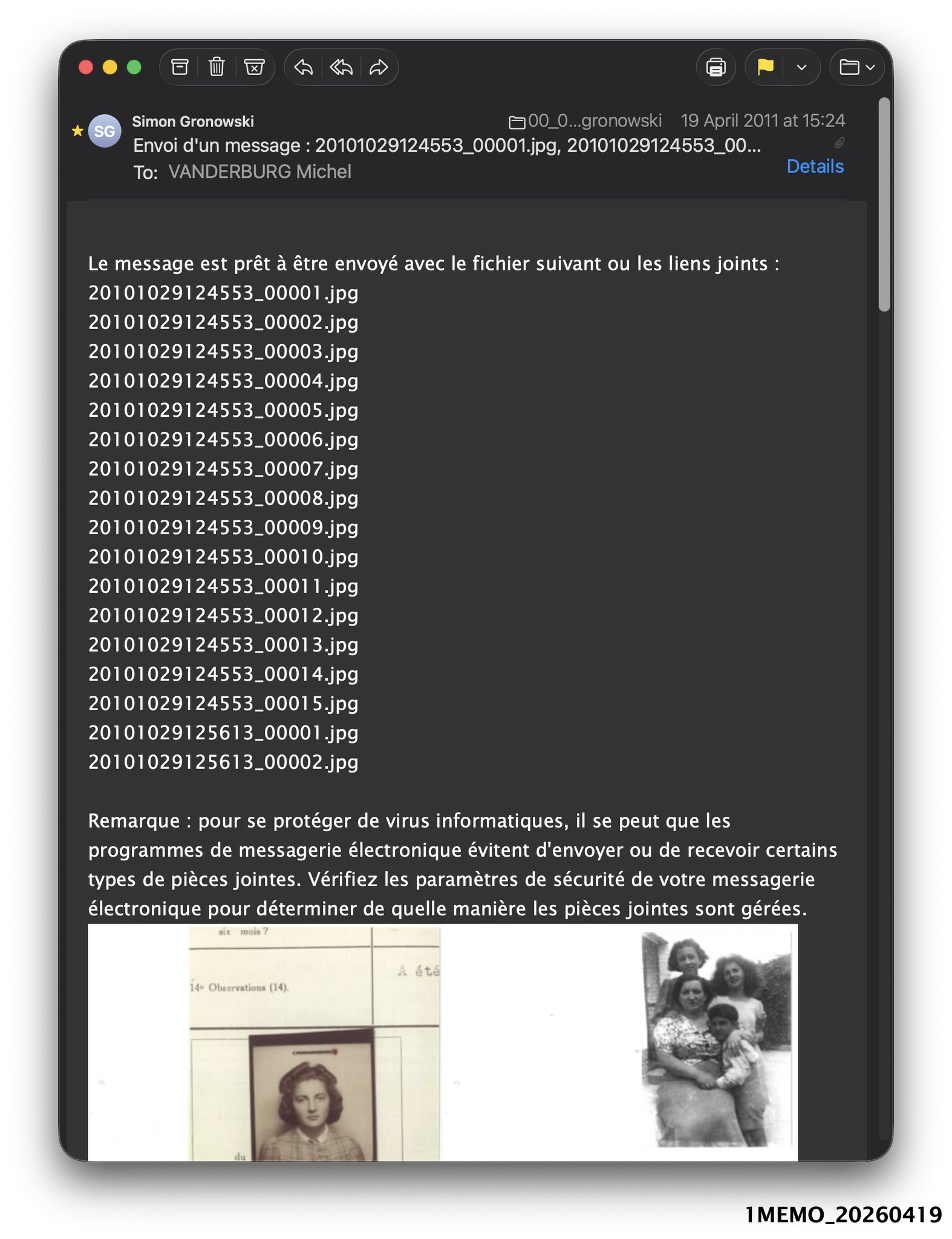
You’ve Got Mail • Transport XX • 1MEMO_20260419 • Michel van der Burg • Miracles•Media • Today 15 years ago, on April 19, 2011 , Simon Gronowski mailed me photo’s in preparation for our 1st interview scheduled April 21, 2011 at his office in Brussels, working on our documentary film Transport XX to Auschwitz.
#24 Most Viewed Today on YouTube • TRANSPORT XX – installation Brussels
My ‘Channel 012’ ranked the #24 Most Viewed Today YouTube channel in the Netherlands on the first day after uploading the captivating video Transport XX . The next day again it reached #23 Most Viewed Today.
Channel012 ranking was #68 in Most Viewed (This Week) , a week after uploading Transport XX.
Google purchased YouTube late 2006. I started late 2007, with a first upload. Between ~ 2007-2011 channel pages were equipped with view counters, bulletin boards, and were awarded badges for various rank-based achievements, such as ” “#68 – Most Viewed (This Week)”. The term “gurus” on YouTube referred to a specific category of content creators who focused on education. This category helped establish YouTube as a platform for influencers. You could change your account type to eg. Director, Comedian, Musician.
The film was uploaded close to midnight April 19th, 2009, registered by YouTube as April 20th, 2009. This short documentary is a video impression (2009) of the confrontation of passers-by with the TRANSPORT XX installation in Brussels, that presented photographic portraits of 1,200 of the 1,631 Jewish prisoners deported with the 20th train convoy to Auschwitz , the night of April 19th in 1943. Half an hour after the departure of this transport XX three young Belgians from Brussels, Youra Livschitz, Jean Franklemon and Robert Maistriau stopped the train between Boortmeerbeek and Haacht, opened one of the cars and liberated 17 prisoners. Later before the train reaches the German border over 200 other prisoners decide to attempt to escape and also jump out of the cars. This was the only documented attack on a death train during the Holocaust.
A 1minute edition of Transport XX premiered in the Paradiso theater in Amsterdam Nov. 28, 2010 – in The One Minutes – Where history starts …film festival . Here the registration : Transport XX in Paradiso | The One Minutes Collection | 20200607 | URL https://youtu.be/KuyQzLXQo3g
A behind the scenes film of the making of this film was published last year : Flow | Miracles Moment #1 | 20240513 | URL https://youtu.be/iwQQLvGtUm0
Citation info : Youtube Creator Top 25 Award • Transport XX • Michel van der Burg • Miracles•Media • 20251021 • TakeNode 39bdf260-095a-4749-acd7-e18adc9108c5 / 9f425f47-55b0-4637-9c1c-019879110895
English – 🇬🇧 Street Art Simon — Episode #6 of Miracles Docs — captures the emotional unveiling of a mural created by artist HYER honoring Holocaust survivor Simon Gronowski at the S2J School Center in Liège, Belgium. Through Simon’s testimony and message of hope, the film celebrates resilience, remembrance, and the enduring beauty of life.
Français – 🇫🇷 Street Art Simon — épisode #6 de la série Miracles Docs — retrace l’émouvante inauguration d’une fresque murale réalisée par l’artiste HYER en hommage au survivant de la Shoah Simon Gronowski, au Centre Scolaire S2J de Liège. À travers le témoignage de Simon et son message d’espérance, le film célèbre la résilience, la mémoire et la beauté de la vie.
Intro
Unveiling of the street art mural created by HYER , a tribute depicting the story and credo of Simon Gronowski, in the Garden of Remembrance and Memory of the S2J School Center in Liège, Belgium, on Saturday, May 17, 2025.
Saturday 17 May 2025, Simon Gronowski arrives at the Station Liège-Guillemins — invited for a surprise event at the S2J School Center in Liège, Belgium.
Surprise
After climbing the stairs to S2J school’s hanging garden, Simon has his first encounter with this street art mural on the S2J school’s garden wall, and with the Liège artist HYER.
Inauguration
In her opening speech Antonia Hicter (Principal, S2J School Center) recounted on the history, rationale, and team of this mural project, and the memorial work — the duty of remembrance at S2J .
Next, Philippe Renette (Teacher, S2J School Center) described Simon Gronowski’s impact on the school, the students, and the teachers during Simon’s regular school visits over the past 12 years. Philippe Renette further explained how this inauguration of the mural also marked the first step in the development of S2J’s ‘Jardin du Souvenir et de la Mémoire’—the Garden of Remembrance and Memory. Renette concluded by describing this work of art ‘that reads like a book, that is, from left to right, and that unfolds like a tracking shot in a movie’.
Simon Gronowski
Simon Gronowski in his speech focussed on the main points of his history and his message:
The Nazis killed my mother, my sister, in the gas chamber, at Auschwitz-Birkenau. And my father, died, just after the war, in July 1945, in despair.
And I myself, at 11 years old, the Gestapo took me, threw me into a prison, the Dossin barracks in Mechelen.
And after a month of internment, they deported me, in the 20th convoy, and by some miracle, I got out of the train, and I escaped.
A miracle. I was 11 years old. … I do not bring today, nor previously… in this school and elsewhere… a message, of negativity, or sorrow.
I bring a message, of hope and happiness.
Never forget, life is beautiful.
But it’s a daily struggle. You have to fight every day. Because no one is sheltered from life’s trials.
Misfortune can happen to anyone. We can lose a loved one, in a road accident for example, or through illness. When it happens, when misfortune happens, you have to face it with courage.
I’m not saying I’m courageous, by the way, but I say this for everyone, one must overcome. Fidelity to the deceased person, is to live fully and happily.
And despite today’s tragic events. I keep my faith in the future , because I deeply believe , in human kindness…
Long Live Peace And Friendship Among Men !
Simon concluded – “to let off steam a little” – with two of his favourite pieces of music , playing on a keyboard.
Street Art Simon • Miracles Docs #6 • 20251019 • French (original) • Subtitles: English 🇬🇧 Open Captions & French 🇫🇷 Closed Captions (CC)
Notes
Unveiling of the street art mural created by HYER, a tribute to Simon Gronowski in the Garden of Remembrance , S2J School Center (Jardin du Souvenir et de la Mémoire , Centre Scolaire S2J) , Liège, Belgium, Saturday 17 May 2025.
Thanks to Simon Gronowski, the S2J team, and especially former student Maxime Louis for his last minute helping hand with the keyboard.
Social Edition dd 20251019 This ‘social’ edition of the video dd 20251019 has burned in English captions facilitating posting at social media.
Clean Edition dd 20251012 A first ‘clean’ edition of this film (with no burned in captions) with closed captions (CC) for both English and French was published dd 20251012 at miracles.media/2025/10/12 . Reference : Street Art Simon – CC | Miracles Docs #6 | Miracles•Media | 20251012 | ISAN 0000-0007-329C-0006-G-0000-0000-Q
Upload YouTube : Street Art Simon • Miracles Docs #6 • 20251019 🇫🇷🇬🇧
Citation info : Street Art Simon | Miracles Docs #6 | Miracles•Media | 20251019 | ISAN 0000-0007-329C-0006-G-0000-0001-O | Source : miracles.media/2025/10/19
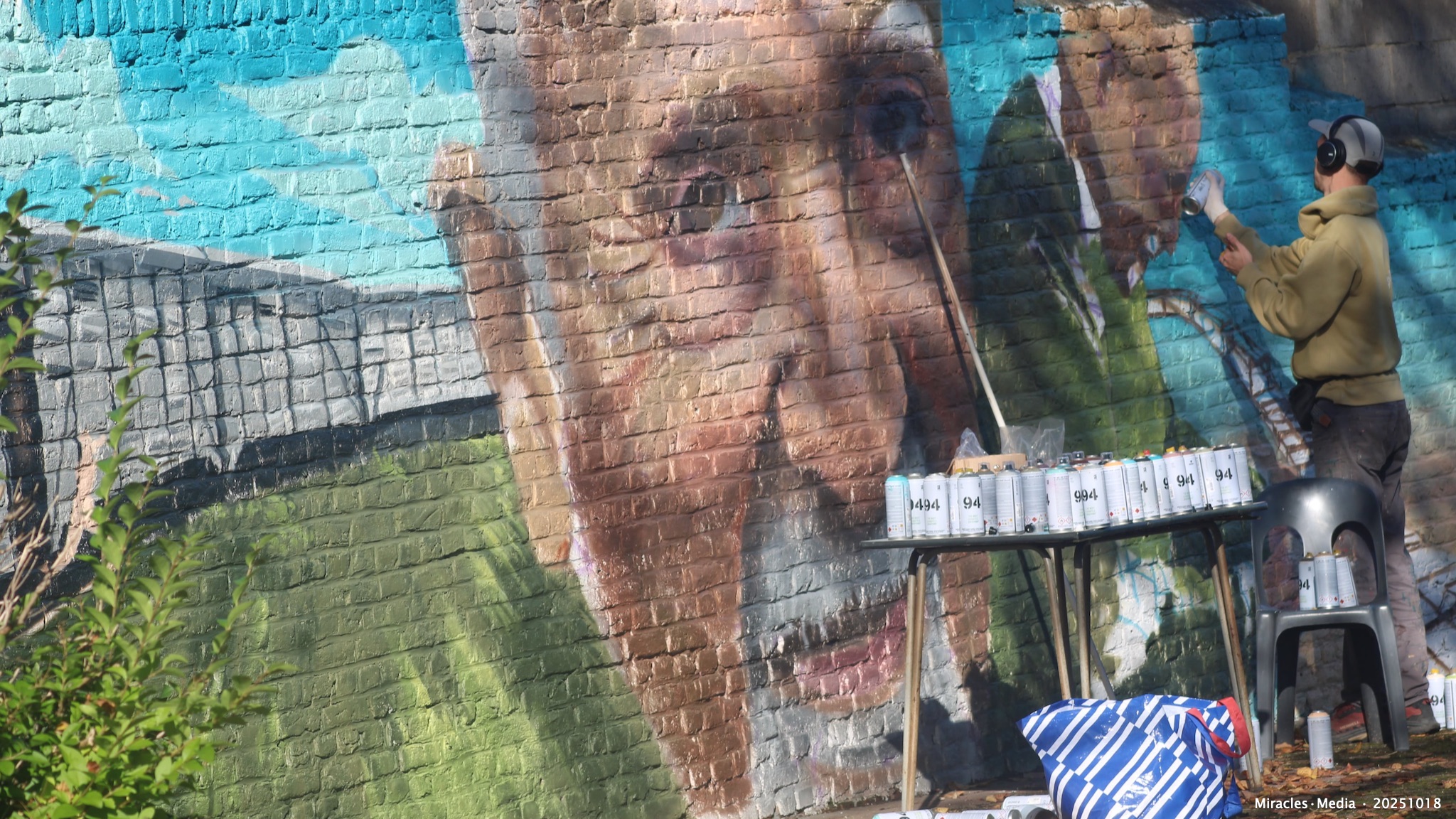
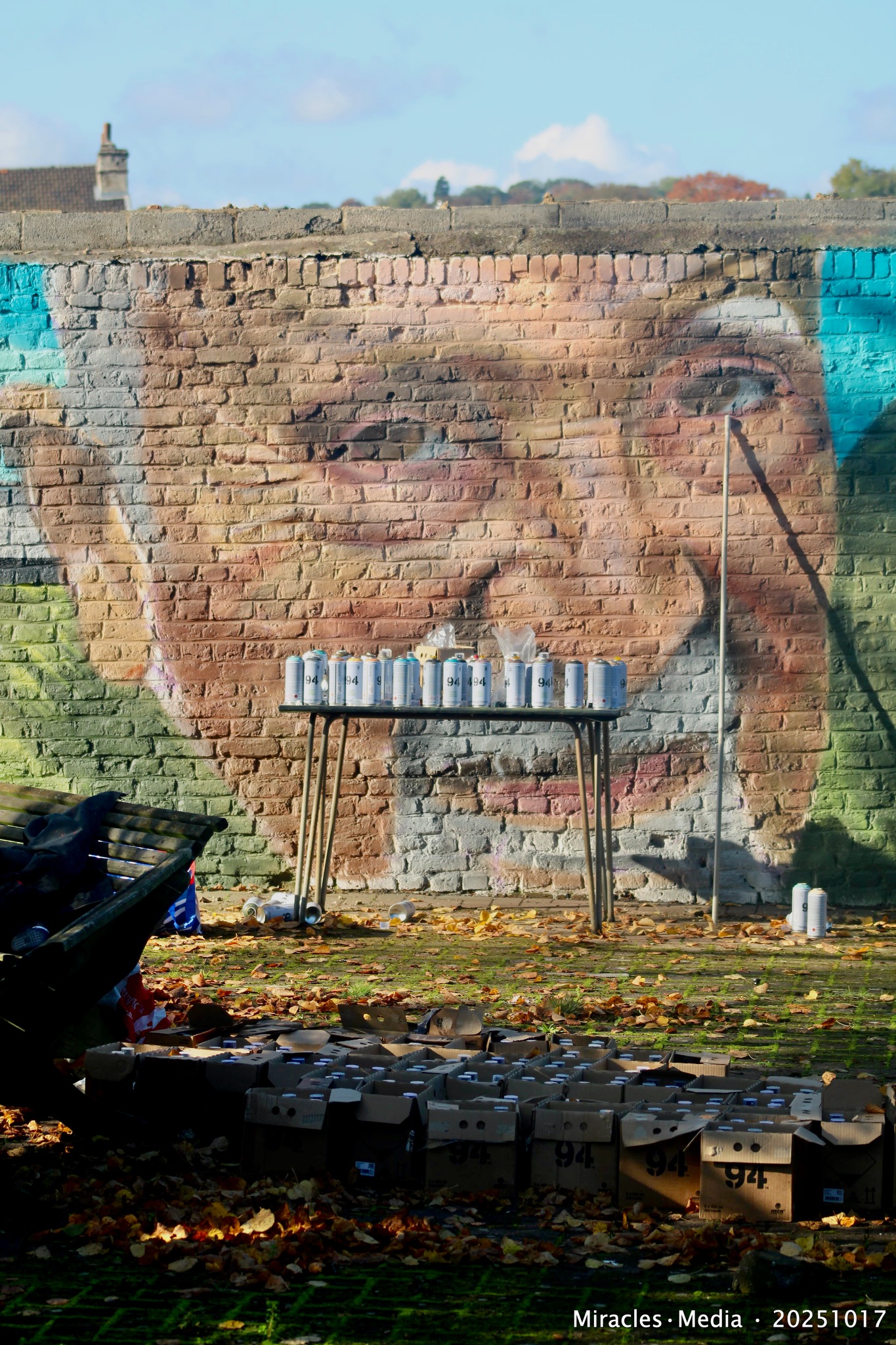
Setting up the final, 3rd, scene. Behind the scenes photo taken by Philippe Renette while Liège artist Nico Hyer is working with spray paint making the street art mural ‘Simon’ in the garden of the S2J School Center in Liège, Belgium, Oct 2024.
Behind the scenes photo taken by Philippe Renette while Liège artist Nico Hyer is working with spray paint making the street art mural ‘Simon’ in the garden of the S2J School Center in Liège, Belgium, Oct 2024.