Kuttekoven track to Auschwitz… Right after the site where Simon Gronowski escaped from the 20th convoy, ‘Transport XX’, the railway bed of this former so-called ‘Fruitspoor’ (Fruit Track) crosses the village of Kuttekoven, with – on the horizon – the Church of Saint John the Baptiser , currently with the expo ‘Witzwart’ (Whiteblack) – aka Land(es)capes from the 20th Convoy – by the local photographer Jo Struyven.
Filmed Sunday early afternoon, January 26th, 2014, while scouting the place for a reportage with Simon Gronowski later that day.
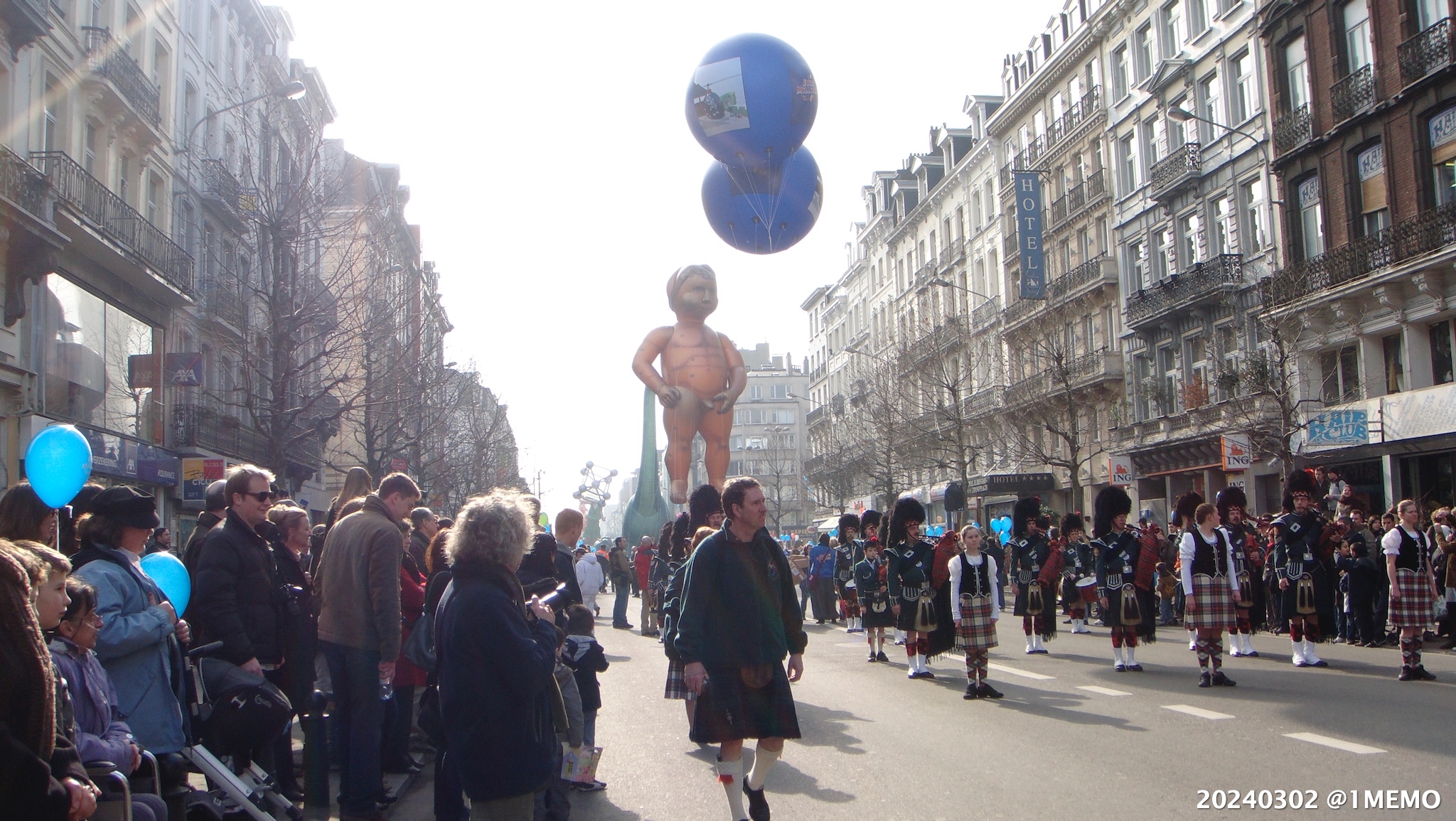
The 1st Brussels Balloon’s Day Parade and opening of the BRUSSELS 2009 BD COMICS STRIP year. The giant balloons representing Brussels folklore, Belgian comic strip (Bande dessinée) with Manneken Pis here in front in the city of Brussels , Belgium , February 28, 2009. Camera Sony DSC-T500 , Super HAD CCD 1/2.3″ .
CitySkip Featured Video – April 20, 2009 | Short film TRANSPORT XX — installation Brussels | 20240229_1 | Miracles•Media | TakeNode deab5515-d0de-453d-9c8d-f4074a39d03b
April 20th, 2009 , TRANSPORT XX — installation Brussels was featured as the most popular video at CitySkip.
CitySkip was one of the Web 2.0 communities – a network about all aspects of urban life, from city planning to street art, a forum for “cool people who dig cities” for posting messages, sharing photos and videos – at Ning.com in addition to the mainstream social networks MySpace, Facebook, YouTube. It existed from 2007 untill February 2010.
CitySkip Featured Photo – April 20, 2009 | Storyboard film TRANSPORT XX — installation Brussels | 20240229_2 | Miracles•Media | TakeNode 0af46f73-5df8-4aaf-812a-355553775dd3
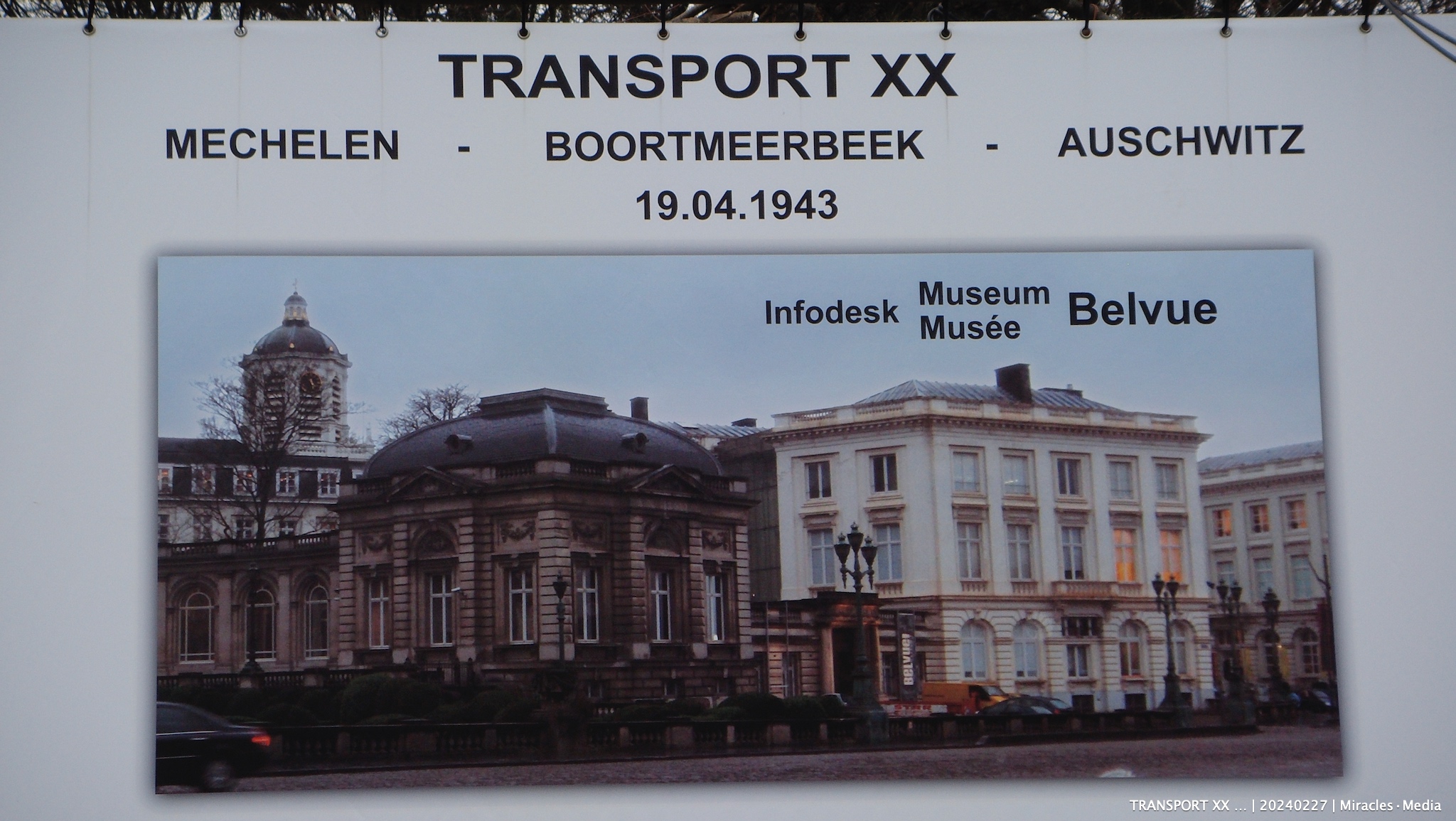
TRANSPORT XX — installation Brussels February 28th, 2009, Brussels. Day two, of my encounter with the TRANSPORT XX installation outside in the Royal park in Brussels, that presented 1200 photographic portraits of Jews deported from Malines (Belgium) to Auschwitz in 1943. One of the stills and establising video shots made that Saturday morning after finishing long take video recordings of the installation, during a walk from our hotel in the Leopold (European) Quarter via the Royal park direction the historic centre of Brussels. That weekend break in Brussels, today 15 years ago, turned out to be a turning point in my life. Two months later – April 19, 2009 – the film TRANSPORT XX — installation Brussels was published.
8. First Encounter TRANSPORT XX … | 20240227 | Michel van der Burg | Miracles•Media | URL https://michelvanderburg.com/2024/02/27 | TakeNode cf0dd64d-4512-4846-8bce-6b2d8cca24ef
9. Camera used for both photo and video (720p HD video) of the TRANSPORT XX installation in Brussels is the Sony DSC-T500 which has a CCD sensor – with global shutter – thus not affected by rolling shutter distortion while panning the installation.
Citation info : Encounter TRANSPORT XX … | 20240228 | Michel van der Burg | Miracles•Media | URL https://michelvanderburg.com/2024/02/28 | TakeNode a8317838-7470-4538-b788-40e6cc07b55a
February 28th, 2009, Brussels — my first encounter with the TRANSPORT XX installation in Brussels, that presented 1200 photographic portraits of Jews deported from Malines (Belgium) to Auschwitz in 1943. Turning point in my life. Two months later – April 19, 2009 – the film was published.
Citation info : First Encounter TRANSPORT XX … | 20240227 | Michel van der Burg | Miracles•Media | URL https://michelvanderburg.com/2024/02/27 | TakeNode cf0dd64d-4512-4846-8bce-6b2d8cca24ef
Song sung by Isabella’s great-grandchild Ameet Kanon (aka Queen George) , who explained today – Friday , December 1, 2023 – at the premiere :
“The Abbey – it’s been so special and personal keeping you to myself, but your message was always too big for me not to share it …
… This is Isabella Weinreb Castegnier. She is my great-grandmother. On April 19th, 1943, pregnant with my grandmother, she jumped out of a moving train headed to Auschwitz. She was being sent to her death, simply because she was a Jew. She understood that it was now or never, die at the destination or die trying, so she jumped. In the years to follow this epic jump, the Abbeys of Brussels became a place of hiding, survival, and safety for them time and time again.”
Silent film — Towards the end of World War I – in the summer 1918 , after the Allies defeated the Germans in the Second Battle of the Marne – large groups of Belgians and French refugees flee in front of the retreating enemy force to the neutral Netherlands.
The Dutch army and Red Cross prepared to receive a possible 100,000 evacuees in the border towns in the south of the Netherlands.
After wandering weeks in the north of France , and next crossing Belgium on foot, the first group of French refugees arrived at the Dutch border October 20, completely exhausted.
At the gate in the electric wire fence at the border to the Netherlands – the so-called ‘Death Wire’ (dutch : Dodendraad ) Dutch soldiers took them over from German escorts.
Some refugees had travelled by tram part of the route crossing Belgium to the belgian border town Molenbeersel.
At the dutch border the refugees were welcomed and ladies from relief committees provide the refugees with food and drinks on the road to Stramproy in the Netherlands.
Within days , thousands of French refugees arrive in the village of Stramproy and are transferred to the city of Weert .
On arrival in the city center of Weert the dutch army registered people and handed out soup and bread.
The weak, the sick, and maternity women were cared for by the Red Cross and taken to an aid post for further care.
The refugees were sheltered the night in buildings like convents and schools in Weert, before being housed elsewhere in the country the following days.
References
Source (video footage) : Belgische vluchtelingen 1e Wereldoorlog. Open Images | Beeld & Geluid (Sound &Vision).
Weert en het einde van W.O.-I. | Jan Henkens | Stichting Historisch Onderzoek Weert | URL http://www.showeert.nl