Miracles•Media • 20241011_1 • Harzburger Front founding field service with preacher Bruno Doehring on the Kaltental-Wiese (meadow) in Bad Harzburg, October 11, 1931.
Founding of the ‘Harzburger Front’ in Bad Harzburg, October 11, 1931 – an alliance between right-wing, nationalist, conservative elements and Hitler, to attempt to topple the Weimar government of chancellor Heinrich Brüning. The field service on the Kaltental-Wiese (meadow) in Bad Harzburg, with the Berlin Protestant preacher Bruno Doehring, on the platform (pulpit).
Miracles•Media • 20241011 2 • Nazi Party at the founding of the ‘Harzburger Front’ in Bad Harzburg, October 11, 1931. Bundesarchiv image 102 02134 • CC BY SA 3.0
The Nazi Party delegation during the field service on the Kaltental-Wiese (meadow) in Bad Harzburg. First row , left to right: Gerret Korsemann (SA-leader), Heinrich Himmler (SS Chief), Ernst Röhm (SA Chief), Franz Ritter von Hörauf, Hermann Göring (Reichsmarschall, Commander-in-Chief of the Luftwaffe, Prime Minister of Prussia), Bernhard Rust (Prussian Minister of Culture).
Notes
Last update 20241011-2228
Update 20241011-2228 : Facebook does not allow me to share todays post with images from my website michelvanderburg•com or michelvanderburg.substack (posts are removed)
Citation info : Radical Right Front • Miracles•Media • 20241011 • URL michelvanderburg.com/2024/10/11/
After the monster film congress in Berlin, a swinging Saturday night 23 March 1935 in the Amsterdam Carlton Hotel at The First Dutch Film Ball (Het Eerste Nederlandsche Filmbal) organized by the dutch film world (with Loet Barnstein, …Ehrlich…Hamburger…Willy Mullens…Max Tak…Abraham Tuschinski…Kor Postma) both to celebrate the film world and especially to collect money for their foundation ‘Bio Vakantieoord’ ( Cine Holiday Resort ) — founded in 1927 by the cinema owner Abraham Tuschinski and the Dutch Cinema Association (Nederlandse Bioscoopbond; NBB; association of cinemas , distributors and producers) to facilitate holidays in their seaside ‘castle’ on the dutch coast, each month for 90 poor lower class children living in the big cities like Amsterdam. At that time, also , twice a year (the Christmas and Easter weeks), money was collected for that Bio Holiday Resort foundation in the dutch cinemas, but because of the Great Depression donations are shifting from ‘silver’ to nickel …copper . The fundraising went hand in hand with promotional films made by the Dutch Profilti and Polygoon cinema newsreel companies . Next week people would watch this Polygoon news in the cinemas. The newspapers wrote, those present will be filmed, and if allowed by the police , the film will be shown the same night, and many movie and theater stars, filmschlagers, to be present … Harry Baur, Henriette Davids, Jopie Koopmans, Kid Johnson, Reri, Johan Kaart, Frits van Dongen, Henk Alsem.
Dutch news bulletin De groene Amsterdammer had a picture (collage?) with prominent guests (or impersonations?) : Gloria Swanson, Max Tak, Jean Harlow, Loet C. Barnstijn, Norma Shearer, Dr. M. de Hartog, Lupe Velez, Louis Davids, Joan Crawford, Greta Garbo, Sylvain Poons, Myrna Loy, Mariene Dietrich, Wethouder Boissevain, Kor Postma, Theo Ketelaar. And a dutch cinematography news bulletin reported ‘the expected foreign stars were conspicuous by their absence’.
Film edited from dutch Polygoontoon (Polygoon Hollands Nieuws) cinema news reel week 13, 1935 | Sound & Vision (Open Images).
‘Everything’ song with movie stars Dolly Haas, Pierre Blanchard and dancing star imitators Saturday night 21 March 1936 in the Amsterdam Carlton Hotel at the second annual ‘film ball’ organized since 1935 by the dutch film world both to celebrate and especially to collect money for their foundation ‘Bio Vakantieoord’ ( Cine Holiday Resort ) — founded in 1927 by the cinema owner Abraham Tuschinski and the Dutch Cinema Association (Nederlandse Bioscoopbond; NBB; association of cinemas , distributors and producers) to facilitate holidays in their seaside ‘castle’ on the dutch coast, each month for 90 poor lower class children living in the big cities like Amsterdam. At that time, also , twice a year, money was collected for that Bio Holiday Resort foundation in the dutch cinemas . The fundraising went hand in hand with promotional films made by the Dutch Profilti and Polygoon cinema newsreel companies . Next week people would watch this Polygoon news in the cinemas.
Film edited from dutch Polygoontoon (Polygoon Hollands Nieuws) cinema news reel week 13, 1936 | Sound & Vision (Open Images).
Citation info : Jazzy Film Ball 1936 | 20240121 | Miracles•Media | @michelvanderburg | TakeNode 869e9686-14c9-4f9e-802a-9aa49d670213
Rumba in 1932 with the dutch bandleader and jazz pianist Ernst van’t Hoff and his Virginians orchestra, and the dutch dance teachers Cor Klinkert & Liesje Santen. Including an introduction of this new fashion dance in Holland by Cor Klinkert — shifted to the end in this film.
Notes
In 1940, after the Netherlands became Nazi-occupied territory, Ernst van’t Hoff was ordered to start a big band to play state-approved dance music, but he played some jazz anyway, recording songs such as “Pennsylvania 6-5000” and “In the Mood”. He recorded for Deutsche Grammophon and played at the Delphi Palast in Berlin, but in 1942 he was chastened by the Sicherheitsdienst for playing degenerate music. He was repeatedly taken into custody by the Gestapo and eventually, in April 1944, was dismissed from his post and moved to Belgium.
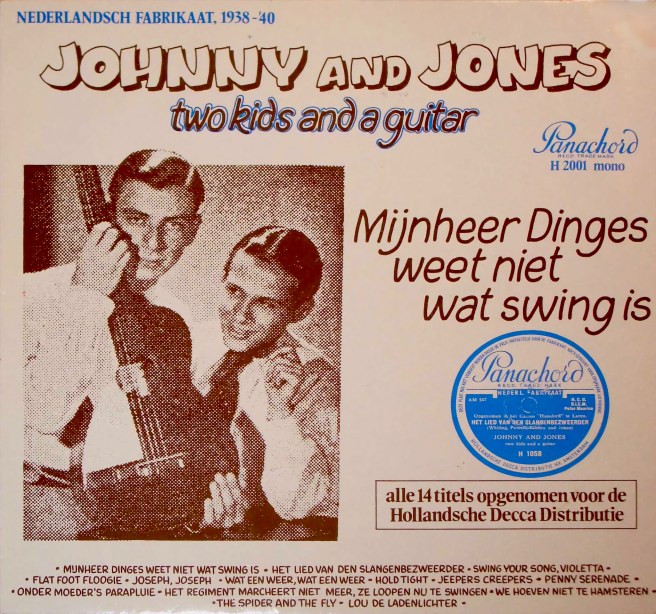
‘Swing’ by jazz duo Johnny and Jones in 1938 with their biggest hit , the dutch song “Mijnheer Dinges weet niet wat Swing is” …Mister Dingus doesn’t know what Swing and Hot (jazz) is…he’s a composer and teacher with a problem : his students skip class, he thinks jazz is banal.
“Two Kids and a Guitar”
The Amsterdam duo sang jazzy Dutch songs with a mock American accent and a parody of current events. They were the first teen idols in Holland and often on the dutch radio in the 1930s …before World War 2.
Nazi victims
Because of their Jewish origins, both ‘Johnny’ (Salomon Meijer Kannewasser, born 1916 and called Max) and his second cousin, partner, ‘Jones’ (Arnold Siméon van Wesel, born Amsterdam 1918 and called Nol) were arrested together with their wives in 1943, taken to the Westerbork transit camp, and deported Sep 4, 1944 first to the Theresienstadt camp, next the Auschwitz, Sachsenhausen, Ohrdruf and Bergen-Belsen camps. They died of exhaustion in the last days of the war in 1945.
Notes
Mijnheer Dinges weet niet wat Swing is | Two Kids and a Guitar | Johnny and Jones (1938). Lyrics from Joop de Leur. Recorded in Casino Hamdorf, Laren, Holland, November 1938. Label: Panachord (78 rpm). # H 1058 (Am 546-1). URL https://youtube.com/clip/UgkxMQtbdZ26fS4zcluq6fT7NlTbbpfuxpcx
Dinges, oh Dinges Dinges, oh Dinges Meneer Dinges die is dol op componeren Hij zit eeuwig met zijn neus in de muziek Jongelieden die bij hem piano leren Houden zich na de eerste les een tijdje ziek Want hun leraar heeft een kwaal Hij vindt jazzmuziek banaal Meneer Dinges weet niet wat swing is Hij weet niet wat saxofoon voor een ding is Omdat zijn radio kapot is Wat voor de buren een genot is Weet die Dinges niet wat swing of hot is Op een dag belde aan Dinges’ deur de wasman Die zei meneer er staat muziek op uw manchet Hou hem hier of stuur hem Theo Uden Marsman Maar meneer Dinges antwoordde toen zeer ontzet Man, ga uit mijn trapportaal In mijn huis geen jazz-schandaal Meneer Dinges weet niet wat swing is Hij weet niet wat saxofoon voor een ding is Omdat zijn radio kapot is Wat voor de buren een genot is Weet die Dinges niet wat swing of hot is Meneer Dinges maakte een grote ouverture Met een slotkoor, de finale stond in mol Toen het klaar was speelde Pietje van de buren De compositie dreunde in hot style door zijn bol Toen viel hij flauw op 1 crapaud (het kunnen er ook twee geweest zijn) En Johnny and Jones zongen door de radio Meneer Dinges weet niet wat swing is Hij weet niet wat saxofoon voor een ding is Omdat zijn radio kapot is Wat voor de buren een genot is Weet die Dinges niet wat swing of hot is Domme Dinges Oh, domme Dinges Weet jij nu nog niet wat jazz voor een ding is Als jij je goed wil amuseren Moet je de hi-de-ho studeren Meneer Dinges, probeer de swing ‘s Dinges, oh Dinges Dinges, oh Dinges.
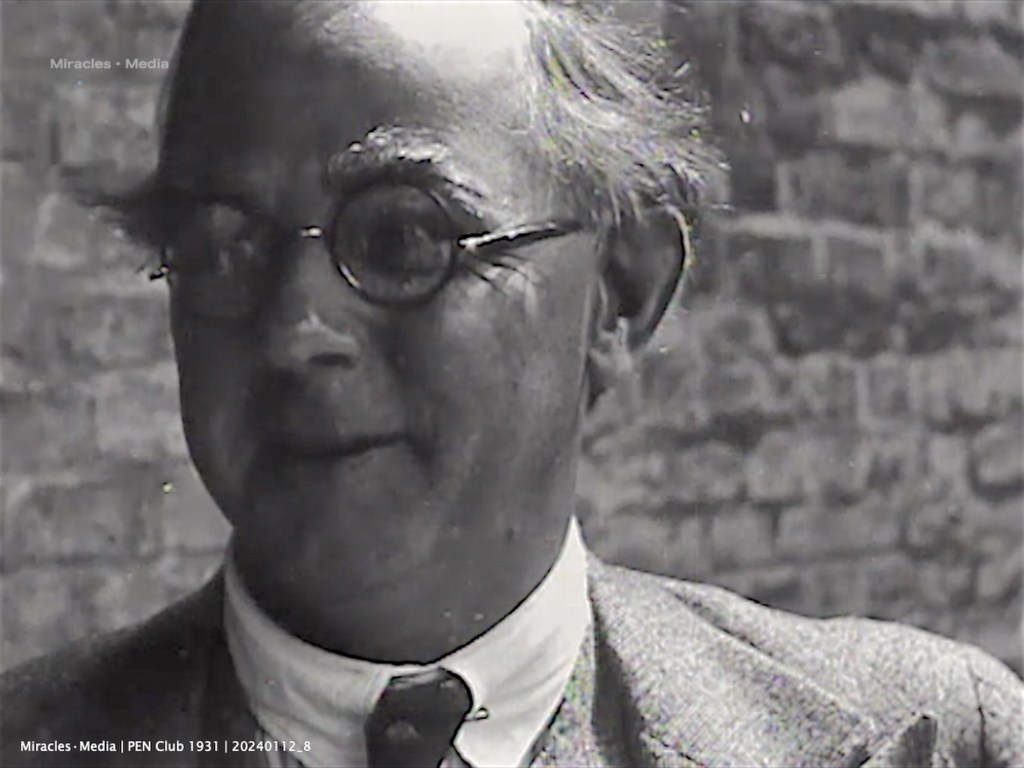
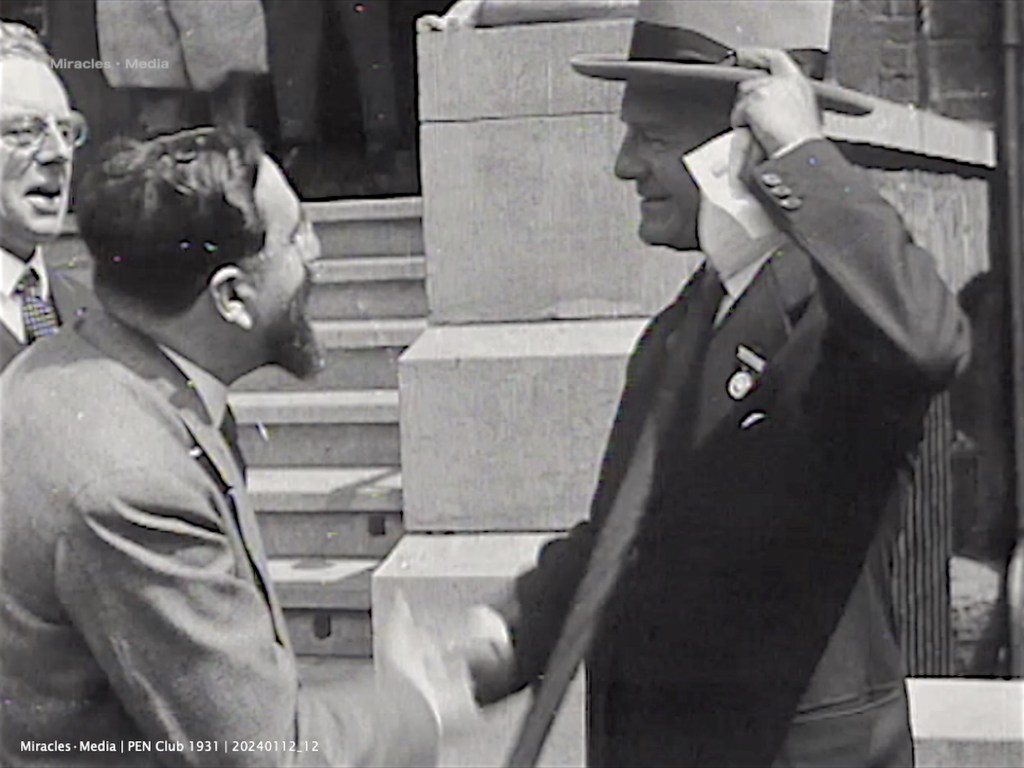
The 9th Annual International Congress of the PEN Club — Poets, Essayists, Novelists — in 1931 in the townhall of Rotterdam, Holland, with a focus on the Flemish writer Felix Timmermans, Dutch writer Dirk Coster (?), Dutch poet P.C. Boutens, Dutch writer Anthonetta (Top) Naeff, and in the final scene : the English author John Galsworthy (Nobel Prize Literature 1932) talking with the Dutch journalist and writer Lord Jan Feith, and the French author, critic and literary historian Benjamin Crêmieux — secretary of the French section of the PEN Club (see below).
From its inception in 1921, PEN was intended to be a non-political organisation. However, with the rise of the Nazis in Germany, and of fascism in Spain and Italy, it became increasingly difficult for PEN to stay away from the political; and that year 1931, the PEN Committee made a public ‘Appeal to All Governments’, which protested the plight of those imprisoned for political or religious reasons.
In 1940 Benjamin Crêmieux joined the French underground and became a leader of the Maquis resistance fighters. In April 1943, two Gestapo agents detained Crémieux in Marseilles. He was arrested, imprisoned, and deported to Nazi Germany, where, in April 1944 he was executed in the Buchenwald concentration camp.
Film edited from dutch Polygoon Hollands Nieuws cinema news reel week 14 , 1931 | Sound & Vision (Open Images). Citation info : PEN Club 1931 | 20240112 | Miracles•Media | @michelvanderburg | TakeNode bed03c07-cc96-40cd-b917-0fc693bb55cd
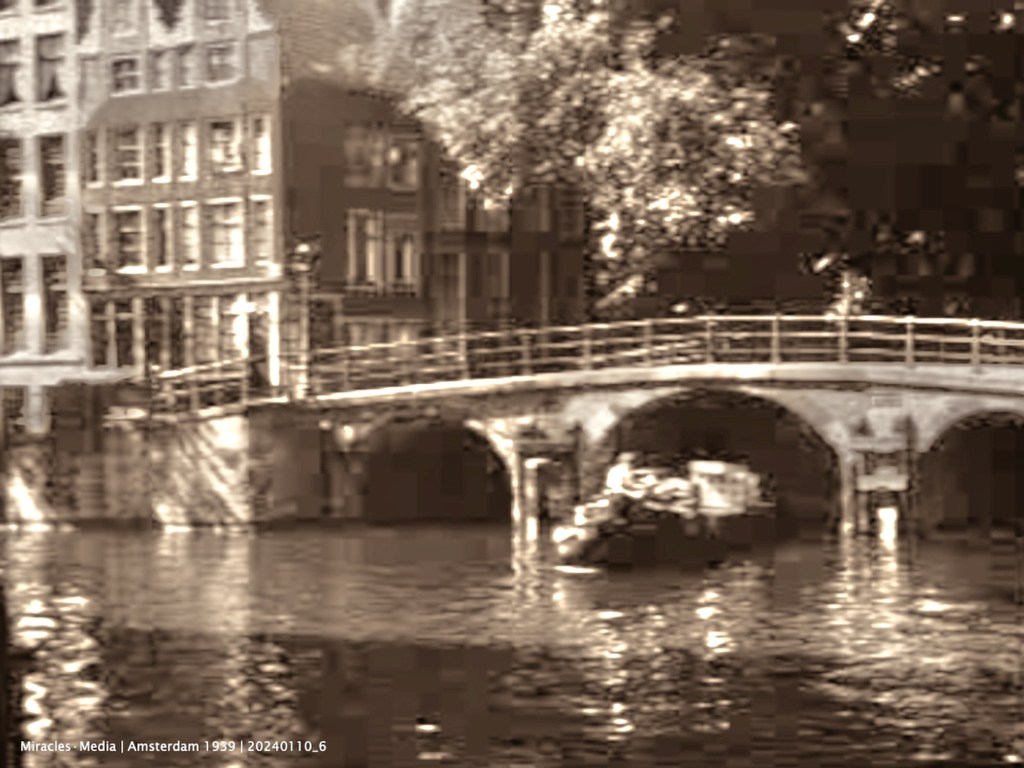
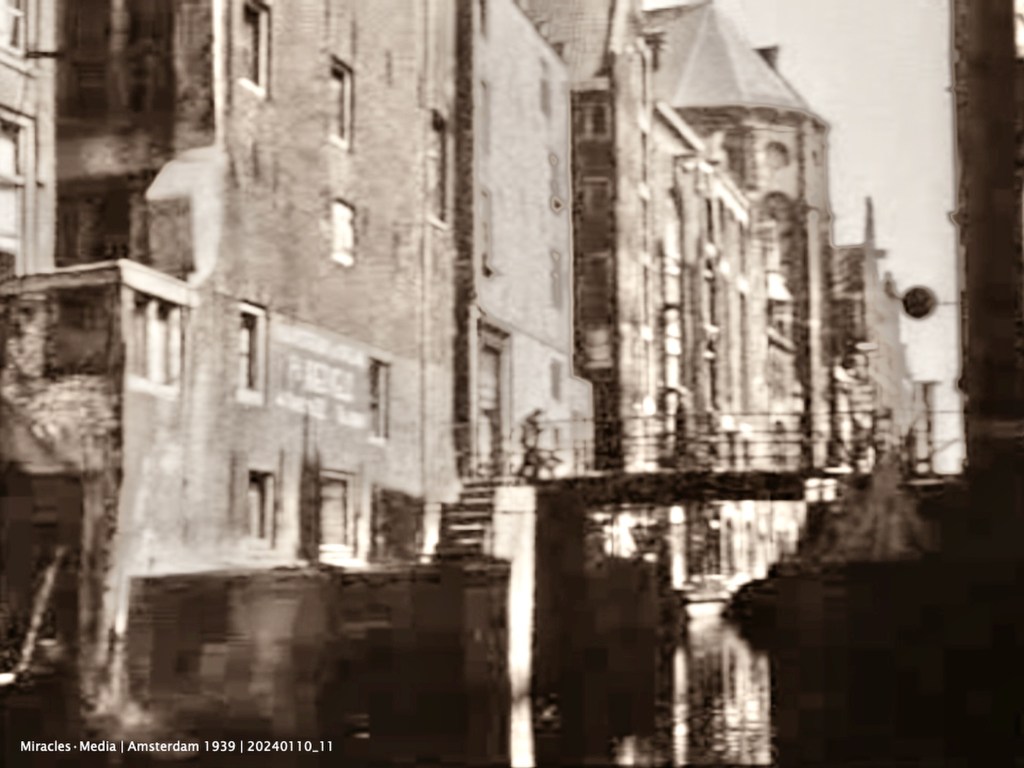
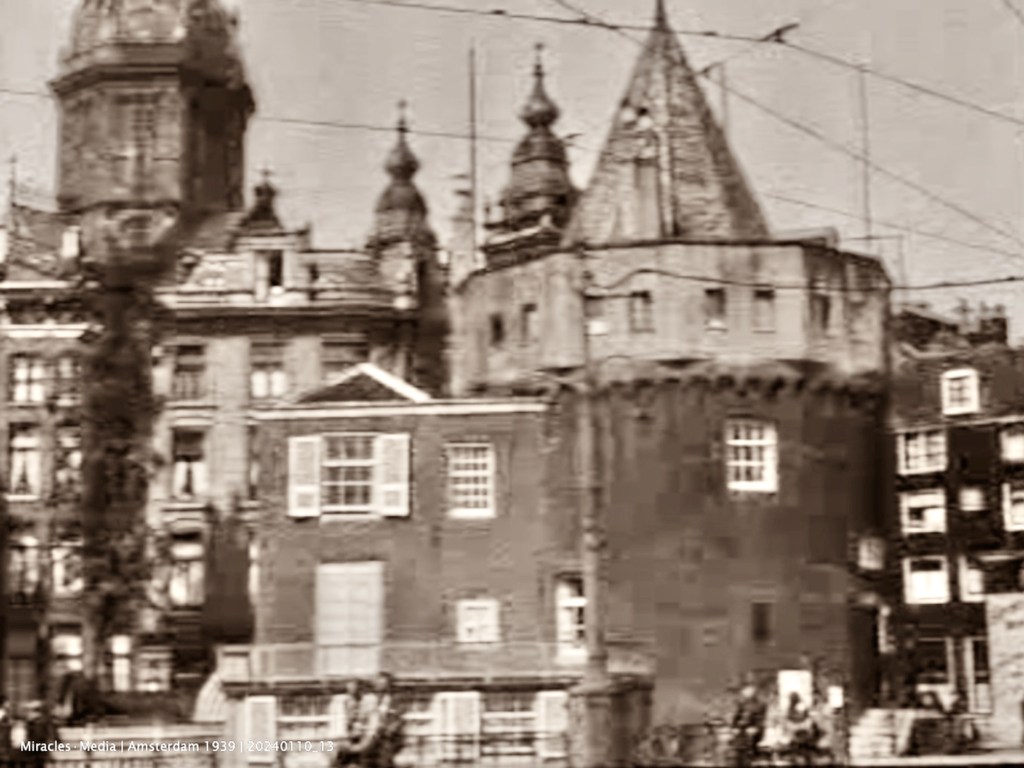
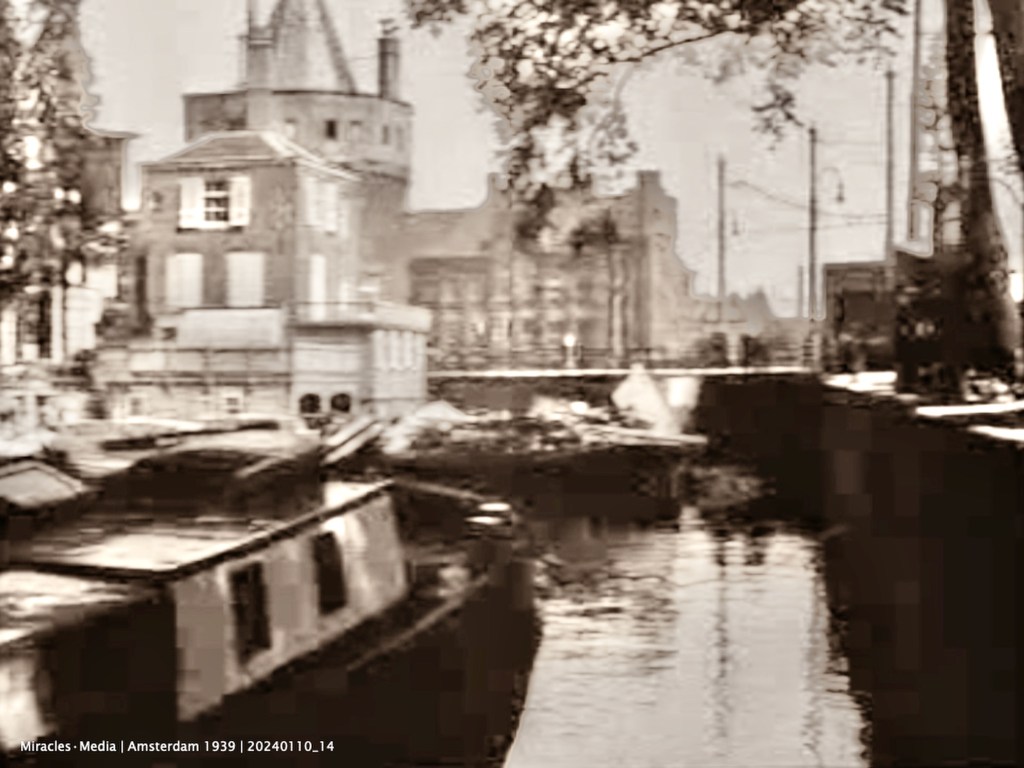
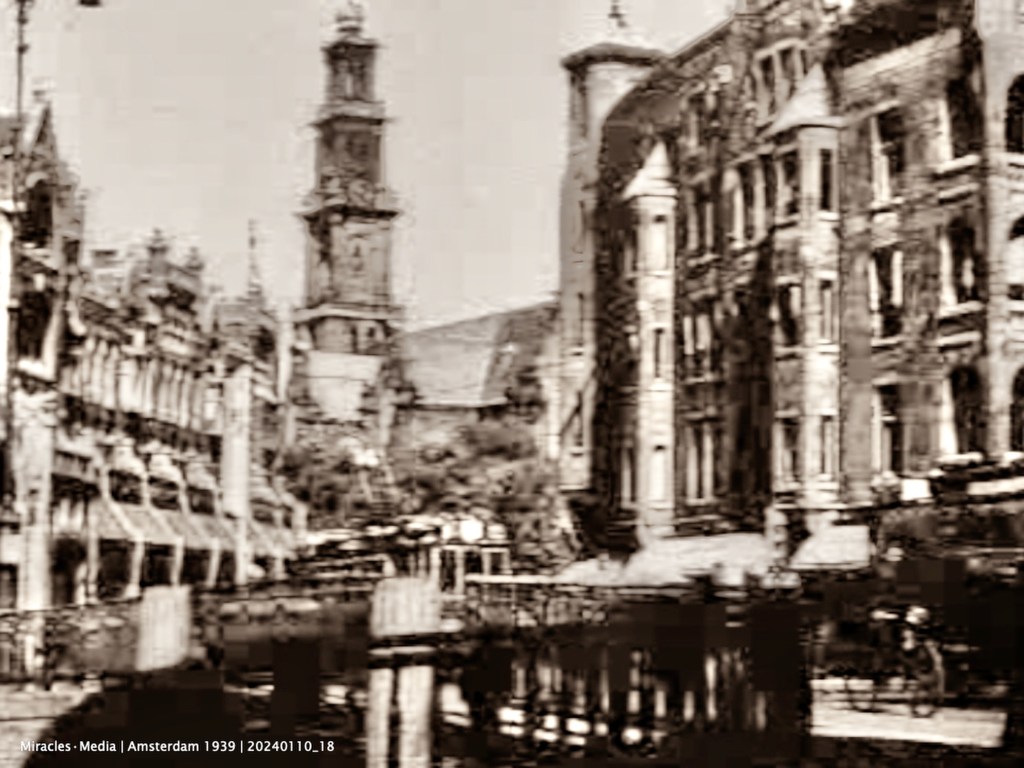
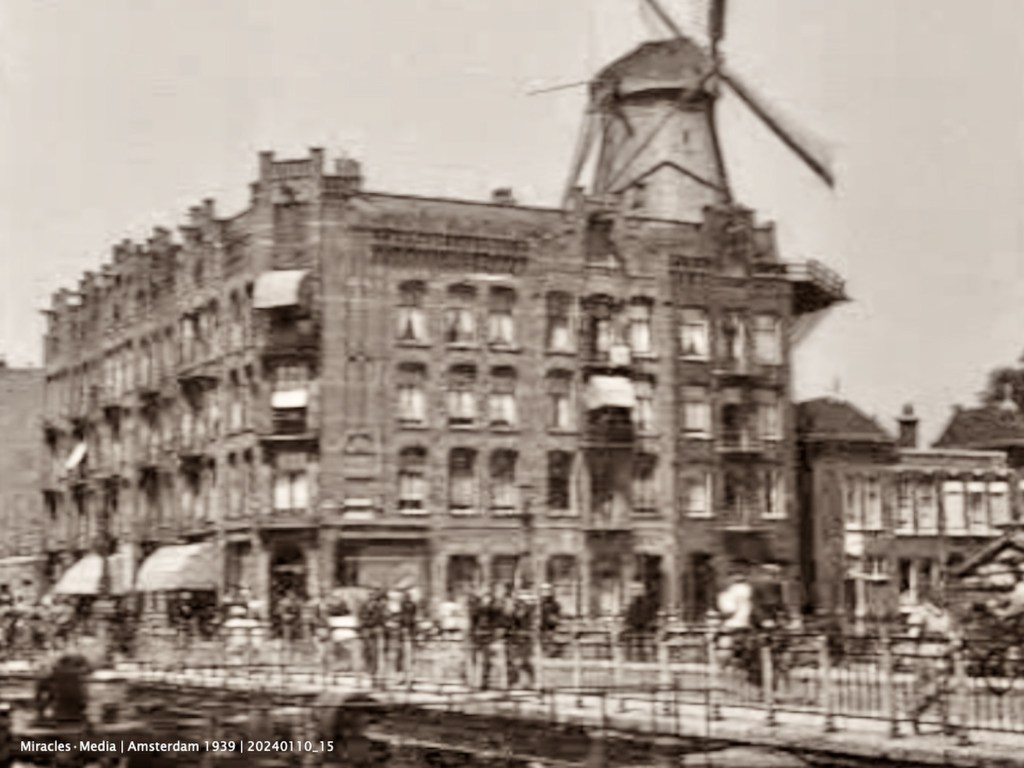
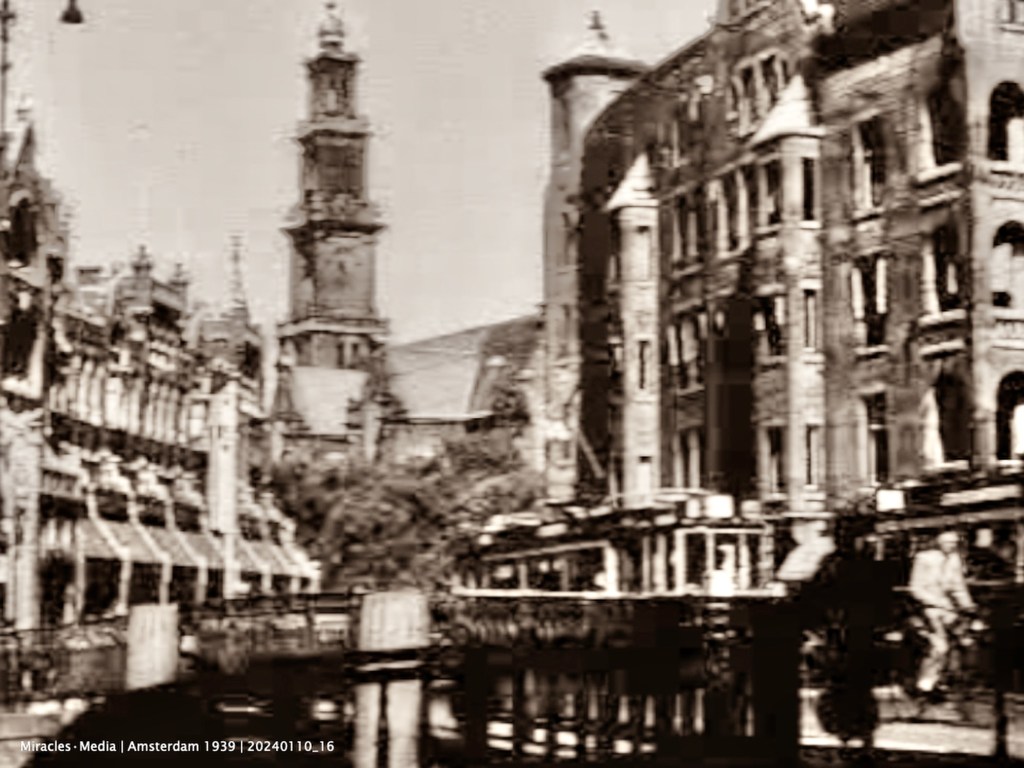
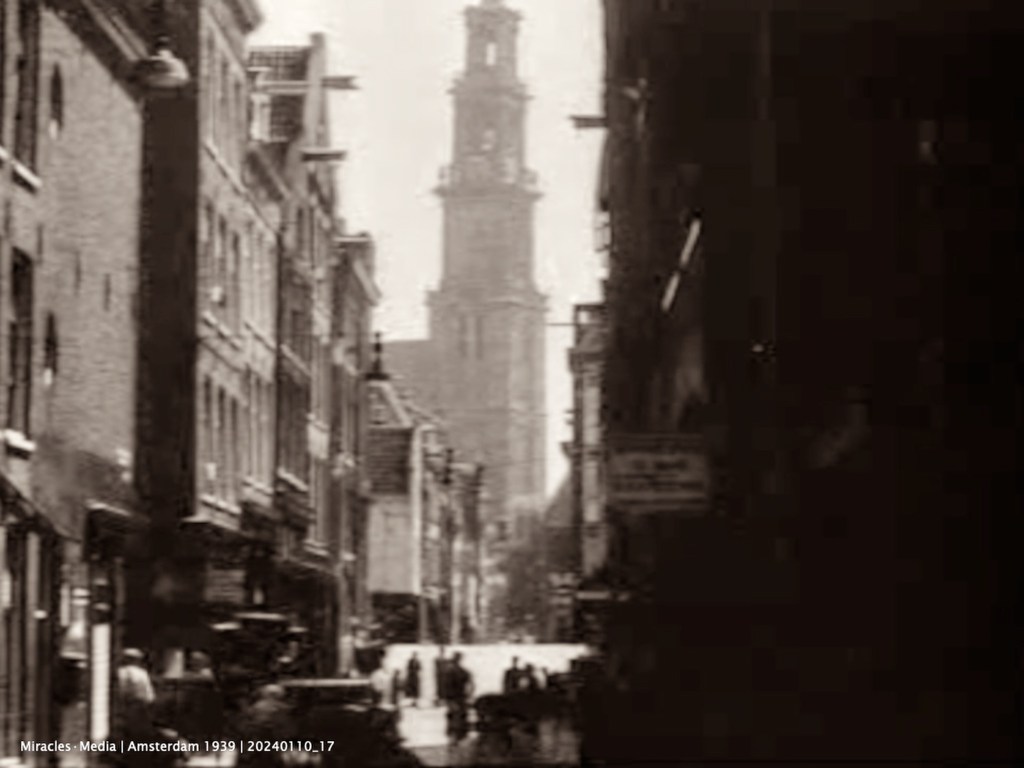
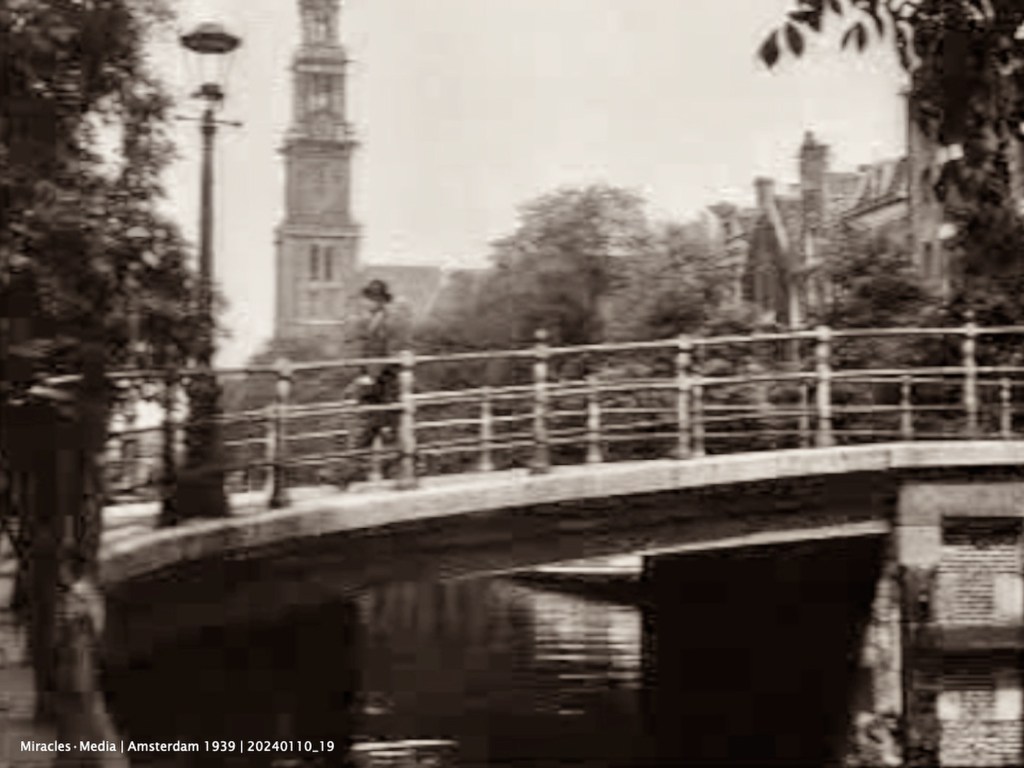
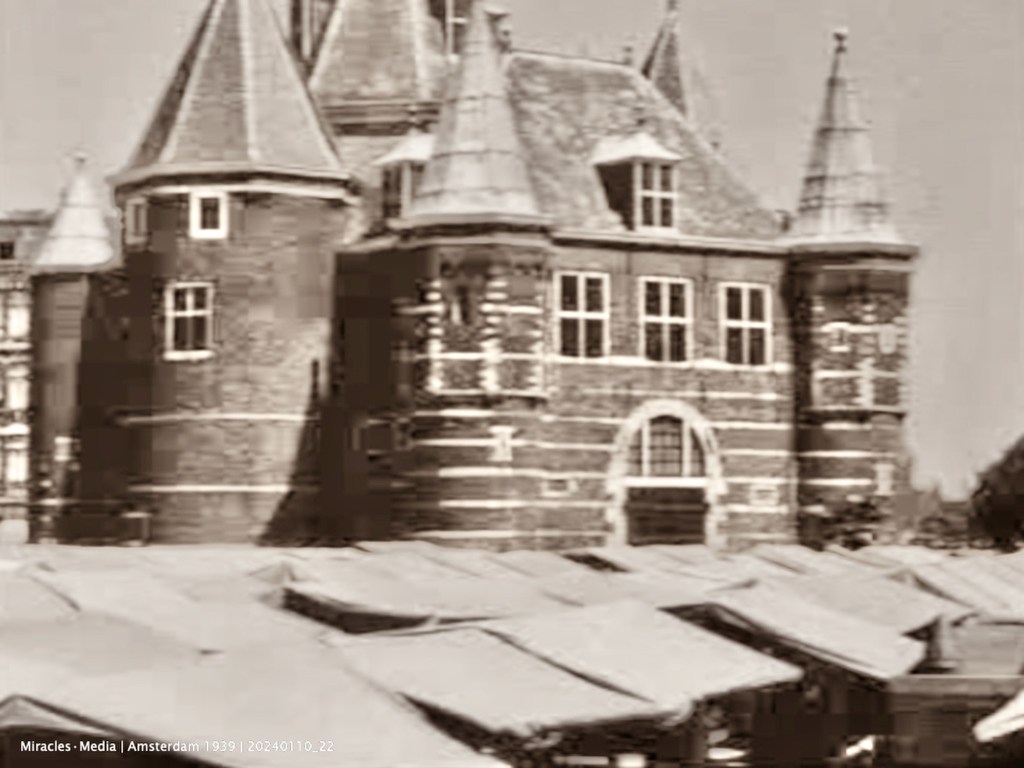
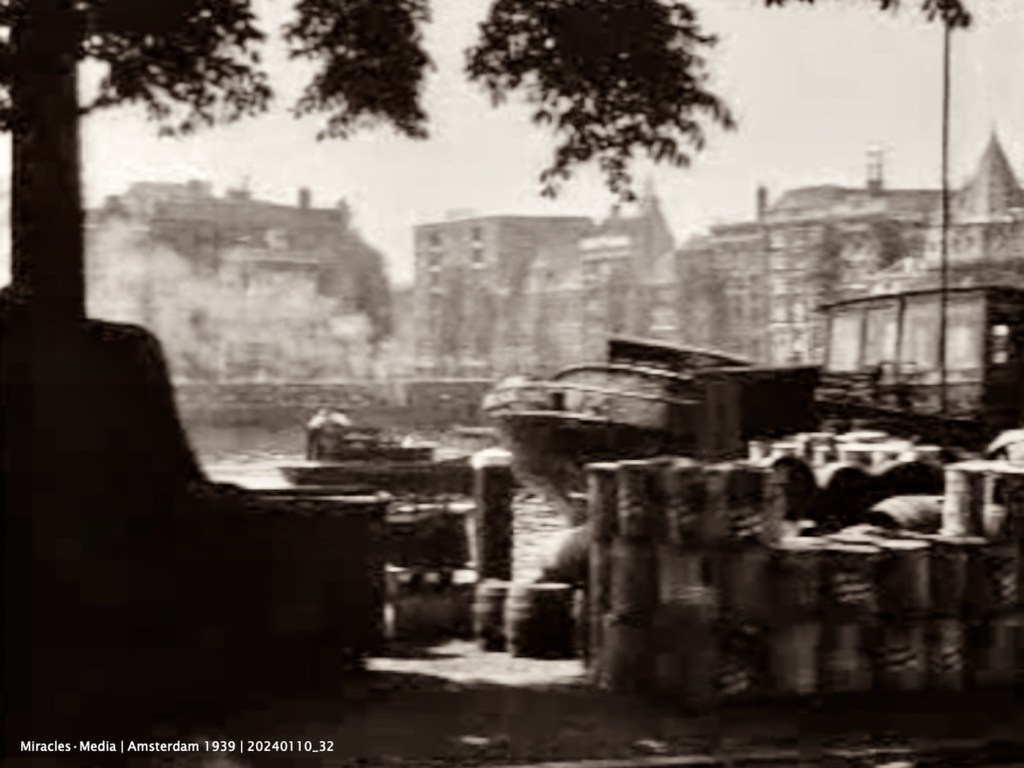
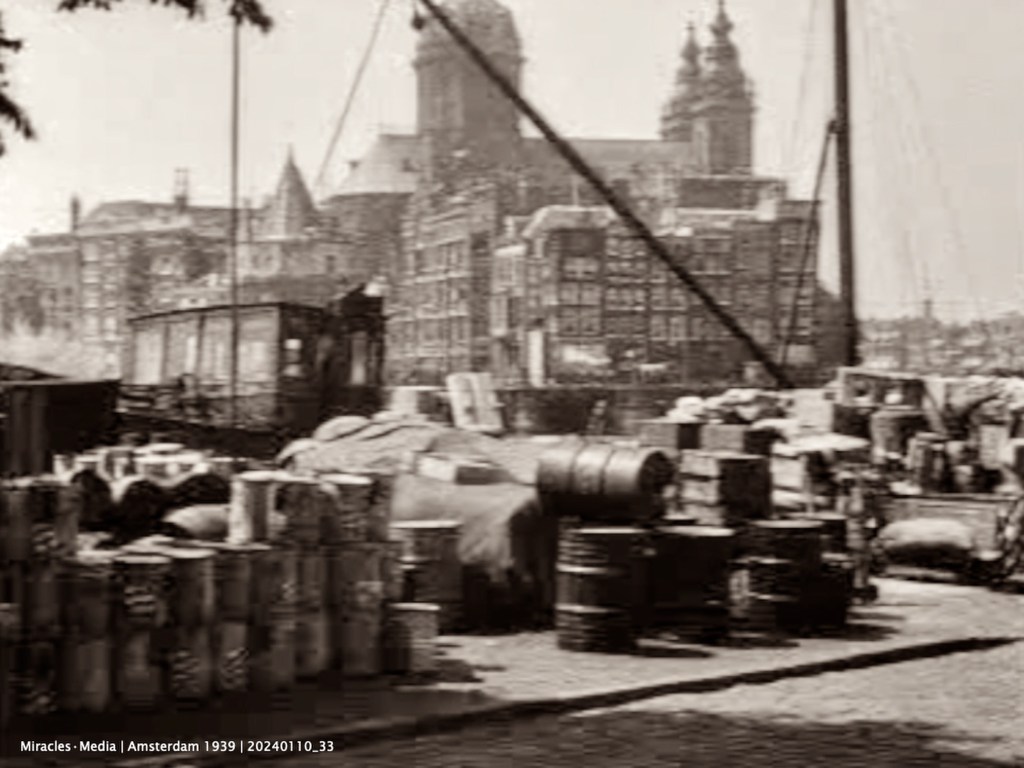
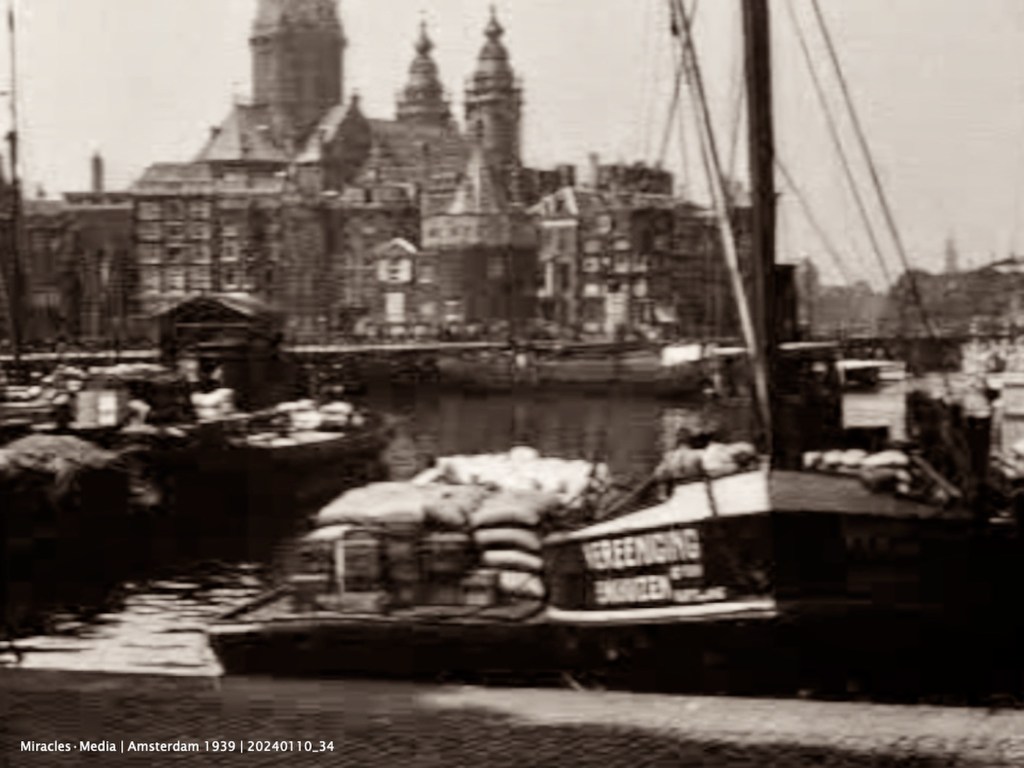
Screenshots from the film Amsterdam 1939 a trip through the canals and along the old facades of Amsterdam in 1939 , published first by Polygoon in 1940 a few months before World War II. Images are discussed in detail in the film.