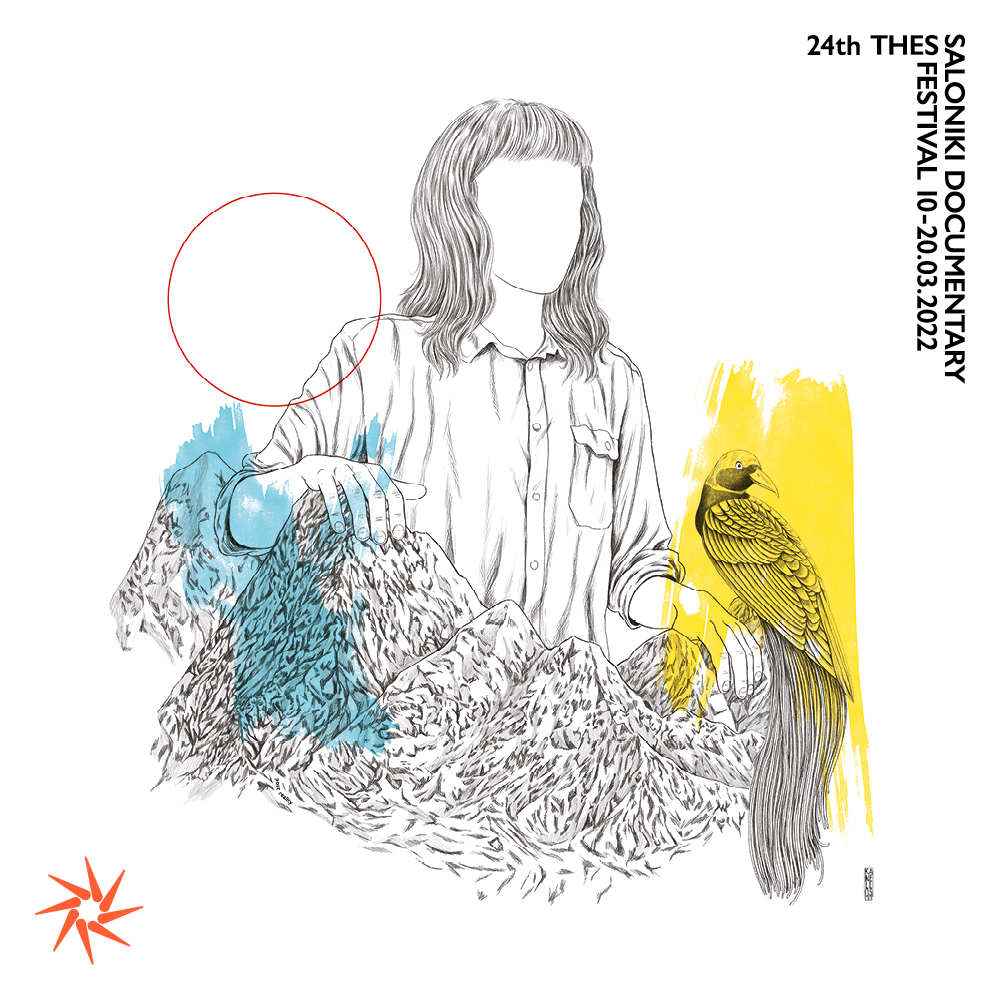
Jews of Corfu: A population group that was an important part of the island, participated in the formation of its history, and contributed to the development of trade and economy. But the tragic events that befell them were added to the black pages of human history.
The Jews of Corfu a film by Mirjan Gjergjevica (direction, cinematography, editing, production) & Maria Boua (script, music, sound, production). Narration by Yannis Andriotis, with Zaharias Matathias • Linos Sousis • Nina Vital.
‘Helping this production was absolutely worth it …’ – Michel van der Burg 😉
The Jews Of Corfu | 20220310
News
Monday , March 14, 2022 – Review ‘The Jews of Corfu ‘
Powerful documentary , both visually and the sound – filmed in an innovative way, combining ambient sound and stories told outdoors with the Mediterranean background – in public spaces, the streets and Corfu synagogue – with an excellent film score – that is especially impressive how it manages to accompany the viewer in scenes of holocaust atrocities. The history of the Corfiot Jews – a mixture of Pugliese (from south Italy) and Romaniote (from Greece) is told in vivid detail from the Middle Ages to today. I watched this fast paced film twice, last premiere weekend, to fully grasp the whole picture.
Netherlands’ Fight World War II | 20220303 | Settela•Com | Three years of the Netherlands’ fight against the axis 1940-1943
Film about the Dutch urge for freedom in the Second World War, which is said to be rooted in Dutch history. This is followed by images of the pre-war Netherlands with typical views (including the Rijksmuseum, the Night Watch (Nachtwacht), the Muntplein square in Amsterdam, the viaduct of the Hofplein line, new industrial residential areas, Amsterdam Airport (Schiphol), the Afsluitdijk dike, the Dutch East Indies, Curaçao and the Hague Peace Palace (Vredespaleis). A look back at the mobilization with Hr.Ms. Tromp, artillery and soldiers along the waterline. The German invasion including Rotterdam, Moerdijk bridges and Zeeland. HMS Queen Wilhelmina on arrival in England accompanied by baron C. de Vos van Steenwijk. A look at the contribution of the Dutch East Indies. Negotiation with Japanese envoy. Mobilization with images of new material. The declaration of war after the attack on Pearl Harbor. Bombardment of Catalinas on [Japanese submarine]. Glenn-Martin’s Bombardment of [Japanese Ships]. The Battle in the Java Sea. The Japanese invasion. Training center for Dutch people in Canada and England and the training of Dutch pilots in America. Images of the army in Suriname during the war with Marmon-Herrington tank. Training in the Netherlands Antilles. Convoy protection. Torpedo boat (TM-8) in view. Patrolling in the West Indies and the transfer by President Roosevelt of the submarine fighter Hr.Ms. Queen Wilhelmina to HMS Queen Wilhelmina on 30 July 1942. The merchant navy fleet of the Netherlands. Images from the occupied Netherlands.
World War II documentary produced in 1944 by the Netherlands Information Bureau (N.I.B.) – an Agency of the Netherlands Kingdom, in het Rockefeller Center in New York , USA . Propaganda – Dutch diplomacy – during World War II for international public (especially the USA) aiming at international cooperation in the fight against the Axis alliance – that is : against Germany, Italy, and Japan . Source : Collection Netherlands Institute of Military History (NIMH).
Westerbork Film 🎦 2021 | The complete remastered edition of the Westerbork Film , here annotated online in CC – by Michel van der Burg as an ongoing integrating resource.
The original display edition of the restored Westerbork film was edited only for black bar removal conform 4:3 format and insertion of a title card intro and outro. Annotations are added as CC – closed captions.
Source : digital display edition of the restored Westerbork film compilation made available in Public Domain by Sound and Vision from May 18, 2021. Courtesy of Collection NIOD held at the Netherlands Institute for Sound and Vision. Source File : Westerbork (gerestaureerd) | Display edition. Retrieved (20210518) PID: URN:NBN:NL:IN:20-ZCRLTUSICOSDILNR .
Credit line :
Westerbork Film 🎦 2021 | 20220302 | Michel van der Burg | Settela•Com – CC BY 4.0
Description & Introduction film
The Westerbork Film – a silent film – is unique…the only authentic documentary footage filmed in a Nazi camp – a waiting room for death in the Netherlands for more than 100,000 Jews, and Roma, Sinti, and resistance workers. A documentary filmed spring 1944, in the Westerbork camp, by the German-Jewish camp prisoner Rudolf Werner Breslauer – the camp photographer, and commissioned by camp commander, SS-Obersturmbannführer, Albert Konrad Gemmeker.
The Westerbork camp was set up in 1939 before the war in Holland, by the Dutch government, as a central refugees camp for Jewish refugees from Nazi-Germany.
July 1942 , when the Nazi’s decided to start ‘Entjüdung’ of the Netherlands, they took over the camp for use as transit camp for deportation of mainly Jews, and Roma, Sinti, and resistance people to eastern Europe.
March 2, 1944 , SS leader Rauter in the Netherlands reports to Germany’s SS Reichsführer Himmler : the Netherlands are ‘Judenfrei’. March 5, 1944 the camp is ‘Arbeitslager’ – a work camp – when
Rudolf Breslauer starts filming the daily life of the Westerbork prisoners. After Breslauer films the deportation of Jews, Roma and Sinti to Bergen-Belsen and Auschwitz on May 19, 1944 the filming stops. The film is also not edited. In 1986 the dutch RVD Information Center makes a first montage in 4 acts of the footage into what is known now as the Westerborkfilm. In 2017 the film dossier – film and production documents – enter the UNESCO Memory of the World Register. Spring 2019 the Westerbork Film – full version (RVD) was published online and annotated – https://settela.com/2019/06/05/westerbork-film-full-version-rvd/ .
Spring 2019 the dutch Sound & Vision , EYE Filmmuseum and NIOD (former RIOD) started a major restauration project and search for all footage of the Westerbork film in all archives.
Two reels with original negative film were discovered by image researcher Gerard Nijssen.
All restored unique shots using both the camera original film and film copies (prints – when no original is known) were used for the new restored Westerbork film compilation made available as ‘display edition’ – with no title actually – by Sound and Vision | NIOD on May 18, 2021.
This newly restored 2021 version of the Westerbork film , 145 min long – was prepared for presentation here in 4:3 format (black bars removed) with a 6 seconds title card superimposed both at the start and the end of the film (superimposed on the originally 30 sec intro text and 17 sec outro text sections by Sound & Vision), in order not to change the length of the film – to allow exact reference to the original file’s timeline.
Westerbork Film 🎦 2021 | 20220302 was first uploaded March 2, 2022, and is now after annotation of the online film made public May 7, 2022 together with a short introductory film : Westerborkfilm Introduction | 20220507 | Michel van der Burg | Settela•Com | An introduction film by Michel van der Burg on the Westerbork film with a first showing May 7, 2022 in METRO Kinokulturhaus , Vienna , Austria at the DOCUMENTS OF DESTRUCTION | DOKUMENTE DER VERNICHTUNG Symposium 6-7 May, 2022 curated by Florian Widegger. Presented by Filmarchiv Austria in cooperation with the Vienna Jewish Film Festival and the Mauthausen Memorial.
Annotations
On YouTube called Chapters – there limited number due to limit number of characters in description
NOTE : for this shot right after the Degen toddlers, Breslauer had to move all the way back to last cars of the transport to Auschwitz – May 19, 1944 – E198 Roll 2/4
00:17:03 Outbound transport to Bergen-Belsen and Auschwitz – May 19, 1944 – Original Reel E198 Roll 2/4
00:17:49 Gemmeker group passing camera in the middle
00:17:55 Outbound transport to Bergen-Belsen and Auschwitz – May 19, 1944 – Original Reel E198 Roll 2/4
Original Reel E198 Roll 3/4
00:18:13 Outbound transport to Bergen-Belsen and Auschwitz – May 19, 1944 – Original Reel E198 Roll 3/4
00:18:51 On the right : SS-Obersturmführer Albert Gemmeker , Commander of Westerbork transit camp
00:18:56 Outbound transport to Bergen-Belsen and Auschwitz – May 19, 1944 – Original Reel E198 Roll 3/4
Special thanks to Valentine Kuypers , curator at Sound and Vision, image researcher Gerard Nijssen, and the Westerbork Memorial Center researchers Bas Kortholt , Koert Broersma and Gerard Rossing. Aad Wagenaar, research journalist and author of book Settela.
Work on the 2021 Westerbork film edition has been a joint effort of four dutch organizations : the Dutch media archive Sound & Vision, Camp Westerbork Memorial Centre , the NIOD Institute for War, Holocaust and Genocide Studies, and the Jewish Cultural Quarter in Amsterdam.
The Westerbork film, May 7, 2022 at the symposium DOKUMENTE DER VERNICHTUNG of the Jüdischen Filmfestival Wien , the Mauthausen Memorial , and Filmarchiv Austria.
Settela, het meisje heeft haar naam terug (1995-2007) by Aad Wagenaar ISBN 9789089751898 / English translation by Janna Eliot ‘Settela’ (2005-2016) ISBN 978-0-9933898-2-5 .
Documentary film Settela, gezicht van het verleden by Cherry Duyns (VPRO, 1994).
De Westerborkfilm 📽️🎞️ | Nederlands Instituut voor Beeld & Geluid | YouTube Apr 8, 2021 URL https://youtu.be/8Y-A4BkWY18
Gerestaureerde filmbeelden Westerbork (1944) (May 18, 2021) Nederlands Instituut voor Beeld en Geluid | Youtube (accessed 2021 Jul 19) URL: https://youtu.be/-zCmr6PSNcI
Kamp Westerbork gefilmd (May 2021) Koert Broersma, Gerard Rossing (editor Gorcum B.V., Koninklijke van) ISBN 9789023257622.
‘Kamp Westerbork gefilmd’ by Koert Broersma and Gerard Rossing (editors Dirk Mulder and Ben Prinsen) ISBN 9023232658
Dawn Skorczewski & Bettine Siertsema (2018): ‘The kind of spirit that people still kept’: VHA testimonies of Amsterdam’s Diamond Jews, Holocaust Studies URL: https://doi.org/10.1080/17504902.2018.1516361
Diamantkinderen: Amsterdamse Diamantjoden en de Holocaust . Translated title of the contribution: Diamond Children: Amsterdam’s Diamond Jews and the Holocaust. Siertsema, Bettine (2020) Uitgeverij Verbum ISBN 9789493028340
Fabian Schmidt (2020): The Westerbork Film Revisited: Provenance, the Re-Use of Archive Material and Holocaust Remembrances, Historical Journal of Film, Radio and Television, URL : https://doi.org/10.1080/01439685.2020.1730033
Westerbork Film Scripts | 20220508 | Michel van der Burg | Settela•Com
Westerbork Film Correspondence | 20220509 | Michel van der Burg | Settela•Com
ANONYM | Girl with the headscarf … | 20210416 | Michel van der Burg | Settela•Com
Westerbork Film in ‘Proces Rauter’ 1948 (20190520) Michel van der Burg | Settela•Com
Westerbork Film 🎦 2021 | 20220302 | Michel van der Burg | Settela•Com | Display edition film annotated online in CC
Westerborkfilm Introduction | 20220507 | Michel van der Burg | Settela•Com | Introduction by Michel van der Burg on the Westerborkfilm screening in METRO Kinokulturhaus , Vienna , Austria at the DOCUMENTS OF DESTRUCTION | DOKUMENTE DER VERNICHTUNG Symposium 6-7 May, 2022 curated by Florian Widegger. Presented by Filmarchiv Austria in cooperation with the Vienna Jewish Film Festival and the Mauthausen Memorial.
20220511 Info on order of shots added in post Westerbork Film Shots Order | 20220511 . Based on that info , here the Annotations list now has sub-headings like ‘Original Reel E325’ etc.
20220604 – Format changes credit line , references
“From Buchenwald to Hollywood, The Robert Clary Story” – A film by Karen and Richard Bloom and Michel van der Burg .
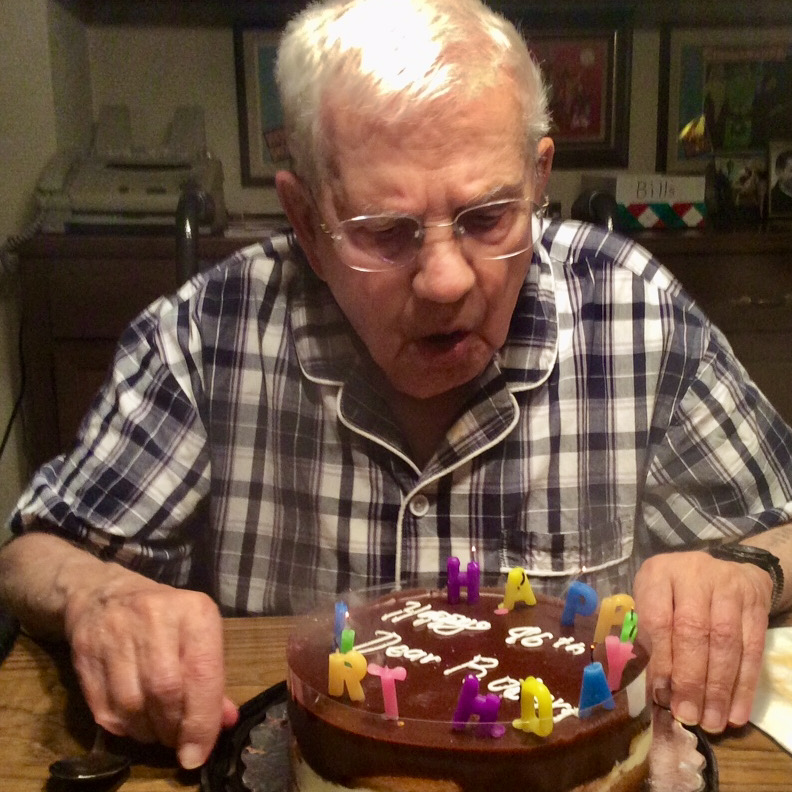
March 1, 2022 – Celebrating Robert Clary’s 96th birthday today announcing this special gift :
Watch online free now our full feature documentary “From Buchenwald to Hollywood, The Robert Clary Story” – A film by Karen and Richard Bloom and Michel van der Burg.
Synopsis
The truly inspiring story of Holocaust Survivor, Robert Clary (born Robert Max Widerman, March 1, 1926 in the heart of Paris, France) who was liberated from Buchenwald on April 11, 1945 by the U.S.Army. Discovered singing in a Paris cabaret and brought to the United States where he became internationally known for his portrayal of Corporal Louie LeBeau on the long running hit TV show Hogan’s Heroes as well as for his Broadway, soap opera and movie roles, his record albums, paintings, autobiography and as an impassioned Holocaust spokesperson.
After the world premiere at the FLIFF (2018) in Hollywood (Florida, USA), and screening at the Paris (2021) Sydney & Melbourne (2021) and Berlin (2022) Lift-Off Film Festivals, the “The Robert Clary Story” film is now made public worldwide available for free watching via their YouTube channel by Richard Bloom Productions (richardbloomproductions•com).
Special thanks to Robert Clary, and Christopher Ray Allison (interview – cinematography) and Nathaniel Link (interview – sound) and many many others…
Watch Free Online – The Robert Clary Story | 20220301
Transport XX Take 1 | 20160127 – 20220127 | Michel van der Burg | Miracles•Media | SILENT FILM : One long take – slowed down – of the TRANSPORT XX installation in Brussels, Feb 2009.
Details : For this film I have chosen the first take of my Feb 2009 video recordings that were used before in the making of the short film “TRANSPORT XX – installation Brussels” – a work published online Apr 19, 2009 at michelvanderburg•com .
The TRANSPORT XX installation in Brussels was organised from 27 January to 15 March 2009 by the BELvue Museum in collaboration with the JMDR / Dossin Barracks (Kazerne Dossin). The photographic portraits were displayed outside in the Royal park in Brussels (opposite the Royal Palace). In this way passers-by were confronted with 1,200 faces of the victims.
This event commemorated the release of Auschwitz-Birkenau (Poland) on 27 January 1945.
Remastered 2022 edition of post ① memo 20160127 ~ Transport XX Take 1.
For optimal clarity this one-take is a 10 times slowed down version. Note : stabilization was not used in this edit , to prevent zooming in , and loss of portraits at the edge of the image.
Brussels’ Afghans Flee Taliban | 20210821 | Afghan refugee interview* by Kristen Cattell (USA) & Michel van der Burg (Holland) at the ‘Afghan camp’ inside the Béguinage Church in Brussels, Belgium – March 17, 2014 .
*One Afghan gentleman – who asked to remain anonymous – told us about his journey to Brussels. Interview anonymized by reconstruction using a disguised voice-over and visual and auditory imagery (organ Félix Snyers) captured March-April 2014 in the Church of Saint John the Baptist at the Béguinage in Brussels.
“When you are working with America or other organizations in Afghanistan the Taliban is a big problem. I was with the forces in Kandahar Province for one year. This was a big, big company in Kandahar. After one year the Taliban send some letters to my family saying, ‘Your son is working for the enemy.’ And they said, ‘He will come and he will work with us.’ Then I went to my home. And after the Taliban found out about me, I came to Iran, then I went to Europe, and this country.”
NL vertaling – translation dutch :
“Als je voor Amerika of andere organisaties in Afghanistan werkt, is de Taliban een groot probleem. Ik was een jaar bij de strijdkrachten in de provincie Kandahar. Dit was een groot, groot bedrijf in Kandahar. Na een jaar stuurden de Taliban enkele brieven naar mijn familie waarin ze zeiden: ‘Uw zoon werkt voor de vijand.’ En ze zeiden: ‘Hij moet bij ons komen werken.’ Ik ging naar huis. En toen de Taliban van mij wist, ging ik naar Iran, en vertrok vandaar naar Europa, en dit land.”
Reportage by Kristen Cattell (USA) & Michel van der Burg (Holland).
Remastered 2nd edition of film first published in 2015 (Béguinage shadows | 20151115).
Brussels’ Afghans Flee Taliban | 20210821 | michelvanderburg•com
In 1935 the nomadic Sinti families Steinbach were photographed by Dutch photographer Jan de Jong in their caravan camp on the heath around the Heksenberg hill in the southern Netherlands. Jan de Jong was working for De Spaarnestad publishing house of the dutch weekly, catholic, illustrated magazine “Katholieke Illustratie” , that used his high quality pictures in this May 1936 spread (REF 1), with a somewhat simple romanticized short story on their origin and culture – entitled ‘Zwervers van geboorte’ or ‘Born nomad’ (my translation).
Members of other Steinbach families, I recognized in this magazine spread in the caravan window image with caption ‘Buurpraatje’ (my tr. ‘Neighbor chat’), are Anna Steinbach in the window (born 24 March 1916 – killed 31 July 1944 in Auschwitz) talking with Maria Steinbach (born 6 Nov 1912 – killed 31 July 1944 in Auschwitz) .
The 15 year old Willy (Celestinus) Steinbach (born 13 Feb 1929 in Heerlen) was deported together with his 9-year old sister Settela ((Anna Maria) Steinbach (born 23 Dec 1934 in Buchten), their brothers, sisters (Willem, Elisabeth, Johanna, Philibert, Florentina, Willem, Anna), and mother Toetela (Emilia) Steinbach (born 23 March 1902 in Antwerp, Belgium), with other Steinbach and other nomad families – all together ca 245 Sinti and Roma and ca 450 Jews – on May 19th 1944 from the dutch Camp Westerbork to Auschwitz — and some, like Willy, later to other camps.
Toetela’s eldest child Moekela (Magdalena; born 14 Sep 1922) had gone to Belgium and had been deported earlier – 15 Jan 1944 – with her 6 months old baby Jeanette – Toetela’s granddaughter – on the Z-Transport from Mechelen to Auschwitz, were they were murdered on arrival.
Note : I found Jeanette on the Transport lists in the image bank of Kazerne Dossin, Mechelen – but not yet her mother Magdalena.
Settela’s father Moeselman (Heinrich) Steinbach (born Nov 11, 1901 in Gründorf in Germany) died alone of grief June 6, 1946 in Maastricht in the Netherlands – his wife and 10 children had not survived the camps.
Their deporatation was filmed for the Westerbork Film by Rudolf Breslauer (REF 2).
This post is based on the story of the Steinbach families as researched in detail and published in book (REF 3) and film (REF 4) by Rob Hendrikx and Marouska Steinbach.
Update May 20, 2021 – Minor corrections in text , plus more detailed family information added. Poster image film replaced with clearer portrait image of Willy.
Below – because of space and linking constraints on social media – the references, source and full credits on websites only – eg. of Settela•Com
CREDITS & REFERENCES
1 – Source – photography Jan de Jong – in ‘Zwervers van Geboorte’ | Katholieke Illustratie 7 mei 1936 No 32 (Haarlem, Spaarnestad) via Delpher archive URL https://bit.ly/3f1jv90
2 – Westerbork Film | Full version RVD 1986 | 20190605 | Michel van der Burg | Settela•Com (accessed 2021 May 19) URL: https://wp.me/p91enH-1x
3 – Story based on book : Settela en Willy en Het geheim van de Heksenberg (2e druk) by Rob Hendrikx and Marouska Steinbach (Heerlen : Historisch Goud – Rijckheyt, centrum voor regionale geschiedenis en Stichting Historische Kring “Het Land van Herle”, April 2017) ISBN 9789082241686. URL https://www.landvanherle.nl/product/settela-en-willy-en-het-geheim-van-de-heksenberg-2e-druk/
4 – Story based on Films : ‘Settela en Willy’ by Rob Hendrikx & Marouska Steinbach | lifepowervideo YouTube user | (accessed 2021 May 19) Deel 1 Historische Gebeurtenissen link https://youtu.be/1wI9_vt9RlY | Deel 4 Holocaust Slachtoffers https://youtu.be/wVta6g6Mo1o
Willy & Settela | Born Nomad | 20210519 | Michel van der Burg | Settela•Com
Updates
20220604 – Format changes credit line , references