Islet purification from bench to bedside • @1MEMO_20260623

by Michel van der Burg , June 23rd, 2026

Abstract

Michel van der Burg developed the Iodixanol-UWS islet purification method at the Leiden University Medical Center, starting with UWS-based density gradients in 1989, switching to Iodixanol-UWS after a 1995 meeting with Terry Ford, refining and sharing the technique with islet centers worldwide with Nycomed/Axis-Shield collaboration (1997–2001), and bringing it into clinical human islet transplantation in Leiden (1999–2002), where a simplified Visipaque-ViaSpan version became the GMP standard.

Summary

This memoir traces the development of the Iodixanol-UWS islet purification method, authored by Michel van der Burg, covering roughly 1989 to the early 2000s.

Origins (1989–1994): The story begins at Leiden University Hospital, where Van der Burg started using UW-Solution (UWS) for islet isolation in 1989 and began experimenting with UWS-based density gradients to purify islets — testing Pentastarch, Dextran, and ultimately Percoll added to UWS. Percoll-UWS became the standard method through his PhD work, completed in 1994.

The Iodixanol breakthrough (1995–1997): A chance 1995 conversation with researcher Terry Ford at an IPITA congress in Miami introduced Van der Burg to Iodixanol (marketed as Optiprep), a newer, more practical density agent than Percoll. He began designing an Iodixanol-UWS gradient, finalizing a protocol by November 1995 and adopting it in the Leiden lab in 1996 for pig islet xenotransplant research, where it dramatically improved islet yield and viability.

Spreading the method (1997–1998): After presenting results at the 1997 IPITA congress in Milan, Van der Burg fielded requests from islet centers worldwide (Geneva, Oxford, Chicago, Minneapolis, and others), sharing his protocol and helping coordinate Pentastarch supply. This led to collaboration with Nycomed (later Axis-Shield), producers of Optiprep, including biochemists Terry Ford and John Graham and product manager Bjørn Henriksen. Together they co-authored a series of published “Application Sheets” (1998–2020) detailing the method, and explored alternative formulations (iodixanol powder vs. Optiprep, with/without double-strength UWS).

Clinical translation (1999–2002): In 1999, the LUMC approved a clinical islet transplantation program, and Van der Burg’s Iodixanol-UWS gradient was used for the first human islet purifications in Leiden. Parallel efforts with Nycomed aimed to commercialize a ready-made product (“IsletPrep”). By 2001, the method was simplified further for GMP cleanroom use in Leiden, mixing clinically certified Visipaque (iodixanol) directly with ViaSpan (UWS) — the approach that became a first standard operating procedure for the Leiden clinical islet transplantation project, and was integrated recently into the automated “PRISM” technique.

Throughout, the piece blends personal recollection (meetings, letters, an enthusiastic 1997 email from Bernhard Hering) with a detailed technical and institutional history of how a laboratory innovation moved from animal models to international clinical practice.


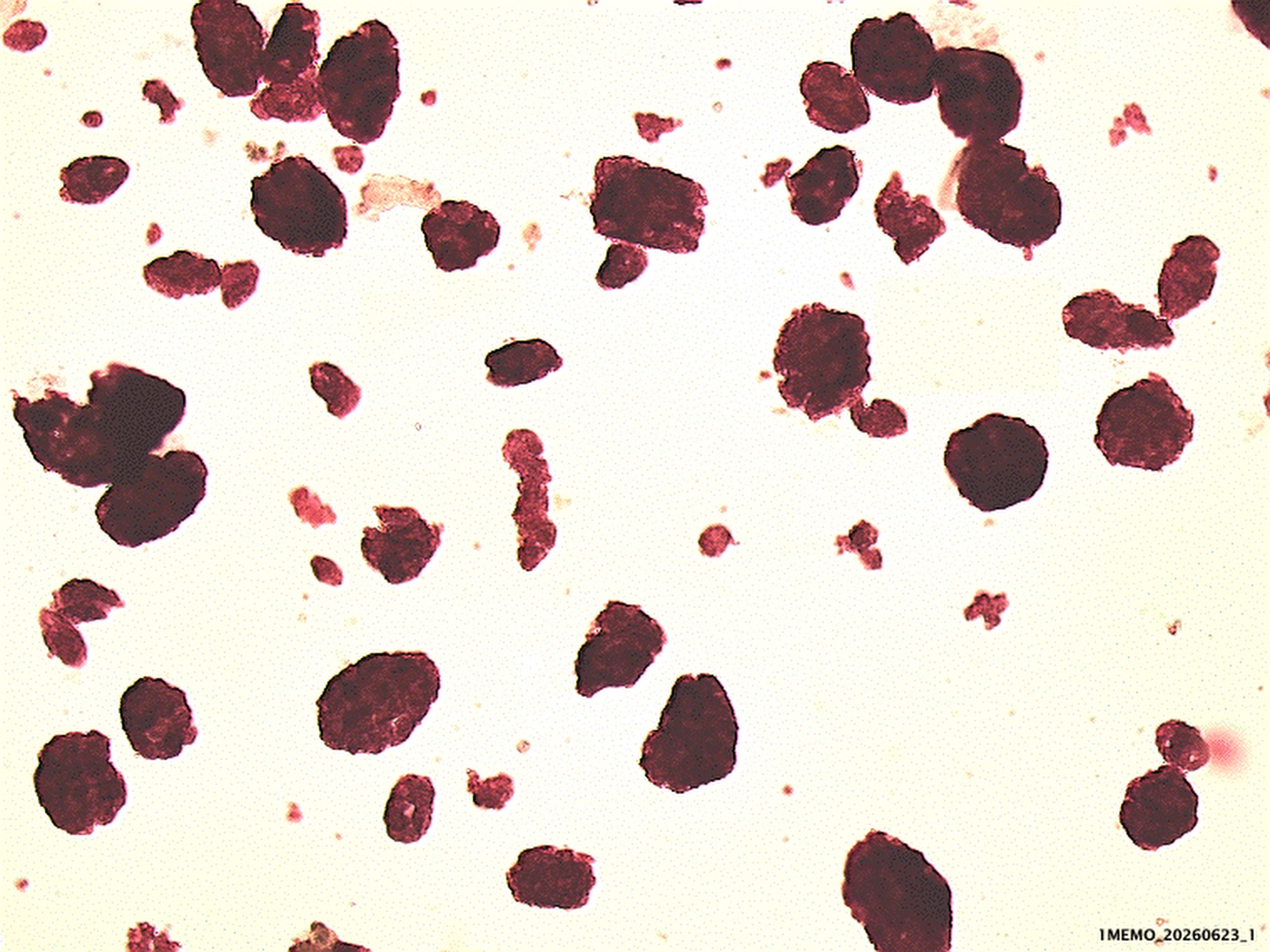
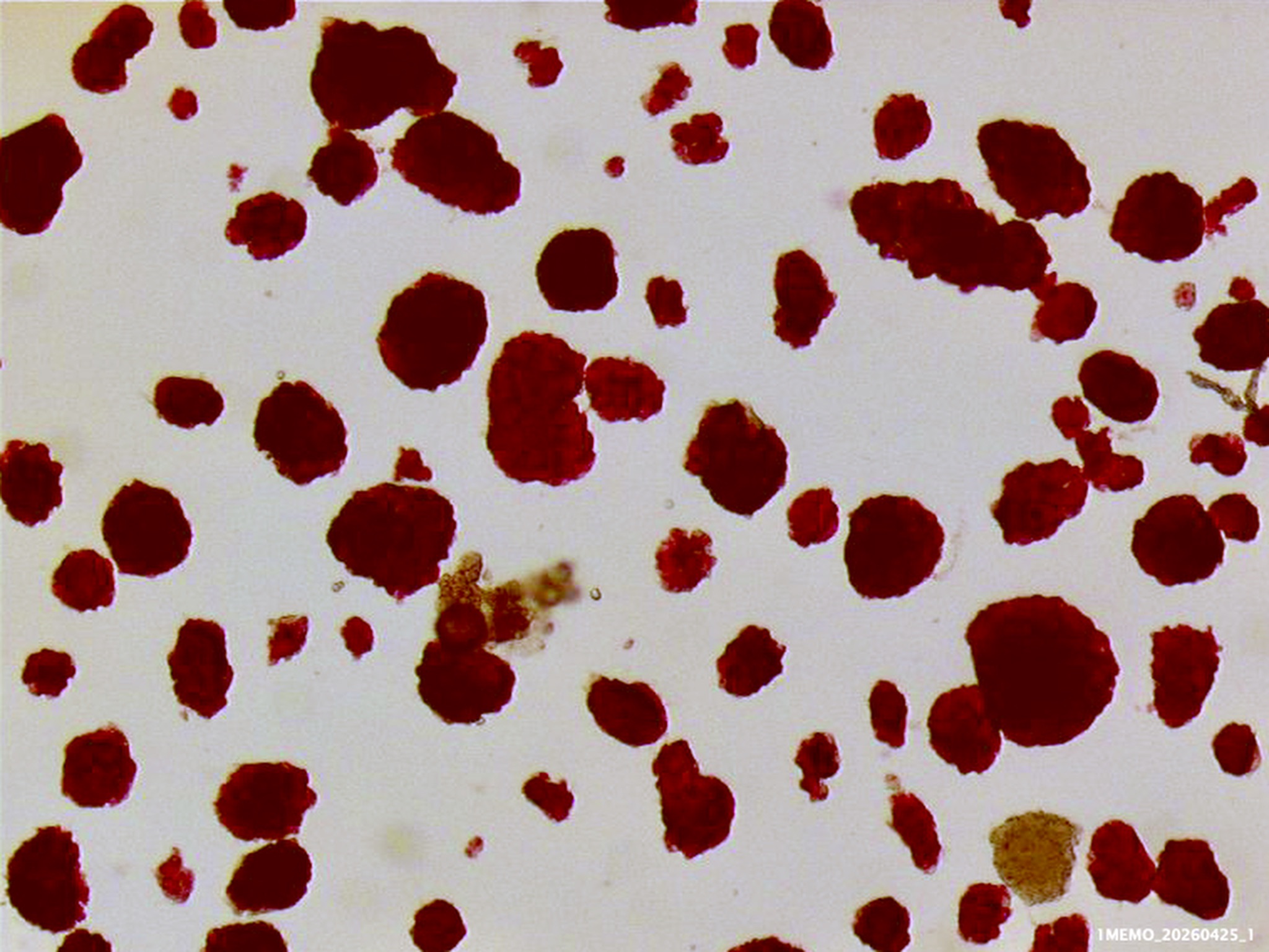
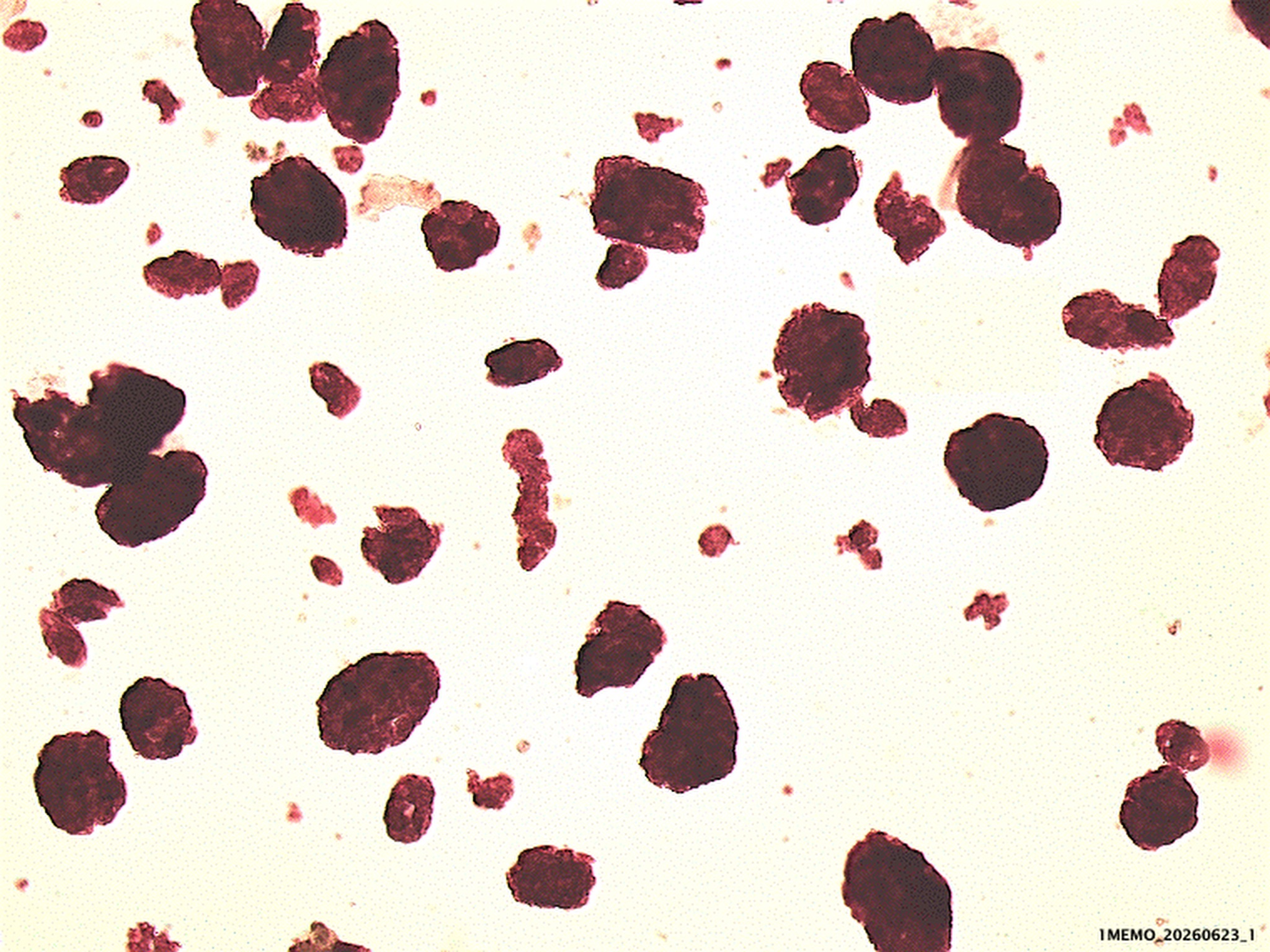
Human Islet Purification in the Iodixanol-UWS solution • 1MEMO_20260623_1 • Michel van der Burg • Miracles•Media • TakeNode 30b1f224-f963-480e-838e-42b4f8dfa559 • Human islets of Langerhans in suspension (selective red labeling of islets with dithizone stain, magnification 40x) prepared by purification in the Iodixanol-UWS solution by Michel van der Burg in the Human Islet Laboratory of the LUMC at the start of the clinical islet transplantation project March 1999, in Leiden, Holland.

Introduction

In order to obtain pure islets of Langerhans from the pancreas for transplantation of the islets in diabetics, a new highly successful islet purification solution was developed from 1995 using a mixture of Iodixanol in a (modified) University of Wisconsin solution, the so-called Iodixanol-UWS solution.

Using this Iodixanol-UWS solution for purification of the islets from pancreases greatly improved the outcome, showing virtually no loss of highly purified viable islets — allowing successful islet purification for transplantation, first from 1997 in our animal models (1), and next from 1998 in human islet isolation (2,3,4).

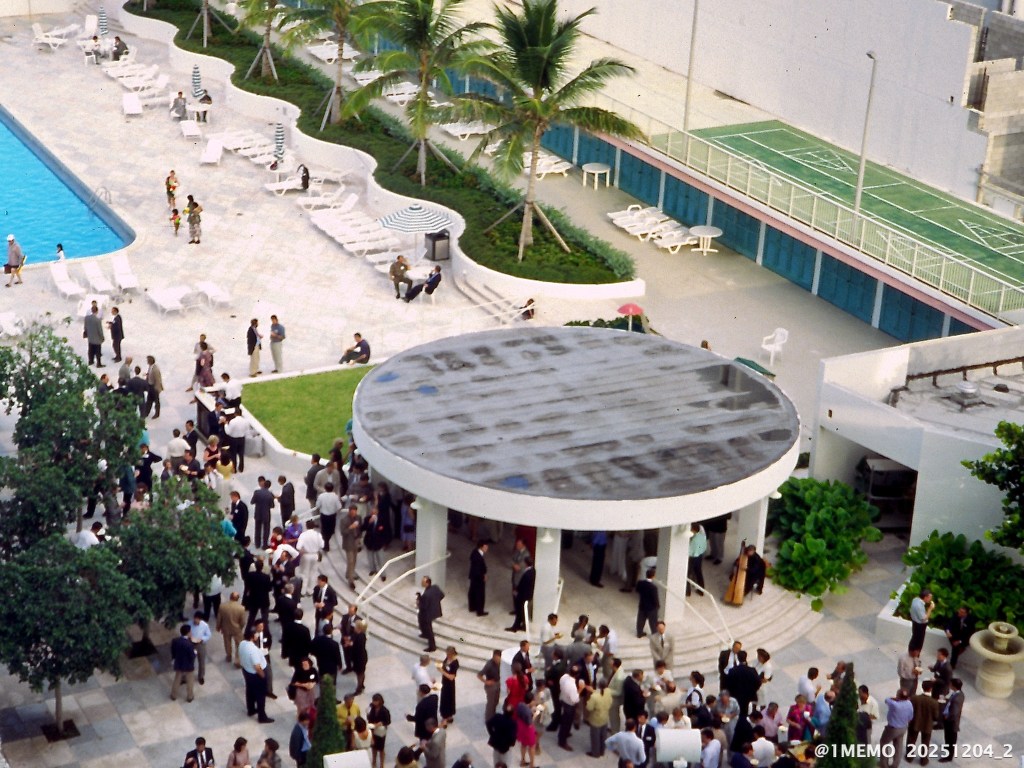
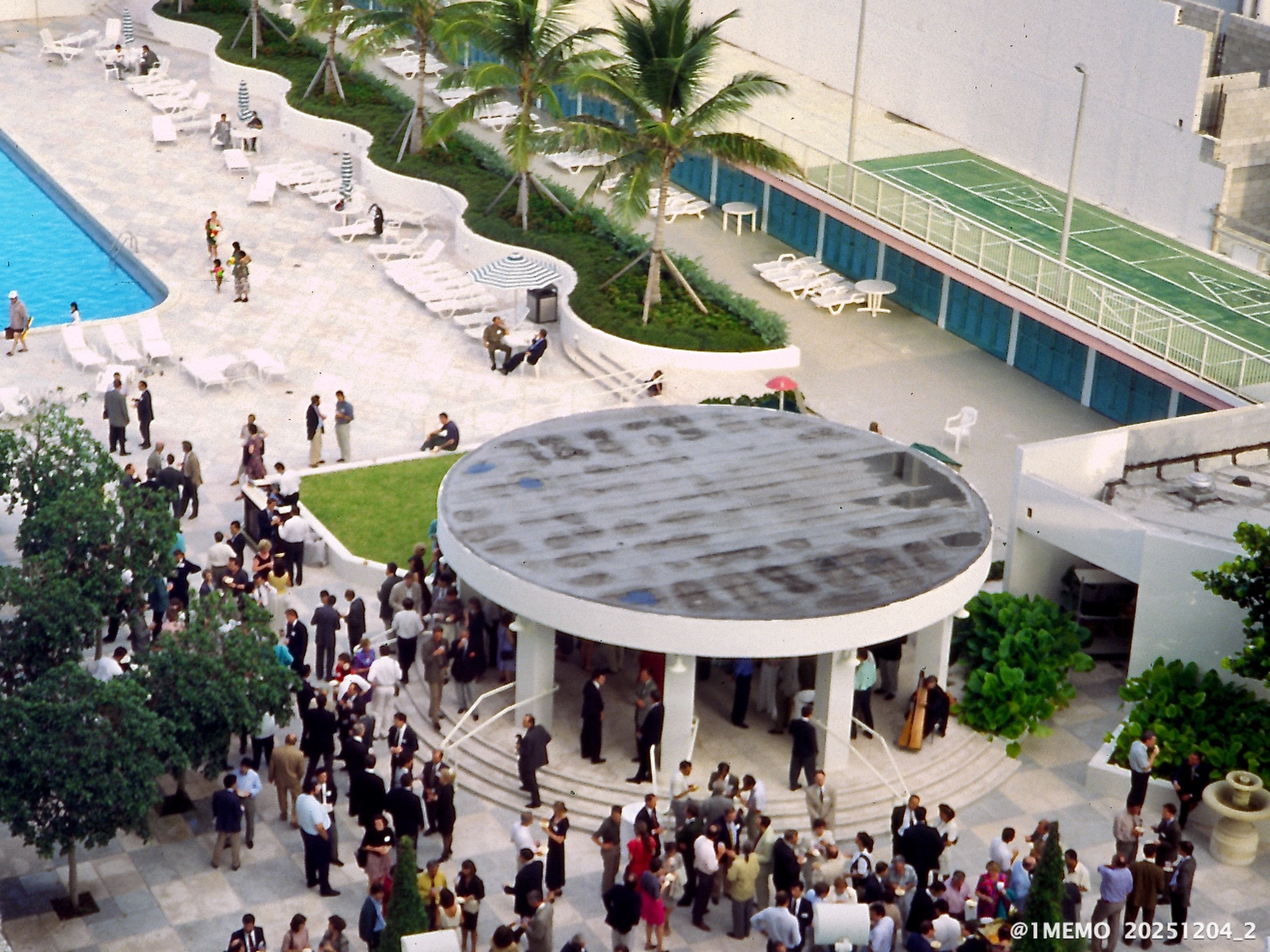
Welcome Reception 5th IPITA on Sunday 18 June 1995, at the congress venue , the Eden Roc Resort Hotel, in Miami Beach, FL (USA) • Michel van der Burg • Miracles.Media • @1MEMO 20251204_2 • TakeNode 8eb04df1-8280-4de3-a206-4b63413c3025

Iodixanol Encounter

My first encounter with Iodixanol (Optiprep) was June 1995 during the 5th IPITA congress in Miami, speaking with Terry Ford who had been researching Nycodenz (5), a forerunner of Iodixanol — a dimer of Nycodenz (6).
Both Nycodenz and Iodixanol (Optiprep) are nonionic iodinated density gradient agents originally developed and produced by Nycomed A/S (Oslo, Norway) — later produced by Axis-Shield and Alere Technologies.
In 1995, Iodixanol was just recently brought to the market as Optiprep, a 60% solution of iodixanol in water, by Nycomed (Oslo, Norway), and Terry Ford gave me the address for obtaining Optiprep in Holland. He co-authored a first poster presentation on the use of an iodixanol (Optiprep) in Hanks medium for juvenile pig islet purification at the 14th AIDSPIT in Igls, Austria, Jan 1995 (32).

I had completely forgotten this brief first meeting with Terry Ford in Miami in 1995, and only recently encountered a memo on this in my archives. I would start working with Terry Ford in 1998 when I was collaborating with Nycomed to explore modifications of our Iodixanol-UWS purification solution to facilitate its implementation in clinical human islet transplantation in Leiden and elsewhere in other islet centers around the world.

Following that June 1995 talk with Terry Ford, I started, in August 1995, designing our islet purification solution of Iodixanol in UW-Solution (UWS). Designing that Iodixanol-UWS for islet purification was a logical progression from our previous density gradient solutions based on the UWS, using either the UWS component Pentastarch (Pentafraction of Hydroxyethyl starch; HES), dextran, Ficoll, or Percoll.

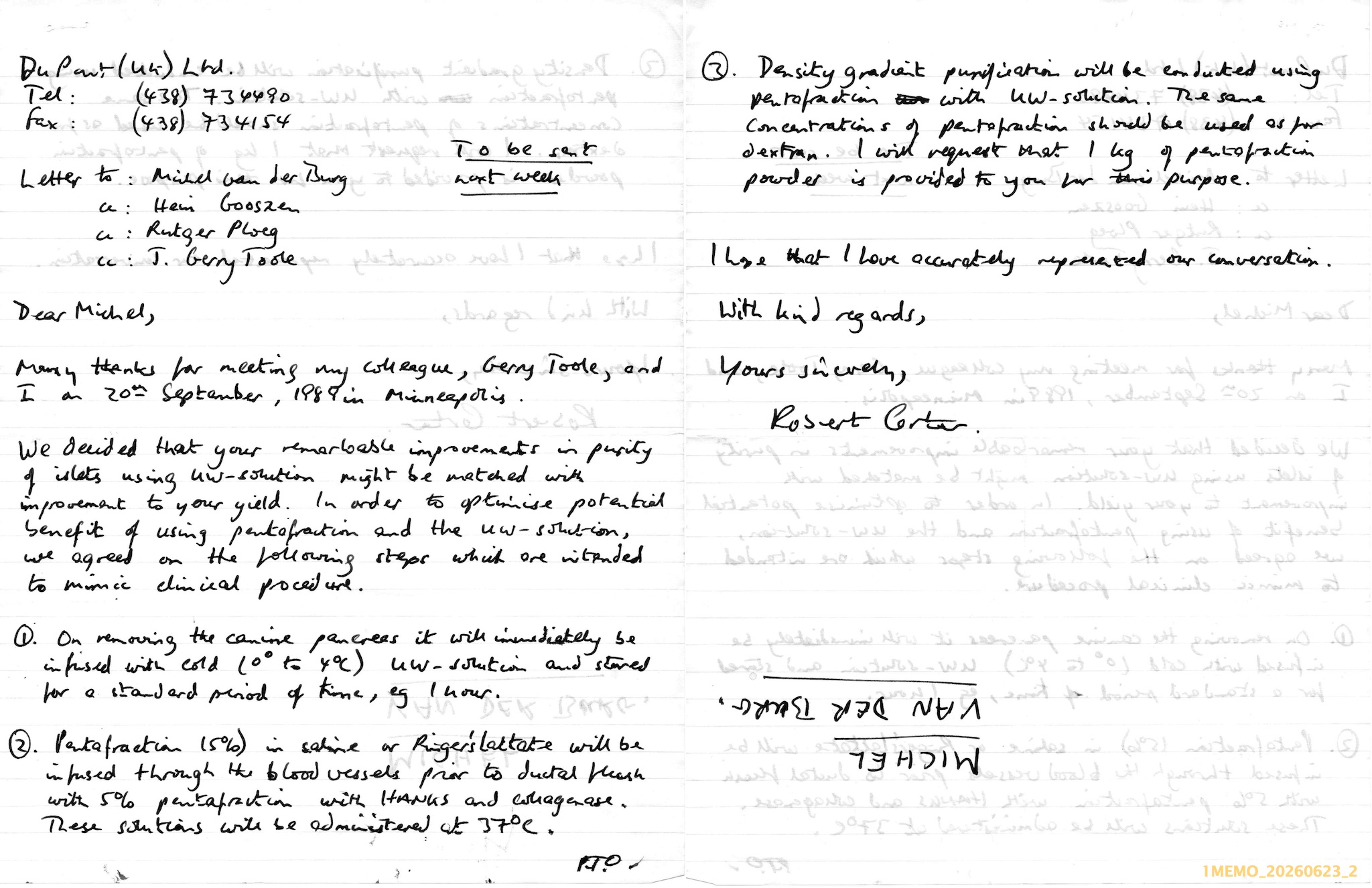
Pentafraction with UW-solution Islet Purification Memo 1989 DU PONT • 1MEMO_20260623_2 • Michel van der Burg • Miracles•Media • TakeNode f8c81440-46d2-4d36-9c5c-495453024bc7 • Same day written memo, 20th Sep 1989, agreement on density gradient islet purification using Pentafraction with UW-solution by Michel van der Burg (University Hospital Leiden) and Robert Carter, Senior Clinical Research Project Co-Ordinator DU PONT U.K. (Final letter Oct 3, 1989 Ref: OCTC2. RJC/meb)

Designing Density Gradients in UWS

Theoretically, the simplest, most elegant design for islet purification in UWS is increasing the native Pentafraction component (‘Pentastarch’) to increase the density of the solution — that is, not adding foreign elements.
That Pentastarch-UWS density gradient was actually also the first density gradient in UW-Solution that I conceived and planned for islet purification in 1989, the year we started using the UW-Solution as the islet isolation solution prior to purification in density gradients, showing consistent near-complete islet purification (7,8).

The news of the exciting finding of over 90% purity of these UWS-isolated islets was presented in a poster, September 1989, at the 2nd International Congress on Pancreatic and Islet Transplantation (IPITA) in Minneapolis, USA (8), where I further discussed Sep 20th 1989 with Robert Carter and Gerry Toole — the DuPont team supporting our work — my research plan (1MEMO_20260623_2) on using UWS also as the islet purification solution by increasing the concentration of the Pentafraction component of UWS (aka PentaStarch) — DuPont’s proprietary HES product (Hydroxyethyl starch, a nonionic starch derivative) used in the production of UWS (DCC-10323 UW Organ Preservative Solution; Du Pont Critical Care, Waukegan, USA; later known as ViaSpan).

Early 1990, while waiting for the arrival of the Pentafraction to create the planned PentaStarch-UWS gradient, I started experiments with the addition of other ‘impermeants’ for islet purification: first, March 1990, with islet purification in a Dextran-UWS density gradient; next, April 1990, in a Percoll-UWS gradient; and finally, May 1990, using the Pentastarch-UWS gradient (9).

Increasing the Pentastarch content in UWS not only increases the density of the solution, it also increases the dehydrating properties of the solution, resulting in islets with an increased density pelleting with the unwanted exocrine tissue after centrifugation, in the high-density bottom. Thus, comparing Pentafraction (Pentastarch) and other impermeants added to UWS, the best results for islet purification were obtained using Percoll in UWS, and islet purification in Percoll-UWS was the method of choice in the early 1990s for the PhD islet research I finished in November 1994 (10,11,12,13).

Introduction of Iodixanol-UWS

This solution of Iodixanol in modified UWS was a logical progression from our previous density gradients based on the UWS, such as the successful Percoll-UWS density gradient (10,11,12,13) — a similar solution of impermeants (that do not readily enter cells) with a similar osmolarity (close to that of the tissue).
The iodixanol solution is more practical, though — easier to prepare and handle — and has the important advantage that both iodixanol and the UW-solution are used clinically.
Iodixanol is clinically used as an X-ray contrast medium (Visipaque), and the University of Wisconsin (UW) solution is clinically used for donor organ preservation (ViaSpan; Belzer UW® Cold Storage Solution).

That Percoll-UWS gradient used in the early 90s was prepared using a 10-times concentrated modified (basal) UWS, which I custom-made in our laboratory (10,11,12,13).
For the new Iodixanol-UWS gradient, Optiprep was mixed with a 2-times concentrated modified (basal) UWS, also custom-made in our laboratory.

The first standard operating procedure for this Iodixanol-UWS gradient for our pig islet isolation research was completed in November 1995. In July 1996, the Iodixanol-UWS gradient was introduced in our Leiden islet laboratory (14), replacing the Percoll-UWS gradient for new large-scale pig islet xeno-transplant work. Using this Iodixanol-UWS solution for purification of the fragile islets from pig pancreases greatly improved the outcome, showing virtually no loss of the highly purified islets.

In September 1997, our results were reported in talks at the 6th Congress of the International Pancreas and Islet Transplant Association (IPITA) in Milan, Italy (15,16), where I began sharing the materials and methods of our purification procedure in detail during face-to-face meetings in Milan with colleagues from other islet centers, and subsequently, upon returning home, in response to the many requests I found in my email and fax inbox from other islet centers in, e.g., Geneva (José Oberholzer), Leicester (Heather Clayton), LA (Yoko Mullen), Oxford (Derek Gray), London (Steve Hughes), Chicago (Horacio Rilo), Minneapolis (Shinichi Matsumoto / Bernhard Hering), and Würzburg (Karin Ulrichs) — for further details in preparing this custom-made Iodixanol-UWS solution, and for obtaining ingredients such as Pentastarch.

I shared both our detailed work procedure for preparing this Iodixanol-UWS density gradient and made arrangements with Pentastarch suppliers on various continents to guarantee delivery to other islet centers around the world.

Bernhard J. Hering, from the Minneapolis islet center, was the first, in November 1997, to email me great feedback on this custom-made Iodixanol-UWS solution:

‘Dear Michael: It was a pleasure meeting in Milan a few weeks ago. Hope all is going well in Leiden. We have tested your new gradient for pig islet isolation several times. Without a question this gradient works. As a matter of fact, the first diabetic pig that received allogeneic islets prepared with the new gradient became normoglycemic immediately after transplantation. …’
Bernhard J. Hering, University of Minnesota, Minneapolis, Tue, 11 Nov 1997


We reported our first series of islet xenotransplants of adult pig islets prepared in Iodixanol-UWS in January 1998 at the 17th Workshop of the AIDSPIT Study Group in Igls, Austria (22).

In April–May 1998, finally, a first series of human islet purifications with the novel Iodixanol-UWS density gradient was performed while working with the islet team of Camillo Ricordi during my working visit to the “fast track” center of the Diabetes Research Institute (DRI) at the University of Miami (2,3,4).

In May 1998, Shinichi Matsumoto, working with the Minneapolis team, reported their first successful series of single-donor allo-transplants of pig islets isolated with the Iodixanol-UWS purification method (17,18).

Of note: this Minneapolis team would also be the first to publish an impressive series of successful single-donor human islet transplants in Type 1 diabetic patients (19,20), with islet purification in a continuous iodixanol-UWS density gradient — supplemented with L-histidine for extra buffering — the method of choice (21, 33) for the more recent islet transplantation trials of the NIH (National Institutes of Health) Clinical Islet Transplantation (CIT) Consortium.

Nycomed Collaboration

In late May 1998, after my working visit to Miami, I contacted Nycomed’s density gradient team – product manager Bjørn Henriksen and research consultant and biochemist John Graham – to describe our work and request iodixanol powder. The aim was to test whether the purification solution could be prepared by dissolving the iodixanol powder directly in standard-strength UW solution, avoiding the need for “homemade” double-strength UWS and thereby simplifying clinical application in islet transplantation.

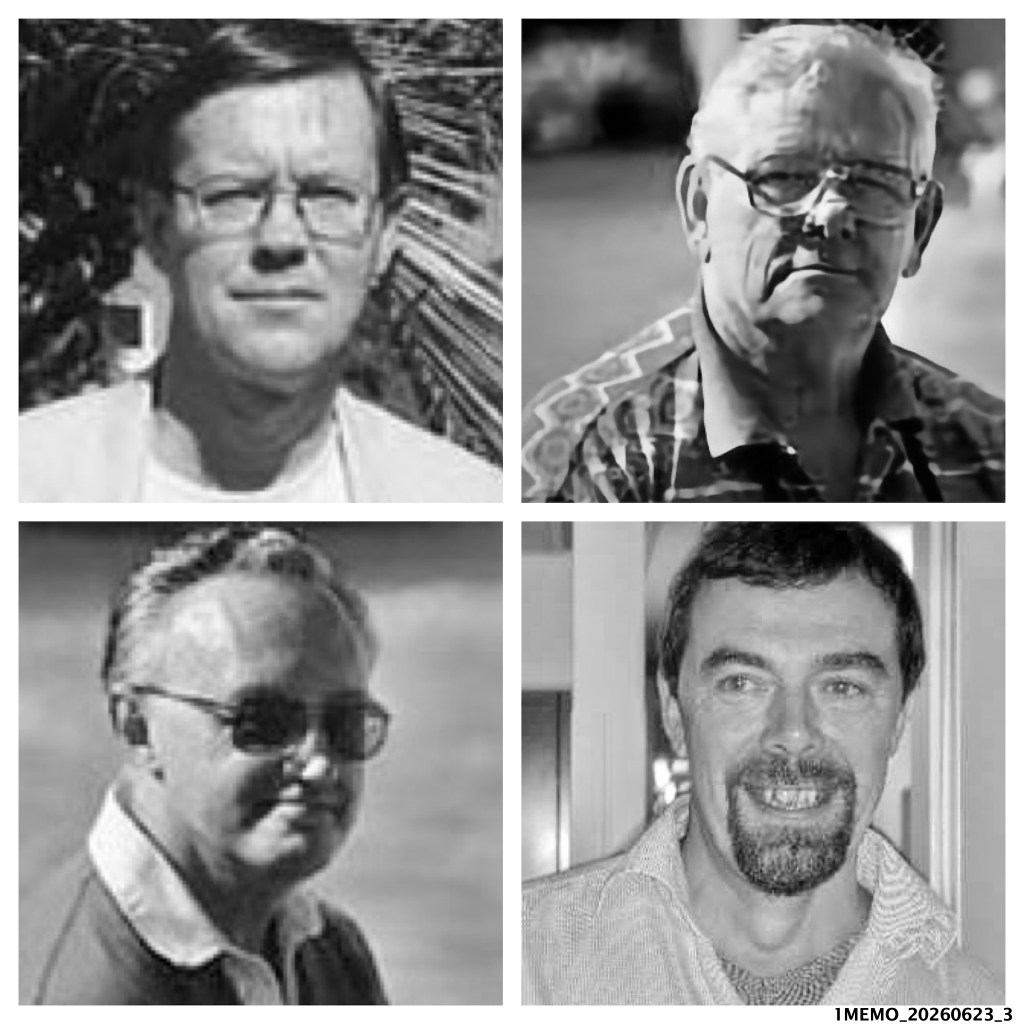
Team up • 1MEMO_20260623_3 • Michel van der Burg • Miracles•Media • TakeNode 894be884-fecb-42e9-a8a3-6859926a537c • Bjørn Henriksen (top left), Terry Ford (top right), John Graham (bottom left), and Michel van der Burg (bottom right).

This marked the start of our long-standing collaboration. Bjørn Henriksen immediately sent me the iodixanol powder and put me in contact with biochemist Terry Ford, also a research consultant for Nycomed’s density gradient media, for assistance with the technical details of preparing the iodixanol powder solution in UWS. His fellow advisor John Graham suggested putting together a Nycomed Application Sheet based on our Iodixanol-UWS gradient work using Optiprep (iodixanol).
This application sheet would allow me to publish, in detail, our procedure for islet preparation in UWS, preparation of the Optiprep-UWS density gradient, preconditions, and contact information on Pentastarch suppliers.


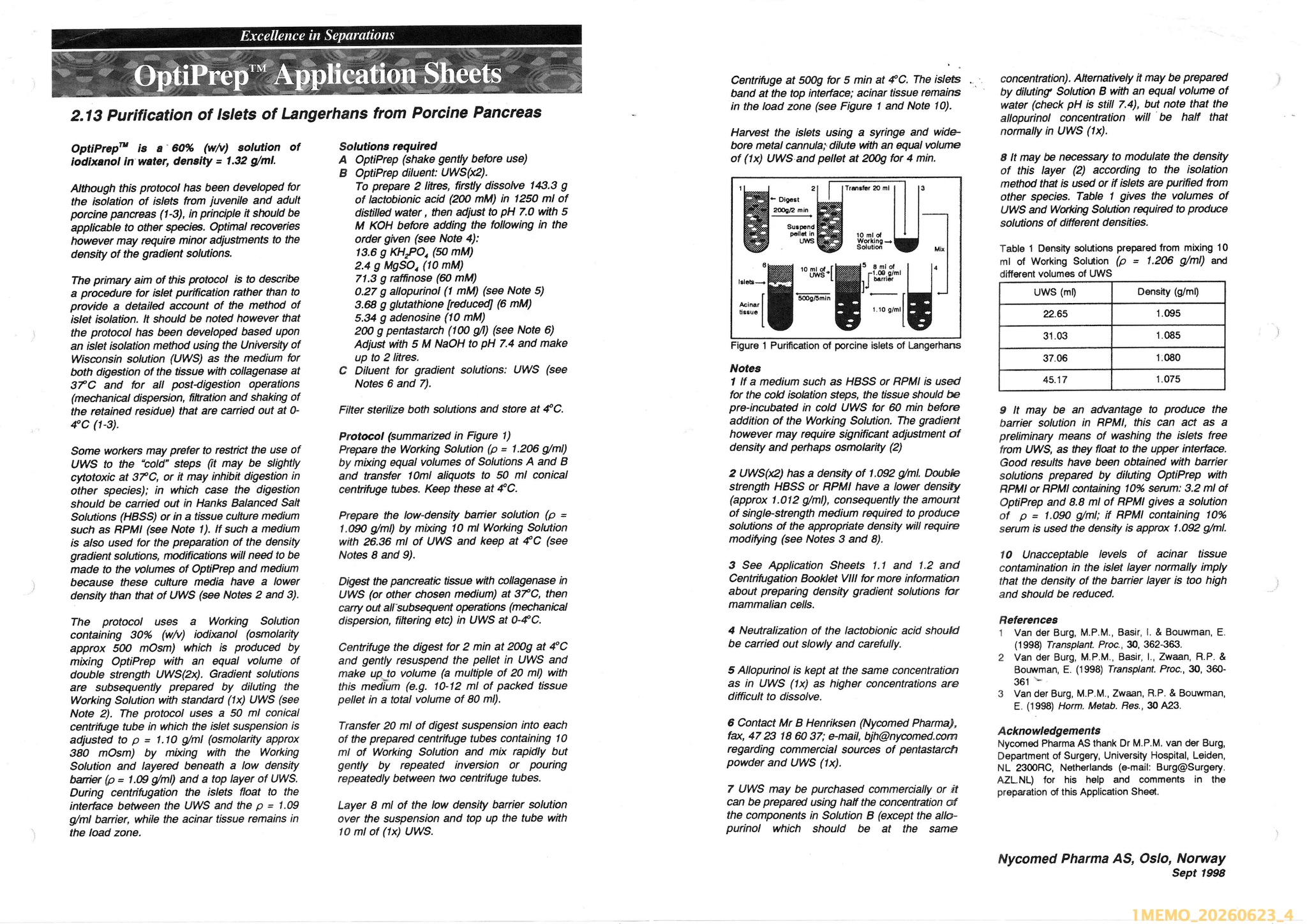
Purification of islets of Langerhans from porcine pancreas. Optiprep™ Application Sheets (No 2.13) Nycomed Pharma AS, Oslo, Norway, Sept. 1998 • 1MEMO_20260623_4

We started writing in June 1998, and in September 1998 published the first edition of this Nycomed Application Sheet as: Purification of islets of Langerhans from porcine pancreas. Optiprep™ Application Sheets (No 2.13) Nycomed Pharma AS, Oslo, Norway, Sept. 1998 (23; 1MEMO_20260623_4).

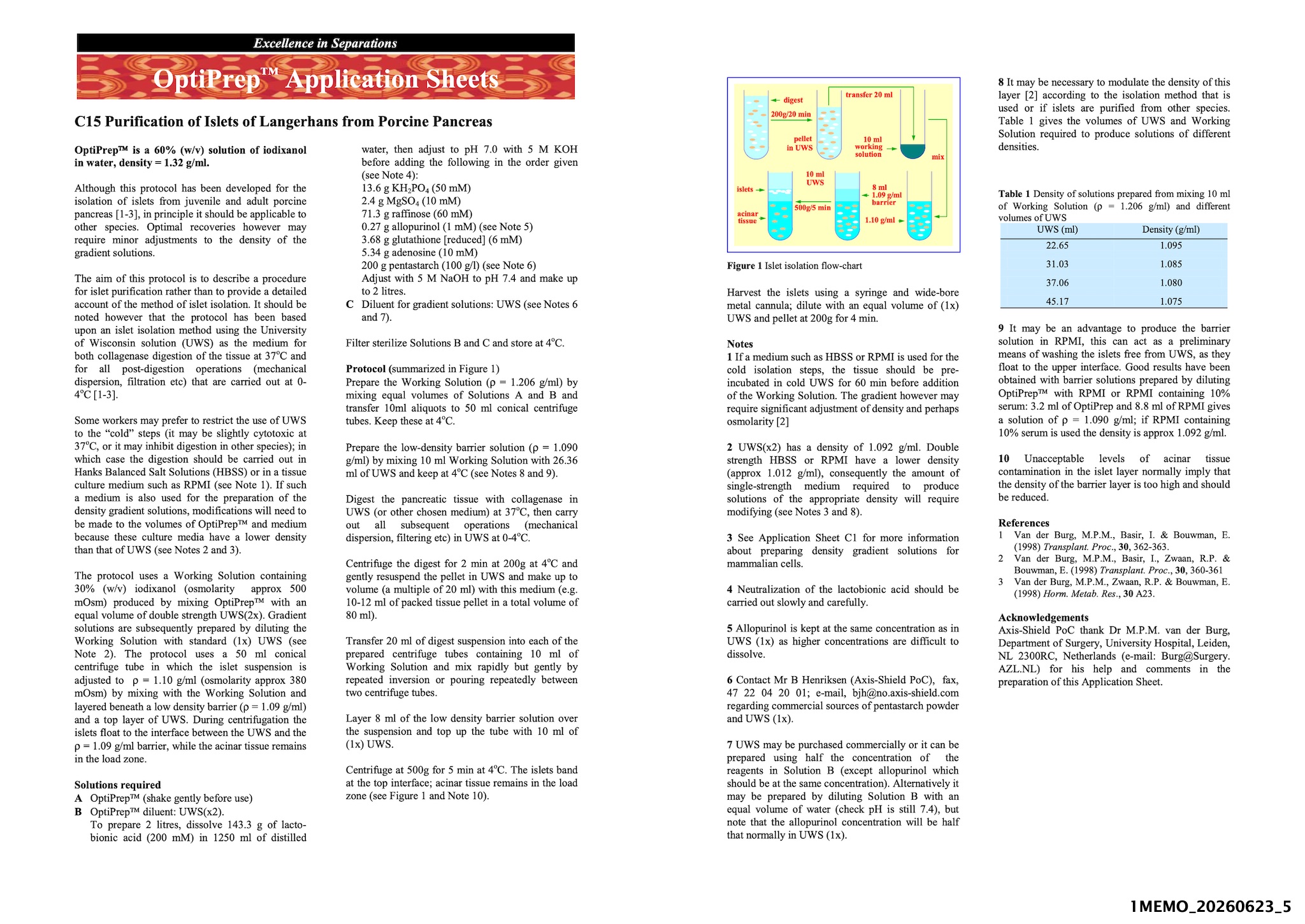
In 2000, when Axis-Shield had taken over responsibility for these density gradient media, a new edition of the Application Sheet was published with minor modifications and a new ‘C15’ catalogue number, as: C15 Purification of Islets of Langerhans from Porcine Pancreas. Optiprep™ Application Sheets (C15) Axis-Shield PoC AS, Oslo, Norway, Nov 2000 (24; 1MEMO_20260623_5).

C15 Purification of Islets of Langerhans from Porcine Pancreas. Optiprep™ Application Sheets (C15) Axis-Shield PoC AS, Oslo, Norway, Nov 2000 • 1MEMO_20260623_5

In 2003, this application was described in our open-access online paper in The Scientific World Journal: Iodixanol Density Gradient Preparation in University of Wisconsin Solution for Porcine Islet Purification (25).

In 2004, a revised edition of the Axis-Shield C15 Application Sheet followed, listing the numerous applications of the methodology in islet centers, adapted and extended for islet isolation from pancreases of other species, and modified for use in the Cobe 2991 centrifuge rather than tubes. Full text PDF (1MEMO_20260623_6) for viewing and downloading below (26).

The 2007 edition — renamed ‘C15 Purification of Islets of Langerhans from porcine, primate and rodent pancreas’ — included the latest references. Full text PDF (1MEMO_20260623_7) for viewing and downloading below (27).

Currently, a less extensive 2020 edition of this Application Sheet is found online, renumbered C16, and renamed ‘Purification of Islets of Langerhans from porcine, primate and rodent pancreas in a discontinuous iodixanol gradient’ (28).

Iodixanol Powder in UW Solution

Making up iodixanol solutions from iodixanol powder is not simple — the process requires heating to around 80 degrees and slow, controlled cooling to prevent crystallization.

In June 1998, both Terry Ford (working in the UK) and I (working in our Leiden Islet Lab) started experiments dissolving 30% (w/v) iodixanol powder in UWS — the same iodixanol concentration used in our standard procedure for preparing the Working Solution by mixing OptiPrep with an equal volume of double-strength UWS (see the Optiprep Application Sheet, Ref. 23; 1MEMO_20260623_4).

I wasn’t able to prepare a 30% iodixanol solution in ViaSpan — the clinically used commercial UWS. Although temperature was carefully controlled, the solution became turbid during the process of dissolving the powder. Terry Ford succeeded in preparing a clear 30% iodixanol solution in a modified UWS (using a different hydroxyethyl starch, not the Pentastarch/Viastarch), but Terry also ran into issues later, in September 1998, when trying to make up a 10% iodixanol solution in Viaspan — the solution was cloudy.

I checked with the NPBI International company in Holland, which produced the ViaSpan solution for DuPont, as to whether such heating might affect the ViaSpan components, and learned that no damage was expected.

In August 1998, I succeeded in preparing a clear 11% solution of the iodixanol powder in ViaSpan (density 1.10) — perhaps a hint of haziness after dissolving the iodixanol, but no issues upon 0.45 µm filtration, so it was considered a clear solution. This solution could be used as the bottom solution of the gradient, by first pelleting the tissue (digest) before resuspension in this 11% ‘working solution’.

Next, in August 1998, in a pilot with two pig pancreases, that 11% iodixanol powder in ViaSpan solution was used as the bottom solution of density gradients (1.100-1.090-1.085-UWS) for islet purification, and showed a similarly successful outcome in a head-to-head comparison with our ‘conventional’ Optiprep-UWS gradients. It appeared that the powder-based gradient worked equally well.

In conclusion: although the powder-based iodixanol gradient worked well in the pilot, making up iodixanol solutions from a powder is not easy, and the way we were making the solutions with Optiprep was the easier of the two alternatives — and, above all, a safe choice for the time being, given the imminent start of our clinical islet transplantation project, with few options for new experiments.

Optiprep (Iodixanol) in ViaSpan

A simpler approach was tested in 1998 that would eventually become the method of choice in 2001, when we started human islet isolation in our GMP cleanroom facility for clinical islet transplantation: mixing the iodixanol solution with the crude islet suspension (digest) in ViaSpan.

Since it might not be necessary to use double-strength UWS, creating the density gradients by mixing only Optiprep and ViaSpan would be the simplest approach, avoiding the need to set up GMP production of the custom-made double-strength UWS for clinical application in islet transplantation.

In fact, mixing Optiprep (60% iodixanol in water) and ViaSpan to create the roughly 1.09 density solution used for human islet purification, has a negligible effect on the ViaSpan composition — only a 10% dilution of the ViaSpan components. Although it does not seem necessary to use double-strength UWS, osmolarity is obviously lower without it, affecting the density of islet and acinar tissue and requiring different gradient densities for purification.

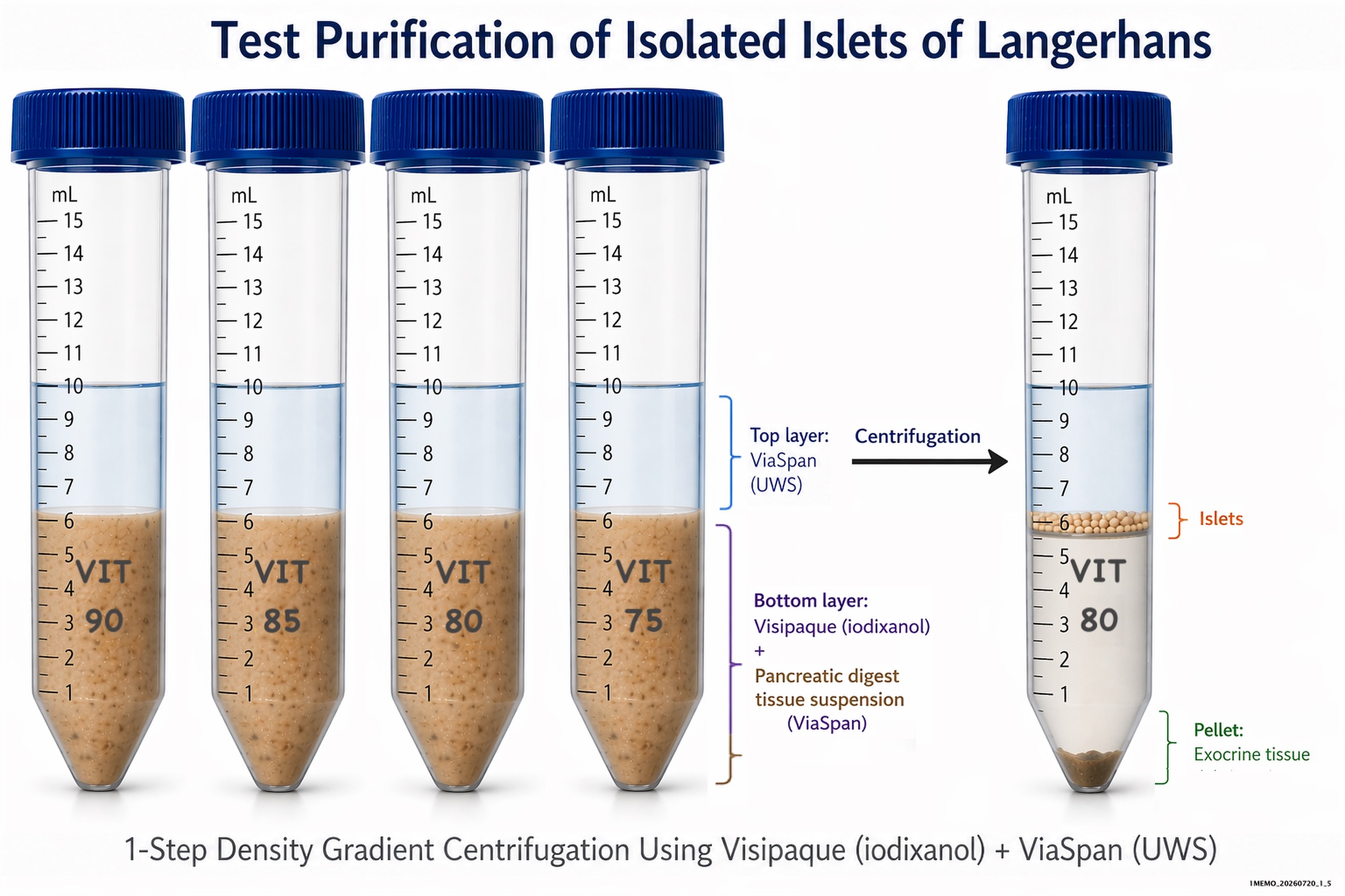
In September 1998, this density gradient of Optiprep (Iodixanol) in ViaSpan was tried in a short pilot of islet purification from adult pig pancreases, in a head-to-head comparison with our standard procedure (including the double-strength UWS). In this simpler new method, OptiPrep (5 ml) was mixed directly with ViaSpan (26 ml) containing the digested pancreatic tissue (‘digest’) to obtain the 1.090 density bottom solution in a 4-step gradient, with densities 1.090-1.085-1.080-ViaSpan (UWS).
Both purification methods yielded similar results in this pilot: a 70–100% recovery of islets, with 70–100% purity.

This simple method was not tested further at the time, because priority was given to advancing GMP production of our standard Iodixanol-UWS medium, which, due to its higher osmolarity, seemed to offer a better guarantee of effective purification in the upcoming human islet isolations, given the greater diversity of human donor pancreata.

IsletPrep

Meetup — Friday, September 25th, 1998: a first meetup with Bjørn Henriksen, Terry Ford, and myself was arranged at the Leiden Islet Laboratory to further discuss the different iodixanol solutions and a possible commercialization of this solution for isolation of Islets of Langerhans. We shared samples of some of the recent UWS2x solutions used in the Leiden Islet Lab, and a hydroxyethyl starch (HES) to potentially replace the proprietary Pentastarch in the commercial solution, along with a first edition of the Application Sheet. Both the content (formulation of the double-strength UWS), packaging, and the potential market for the commercial solution were discussed.

Market — In October 1998, I contacted, via email, 15 of the larger islet centers around the world to explore the potential market. Based on responses from 11 centers (Giessen, Germany; Leicester, UK; Geneva, Switzerland; LA, USA; Miami, USA; Memphis, USA; Perugia, Italy; Edmonton, Canada; St Louis, USA; Brussels, Belgium; Leiden, Netherlands), on average around 1000 large mammal (including human) pancreases were processed per year across these centers. The ‘safe estimate’ of the total number of large mammal pancreases processed per year worldwide amounted to 1500. For the processing of 1000 pancreases in centers showing interest in the gradient, around 150 L of Working Optiprep Solution (WOP) would be required — 75 L double-strength UWS (UWS2x) and 75 L OptiPrep. This did not count the large number of rodent pancreata.

IsletPrep — In October 1998, Bjørn Henriksen coined the term ‘IsletPrep’ for the solution we considered best to supply: the WOP mixture of equal volumes of double-strength UWS (UWS2x) and OptiPrep, in 200 ml bottles.
He planned to have his Pilot Plant produce a small batch of our WOP, and hoped to have IsletPrep available sometime the following year. In the meantime, I could announce that Nycomed planned to introduce an IsletPrep based on our work.

Regarding the formulation of UWS2x, I suggested leaving out the allopurinol, glutathione, and adenosine. Generally, allopurinol and adenosine have not been shown to contribute to organ preservation. Glutathione appears to be beneficial for long-term organ preservation; however: first, the gradient is used only for a short period of time; second, assuming the IsletPrep is mixed with regular UWS, glutathione will be present anyway.

Terry Ford had retired by the end of October but was still available for assistance.

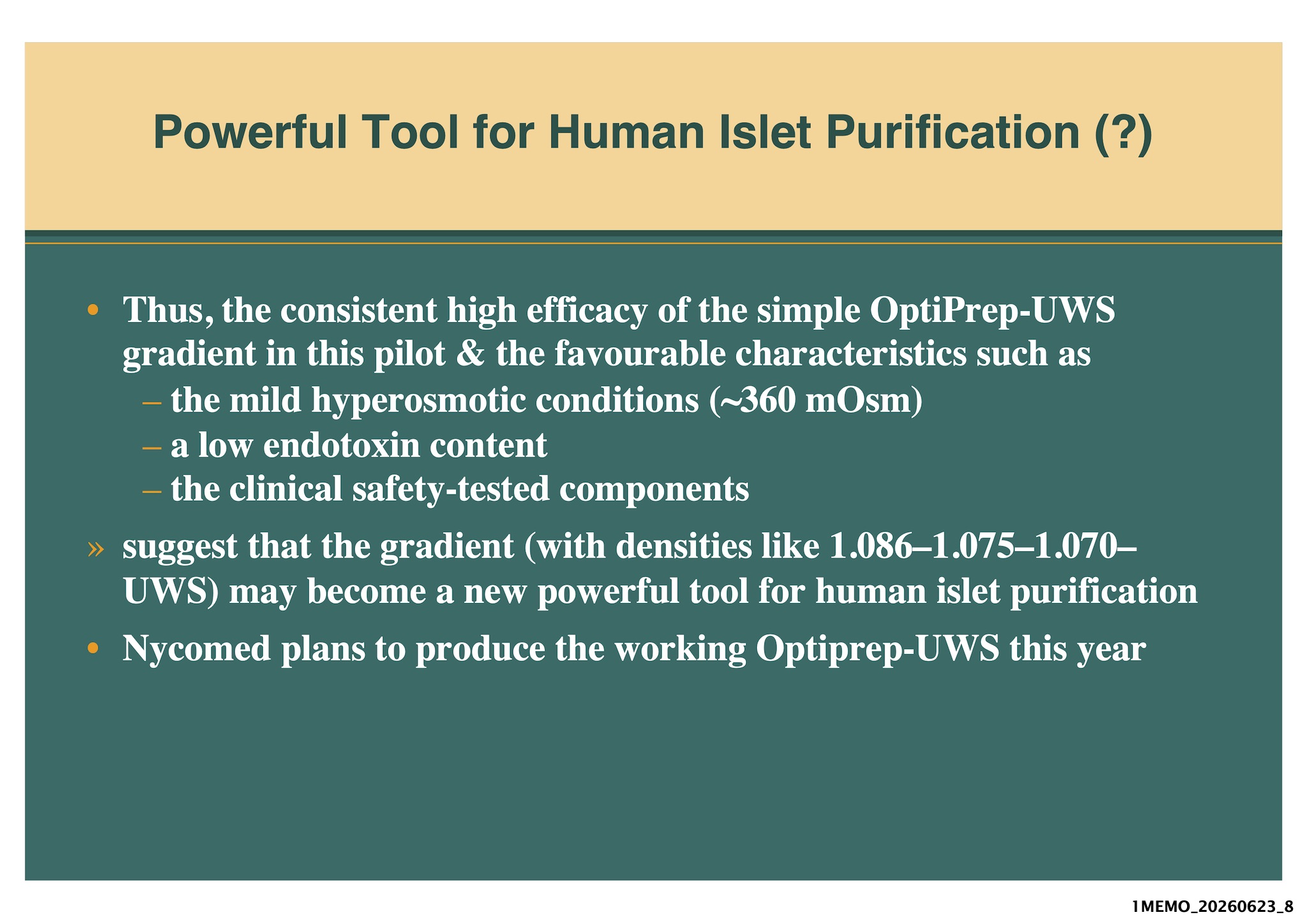
Powerful Tool for Human Islet Purification

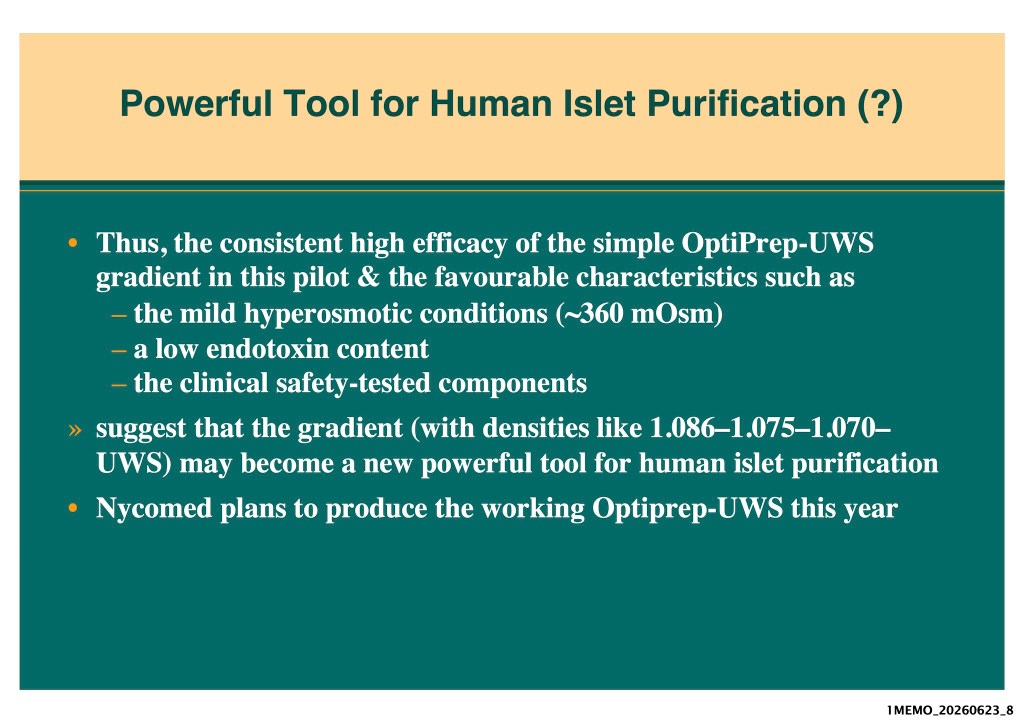
From January 1999, I started announcing Nycomed’s plan to produce the working Optiprep-UWS solution in presentations — first at the January 1999 AIDSPIT workshop in Igls, Austria (29) — and in correspondence with other islet centers I was assisting in implementing the procedure. To assist the UK islet centers in Leicester (Heather Clayton) and Oxford (Harold Contractor, Derek Gray), I shipped the WOP solution February 1999.


Powerful Tool for Human Islet Purification • 1MEMO_20260623_8 • Michel van der Burg • Miracles•Media • TakeNode cba98c44-ff34-4b4a-8153-b77175c521a4 • Conclusion Oral Presentation Michel van der Burg, 18th Workshop AIDSPIT, 25 Jan 1999, Igls, Austria

In February 1999, a few weeks before we received the green light for the official launch of the clinical islet transplantation project at our Leiden University Medical Center (LUMC), a pilot was started testing the innovative Iodixanol-UWS density gradient solution for non-human primate islet isolation, using four macaques, achieving 94% purity and 90% recovery (35).

Clinical Islet Transplantation Project

In February 1999, the Leiden University Medical Centre (LUMC) Executive Board approved our Surgery Department’s clinical islet transplantation project, which we started in March 1999 with the successful isolation and purification of human islets using our Iodixanol-UWS gradient in the Human Islet Laboratory (1MEMO_20260623_1).

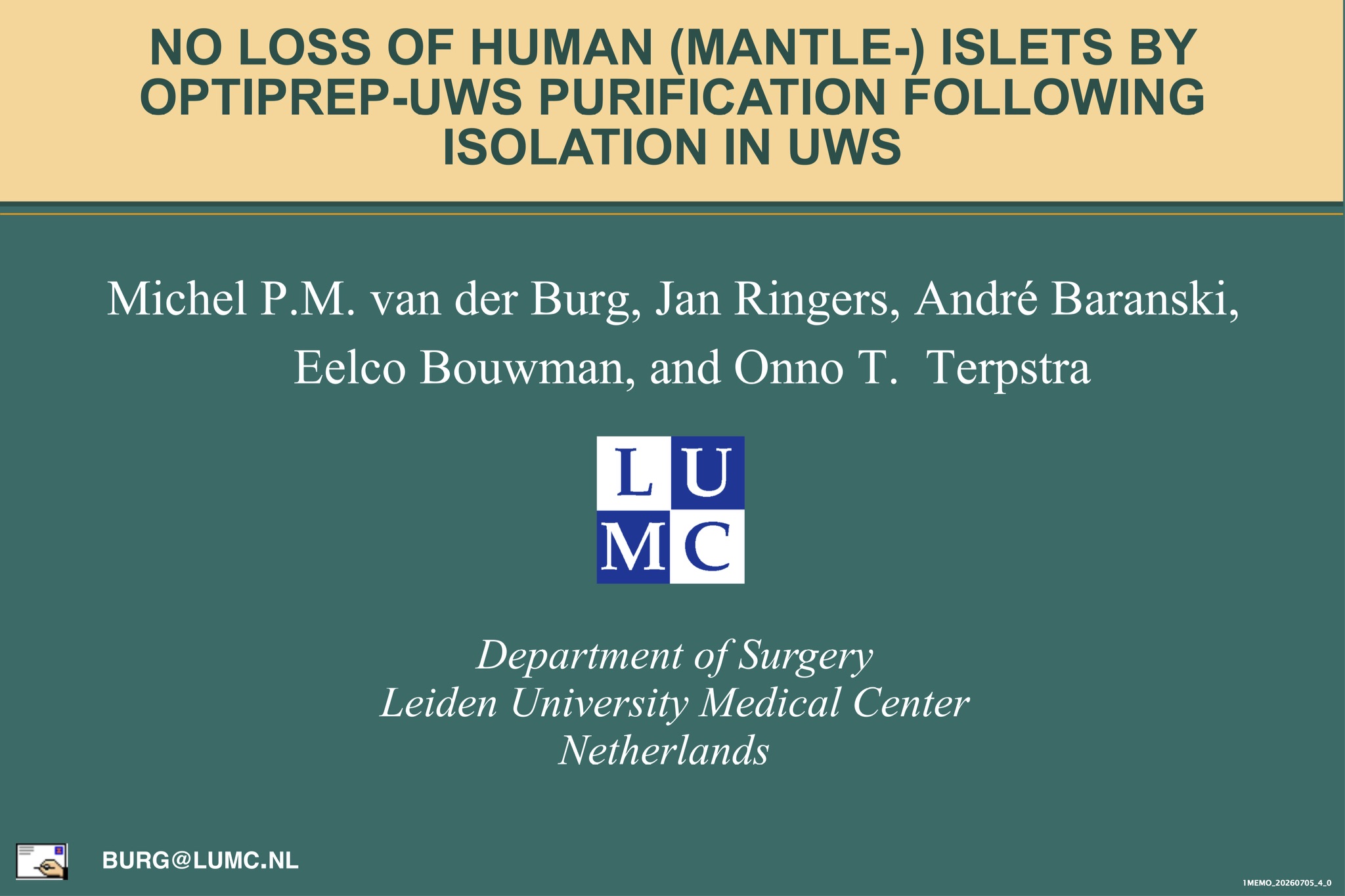
The outcome of that first series of human islet isolations at the LUMC was published later that year (30) and presented at the 19th AIDSPIT Workshop, Jan 2000, Igls, Austria (31) — a post on that first series is being prepared.

A second meetup, in March 1999, at the Leiden Islet Laboratory (LUMC) was arranged with Bjørn Henriksen, Terry Ford, and myself to further discuss the exact formulation of ‘IsletPrep’.

In 2000, when Axis-Shield had taken over responsibility for these density gradient media, Bjørn Henriksen supplied the HES for the final IsletPrep formulation that I worked out and used successfully for islet purification in a second series of human islet isolations, which we started in 2000 using the automated Ricordi method in our laboratory. (A post on that second series is being prepared.)

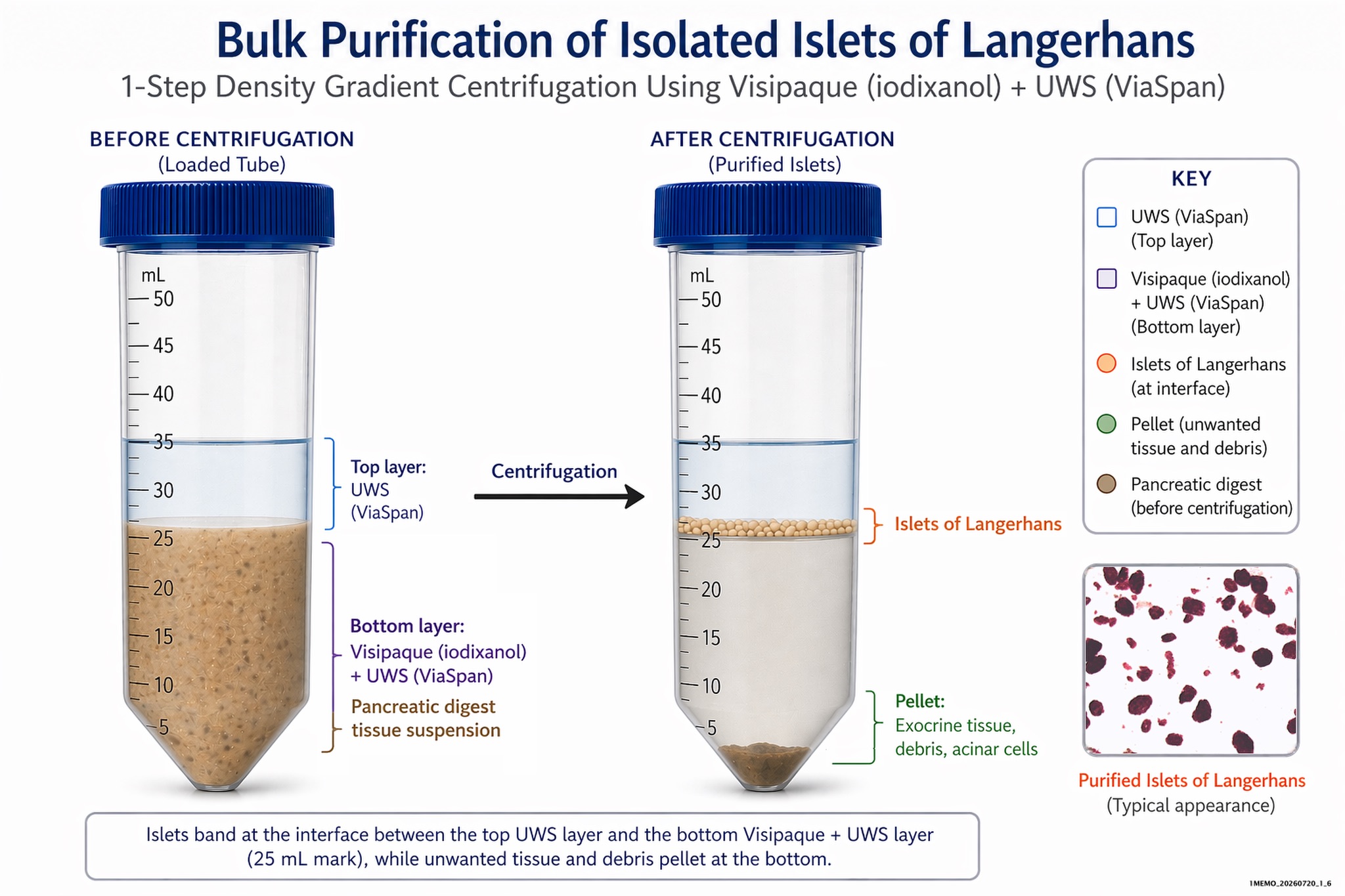
Eventually, in 2001, when we started in the GMP cleanroom facility of our Human Islet Isolation Laboratory at the Leiden University Medical Center (LUMC), the method of choice for islet purification became our simple procedure of mixing the clinically cGMP-approved solutions of iodixanol (Visipaque) and UWS (ViaSpan).

Optiprep wasn’t yet a GMP-certified product at the time, and therefore had to be replaced by the similar Visipaque (65% iodixanol) solution, which is cGMP-certified and used in patients as a contrast agent — even though both Optiprep and Visipaque were produced from the same batches of iodixanol (personal communication with Bjørn Henriksen).

Note that this purification method was recently adapted for the automated ‘PRISM’ method at the LUMC, replacing the dimeric Iodixanol (Visipaque, Optiprep) in UWS , with the chemically similar monomeric Iopromide (Ultravist) in UWS (34).

References

1) Successful Islet Transplantation After Purification in Iodixanol-UWS • IPITA 1999 Sydney • @1MEMO 20260326 • Michel van der Burg • Miracles.Media • URL michelvanderburg.com/2026/03/26/

2) Human Islet Isolation • DRI Miami 1998 • Michel van der Burg • Miracles.Media • @1MEMO 20250204 • TakeNode 86e4a319-a769-44d5-8fa5-de2ca90ab63c • URL michelvanderburg.com/2025/02/04/

3) Efficacy of the novel iodixanol-UWS density gradient for human islet purification • Igls Aidspit 1999 • Michel van der Burg • Miracles.Media • 20241202 • URL michelvanderburg.com/2024/12/02/

4) New Powerful Tool For Human Islet Purification • OptiPrep-UWS? • IPITA 1999 Sydney • @1MEMO 20260325 • Michel van der Burg • Miracles.Media • URL michelvanderburg.com/2026/03/25/

5) Rickwood D, Ford T, Graham J. Nycodenz: a new nonionic iodinated gradient medium. Anal Biochem. 1982 Jun;123(1):23-31. doi: 10.1016/0003-2697(82)90618-2. PMID: 7114474.

6) Ford T, Graham J, Rickwood D. Iodixanol: a nonionic iso-osmotic centrifugation medium for the formation of self-generated gradients. Anal Biochem. 1994 Aug 1;220(2):360-6. doi: 10.1006/abio.1994.1350. PMID: 7978279.

7) Pancreatic Islet Isolation With UW Solution • A New Concept • Michel van der Burg • Miracles.Media • @1MEMO 20241224 • URL michelvanderburg.com/2024/12/24/

8) Minneapolis 1989 Poster | 20240804 | Michel van der Burg | URL michelvanderburg.com/2024/08/04/

9) PentaStarch UWS Pancreatic Islet Purification • 20240802 | Michel van der Burg | URL michelvanderburg.com/2024/08/02/

10) Van der Burg MPM, Guicherit OR, Prins FA, Scherft JP, Frölich M, Gooszen HG. Percoll in UW: efficient iso-osmotic canine and human islet purification. 5th Congres European Society for Organ Transplantation, Maastricht (The Netherlands) October 7–10, 1991. Online in: Percoll UWS Purification Pancreatic Islets • ESOT 1991 Talk • Michel van der Burg • Miracles.Media • @1MEMO 20250114 • URL michelvanderburg.com/2025/01/14/

11) Pancreatic islet transplantation Thesis Repository Leiden University | 20221125 | Michel van der Burg | Miracles•Media | URL michelvanderburg.com/2022/11/25/ | URL direct link https://hdl.handle.net/1887/3486604

12) Van der Burg MP, Guicherit OR, Frölich M, Scherft JP, Prins FA, Bruijn JA, Gooszen HG. Assessment of islet isolation efficacy in dogs. Cell Transplant. 1994 Jan-Feb;3(1):91-101. doi: 10.1177/096368979400300113. PMID: 8162296. In: Chapter 3 of Pancreatic islet transplantation. Michel van der Burg. Thesis Leiden University (1994; see Reference 11) | URL Chapter 3 direct link https://scholarlypublications.universiteitleiden.nl/access/item%3A3486610/view

13) Van der Burg MPM, Guicherit OR, Frölich M, Prins FA, Bruijn JA, Gooszen HG. Cell preservation in University of Wisconsin solution during isolation of canine islets of Langerhans. Cell Transplant. 1994 Jul-Aug;3(4):315-24. doi: 10.1177/096368979400300408. PMID: 7921636. In: Chapter 4 of Pancreatic islet transplantation. Michel van der Burg. Thesis Leiden University (1994; see Reference 11) | URL Chapter 4 direct link https://scholarlypublications.universiteitleiden.nl/access/item%3A3486611/download

14) Van der Burg MPM, Basir I, Bouwman E. Non-traumatic porcine islet density gradient purification in a novel iodixanol in University of Wisconsin solution. The 4th Int. Congress for Xenotransplantation, Nantes (France) Sept. 7–11, 1997. Online in: Purification Islets in Iodixanol-UWS • Leiden Start 1996 • Michel van der Burg • Miracles.Media • @1MEMO 20250126 • URL michelvanderburg.com/2025/01/26/

15) Van der Burg MPM, Basir I, Zwaan RP, Bouwman E. Porcine islet preservation during isolation in University of Wisconsin solution. Sixth Congress of the Int. Pancreas and Islet Transplant Association (IPITA), Milan (Italy) Sept. 24–27, 1997. Online in: Porcine Islet Preservation In UWS • IPITA 97 • Michel van der Burg • Miracles.Media • @1MEMO 20250127 • URL michelvanderburg.com/2025/01/27/

16) Van der Burg MPM, Basir I, Bouwman E. No porcine islet loss during density gradient purification in a novel iodixanol in University of Wisconsin solution. Sixth Congress of the Int. Pancreas and Islet Transplant Association (IPITA), Milan (Italy) Sept. 24–27, 1997. Online in: Innovative Islet Purification in Iodixanol-UWS • IPITA 97 • Michel van der Burg • Miracles.Media • @1MEMO 20250128 • URL michelvanderburg.com/2025/01/28/

17) Matsumoto S, Zhang H J, Gilmore T, van der Burg MPM, Sutherland DER, Hering BJ. Large scale isopycnic islet purification utilizing non-toxic, endotoxin-free media facilitate immediate single-donor pig islet allograft function. Presentation at the 24th Annual Scientific Meeting of the American Society of Transplant Surgeons, Chicago (USA) May 1998. 24th ASTS Program book, Abstract #A-120 • 1MEMO_20260326_5 • Michel van der Burg • Miracles.Media • In: Successful Islet Transplantation After Purification in Iodixanol-UWS • IPITA 1999 Sydney • @1MEMO 20260326 • Michel van der Burg • Miracles.Media • URL michelvanderburg.com/2026/03/26/

18) Matsumoto S, Zhang H J, Gilmore T, van der Burg MPM, Sutherland DER, Hering BJ. Large scale isopycnic islet purification utilizing non-toxic, endotoxin-free media facilitate immediate single-donor pig islet allograft function (Abstract). Transplantation 1998; 66: S30 • 1MEMO_20260326_10 • Michel van der Burg • Miracles.Media •
In: Successful Islet Transplantation After Purification in Iodixanol-UWS • IPITA 1999 Sydney • @1MEMO 20260326 • Michel van der Burg • Miracles.Media • URL michelvanderburg.com/2026/03/26/

19) Hering BJ, Kandaswamy R, Harmon JV, Ansite JD, Clemmings SM, Sakai T, Paraskevas S, Eckman PM, Sageshima J, Nakano M, Sawada T, Matsumoto I, Zhang HJ, Sutherland DE, Bluestone JA. Transplantation of cultured islets from two-layer preserved pancreases in type 1 diabetes with anti-CD3 antibody. Am J Transplant. 2004 Mar;4(3):390-401. doi: 10.1046/j.1600-6143.2003.00351.x. PMID: 14961992. URL (full text) https://www.amjtransplant.org/article/S1600-6135(22)07454-8/fulltext

20) Shapiro AM, Ricordi C. Unraveling the secrets of single donor success in islet transplantation. Am J Transplant. 2004 Mar;4(3):295-8. doi: 10.1046/j.1600-6143.2003.00375.x. PMID: 14961980.

21) NIH CIT Consortium Chemistry Manufacturing Controls Monitoring Committee; NIH CIT Consortium. Raw Material Specification, Cold Storage/Purification Stock Solution. CellR4 Repair Replace Regen Reprogram. 2016;4(3):e1914. Epub 2016 May 29. PMID: 30613730; PMCID: PMC6319875. URL (full text) https://pmc.ncbi.nlm.nih.gov/articles/PMC6319875/pdf/nihms-996504.pdf

22) Iodixanol-UWS Purification for Porcine Islet Transplantation • AIDSPIT 1998 • Michel van der Burg • Miracles.Media • @1MEMO 20250131 • URL michelvanderburg.com/2025/01/31/

23) 1998 Optiprep Application Sheet 2.13 • 1MEMO_20260623_1 • Miracles•Media • TakeNode xxx • 2.13 Purification of Islets of Langerhans from Porcine Pancreas. Optiprep™ Application Sheets (2.13) Nycomed Pharma AS, Oslo, Norway, Sept 1998

24) 2000 Optiprep Application Sheet C15 • 1MEMO_20260623_2 • Miracles•Media • TakeNode xxx • C15 Purification of Islets of Langerhans from Porcine Pancreas. Optiprep™ Application Sheets (C15) Axis-Shield PoC AS, Oslo, Norway, Nov 2000

25) Iodixanol Density Gradient Preparation in University of Wisconsin Solution for Porcine Islet Purification. ScientificWorldJournal. 2003 Dec 1;3:1154-9. doi: 10.1100/tsw.2003.107. PMID: 14646009; PMCID: PMC5974767. URL (full text) https://onlinelibrary.wiley.com/doi/10.1100/tsw.2003.107

26) 2004 Optiprep Application Sheet C15 • 1MEMO_20260623_6 • Miracles•Media • C15 Purification of Islets of Langerhans from porcine pancreas. Optiprep™ Application Sheets (C15) Axis-Shield PoC AS, Oslo, Norway, Oct 2004. Full text PDF for viewing and download below 1MEMO_20260623_6.

27) 2007 Optiprep Application Sheet C15 • 1MEMO_20260623_7 • Miracles•Media • C15 Purification of Islets of Langerhans from porcine pancreas. Optiprep™ Application Sheets (C15) Axis-Shield PoC AS, Oslo, Norway, Nov 2007. Full text PDF for viewing and download below 1MEMO_20260623_7.

28) 2020 Optiprep Application Sheet C16 • 1MEMO_20260623_4 • Miracles•Media • Purification of Islets of Langerhans from porcine, primate and rodent pancreas in a discontinuous iodixanol gradient. Optiprep™ Application Sheet C16; 9th edition, January 2020. Serumwerk Bernburg AG, Bernburg, Germany, Oct 2004. URL (full text PDF) https://diagnostic.serumwerk.com/wp-content/uploads/2021/05/C16-Serumwerk.pdf

29) Van der Burg MPM, Ranuncoli A, Molano R, Kirlew T, Ringers J, Bouwman E, Ricordi C. Efficacy of the novel iodixanol-UWS density gradient for human islet purification. 18th Workshop AIDSPIT, Igls (Austria) Jan. 24-26, 1999 . In : Efficacy of the novel iodixanol-UWS density gradient for human islet purification • Igls Aidspit 1999 • Michel van der Burg • Miracles.Media • 20241202 • URL michelvanderburg.com/2024/12/02/

30) Van der Burg MPM, Ringers J, Baranski A, Bouwman E, Terpstra OT. No loss of human (mantle-) islets by OptiPrep-UWS purification following isolation in UWS (Abstract). Acta Diabetol 1999 Dec; 36: 230. URL https://doi.org/10.1007/s005920050168

31) Van der Burg MPM, Ringers J, Baranski A, Bouwman E, Terpstra OT. No loss of human (mantle-) islets by OptiPrep-UWS purification following isolation in UWS. Talk at the 19th Workshop of the Study Group on Artificial Insulin Delivery Systems, Pancreas and Islet Transplantation (AIDSPIT) of the European Association for the Study of Diabetes (EASD). Acta Diabetol 36, 205–231 (1999). https://doi.org/10.1007/s005920050168

32) Soper CPR, Ford TW, Bending MR. Satisfactory islet isolate number and viability with Iodixanol [Optiprep] discontinuous gradient centrifugation. Horm Metab Res Suppl 1995; 27: 61. Abstract poster presentation at the 14th Workshop of the Study Group Artificial Insulin Delivery Systems, Pancreas and Islet Transplantation (AIDSPIT) of the European Association for the Study of Diabetes (EASD). Igls, Austria, 30-31 January 1995. Abstracts. Horm Metab Res. 1995 Jan;27(1):47-66. PMID: 7729796.

33) Ricordi C, Goldstein JS, Balamurugan AN, Szot GL, Kin T, Liu C, Czarniecki CW, Barbaro B, Bridges ND, Cano J, Clarke WR, Eggerman TL, Hunsicker LG, Kaufman DB, Khan A, Lafontant DE, Linetsky E, Luo X, Markmann JF, Naji A, Korsgren O, Oberholzer J, Turgeon NA, Brandhorst D, Chen X, Friberg AS, Lei J, Wang LJ, Wilhelm JJ, Willits J, Zhang X, Hering BJ, Posselt AM, Stock PG, Shapiro AM, Chen X. National Institutes of Health-Sponsored Clinical Islet Transplantation Consortium Phase 3 Trial: Manufacture of a Complex Cellular Product at Eight Processing Facilities. Diabetes. 2016 Nov;65(11):3418-3428. doi: 10.2337/db16-0234. Epub 2016 Jul 27. Erratum in: Diabetes. 2017 Sep;66(9):2531. doi: 10.2337/db17-er09a. PMID: 27465220; PMCID: PMC5079635.

34) Doppenberg JB, Engelse MA, de Koning EJP. PRISM: A Novel Human Islet Isolation Technique. Transplantation. 2022 Jun 1;106(6):1271-1278. doi: 10.1097/TP.0000000000003897. Epub 2022 Jul 22. PMID: 34342959. URL: https://journals.lww.com/transplantjournal/fulltext/2022/06000/prism__a_novel_human_islet_isolation_technique.28.aspx

35) Primate Islet Isolation and Purification in Iodixanol-UWS • @1MEMO_20260425 • Michel van der Burg • Miracles.Media • URL michelvanderburg.com/2026/04/25/

#islets #islet #Langerhans #isolation #purification #isletbank #QC #GMP #SOP #cleanroom #facility #LUMC #Holland #Netherlands #Leiden #hospital #human #donor #surgery #clinical #laboratory #IsletPrep #optiprep #iodixanol #Visipaque #ViaSpan #Pentastarch #Pentafraction #Percoll #IPITA #DuPont #RobertCarter #density #gradient #UWS #pancreas #UW #university #Wisconsin #transplantation #diabetes #man #history #research #1memo #michelvanderburg #BernhardHering #Minneapolis #CamilloRicordi #NIH #DRI #Miami #Nycomed #prism #AxisShield #Alere #BjørnHenriksen #JohnGraham #TerryFord

Citation info : Islet purification from bench to bedside • @1MEMO_20260623 • Michel van der Burg • Miracles.Media • URL michelvanderburg.com/2026/06/23/

Primate Islet Isolation and Purification in Iodixanol-UWS • @1MEMO_20260425

Primate Islet Isolation and Purification in Iodixanol-UWS • @1MEMO_20260425

by Michel van der Burg , April 25th, 2026

Synopsis

In early 1999, a pilot study at the Biomedical Primate Research Centre in Holland successfully tested an innovative Iodixanol-UWS density gradient solution for isolating and purifying islets from four macaques, achieving 94% purity and 90% recovery. Viability of the purified islets was confirmed at 98% after one day in culture. The strict biosafety protocols required for this primate work provided valuable preparation for the subsequent launch of human islet isolations at Leiden University Medical Center. The protocol was further validated in a second series of eight rhesus islet isolations in 2000.

February 1999

In early February 1999, a few weeks before we received the green light for the official launch of the clinical islet transplantation project (1) in our Leiden University Medical Center (LUMC), I also started preparations to isolate non-human primate islets at the Biomedical Primate Research Centre in Holland.

At the time, we were already collaborating with researchers from the Biomedical Primate Research Centre for xenotransplantation of purified pig islets in macaque monkeys (2).

With our innovative purification solution — made from Iodixanol (the radio contrast agent Optiprep/Visipaque) , mixed with University of Wisconsin solution (UWS), the solution traditionally used for cold storage of human donor organs — we had successfully isolated and purified the islets of Langerhans from pig pancreases since 1996, and transplanted them into mice, rats, and cynomolgus macaque monkeys (2, 3, 4).

This Iodixanol-UWS purification solution had been successfully trialed on human donor islets during my 1998 visit to the Diabetes Research Institute (DRI) in Miami (5,6).

I had now been asked at our Surgery department (LUMC, Leiden, Holland) to examine whether this isolation method using Iodixanol-UWS can be used also in the non-human primate model , with a view to the application for a new research project on allo-transplantation of islets in Rhesus macaques, and in vitro research into the immunogenicity of these purified islets.

For these pilot experiments, the islets were isolated from donor pancreases procured by Michel van der Burg (me), and the transplant surgeons André Baranski, Jan Ringers, and Jan IJzermans, from one cynomolgus (Macaca fascicularis) and three rhesus macaques (Macaca mulatta), that were obtained during surgery upon euthanasia of these laboratory animals for the termination of unrelated experiments by other research groups at the Biomedical Primate Research Centre.

I had previously watched rhesus islet isolation at the DRI in Miami during that working visit in 1998. So , now before starting the isolations the first week of March 1999, I contacted the experienced DRI researcher Norma Kenyon for advise on the optimal donor age , and optimal amount of enzyme (Liberase-HI) for digestion of the pancreas in this species.

Following digestion of the pancreas with the Liberase-HI enzyme in Hanks’ balanced salt solution , the islets were isolated with our manual method in cold UWS (ViaSpan), and purified by centrifugation in the cold Iodixanol-UWS density gradient solution.

Excellent results were obtained in this pilot of 4 primate islet isolations .
Before the purification step , after digestion of the pancreas , the yield of isolated islets amounted to a mean 3697 islets / gram pancreas (IEQ; islet equivalents*).

After purification of these islets in our Iodixanol-UWS density gradient solution , virtually pure islets were obtained (a mean 94% purity) , with virtually no loss of islets (a mean 90 % recovery).

The purified islets were stored in suspension in culture medium up to 1 week after isolation. Both before culture and after 4 days culture, aliquots of the rhesus islets were prepared for analysis of the immunogenicity of the islets in a Mixed Lymphocyte Islet Culture (MLIC) by co-worker Krista Haanstra.

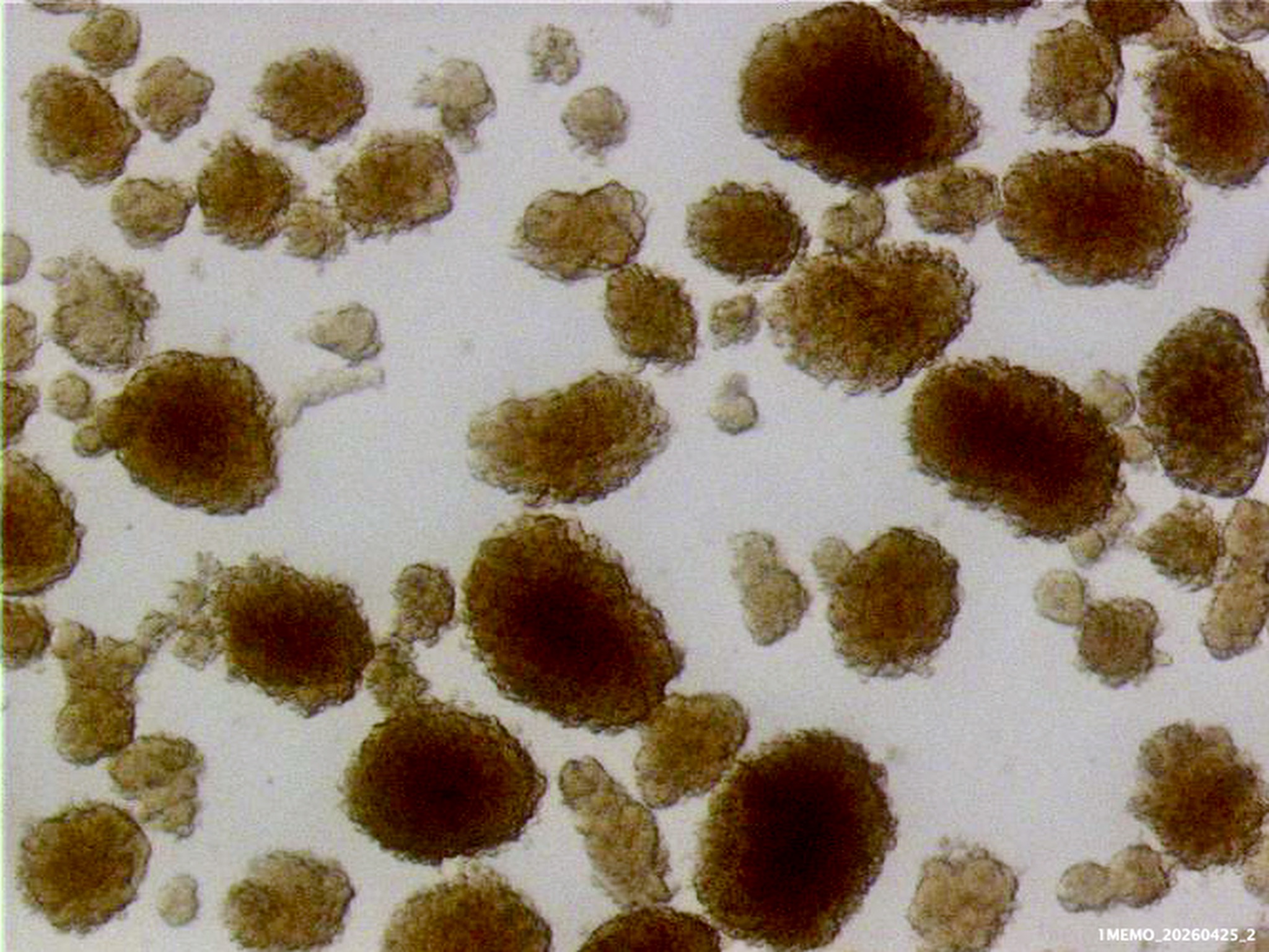
I photographed the isolated cynomolgus islets both before culture (stained red with dithizone), and after one day culture (not stained, in the petri dishes used for culture).


Cynomolgus monkey islets purified in Iodixanol-UWS • 1MEMO_20260425_1 • Michel van der Burg • Miracles•Media • TakeNode 893e099a-13b2-42cd-a3e9-17bcbe14d3d9 • Islets not cultured, identified by staining red with dithizone, after overnight preservation in cold UWS (due to logistics).

Cynomolgus monkey islets purified in Iodixanol-UWS • 1MEMO_20260425_2 • Michel van der Burg • Miracles•Media • TakeNode 606380dc-ae91-461e-ab6c-2c24186676de • Islets cultured one day at 37°C, not stained.

Survival of 98% of the islets after staying one day in suspension in a culture solution at 37°C demonstrated the excellent viability of these cynomolgus islets.


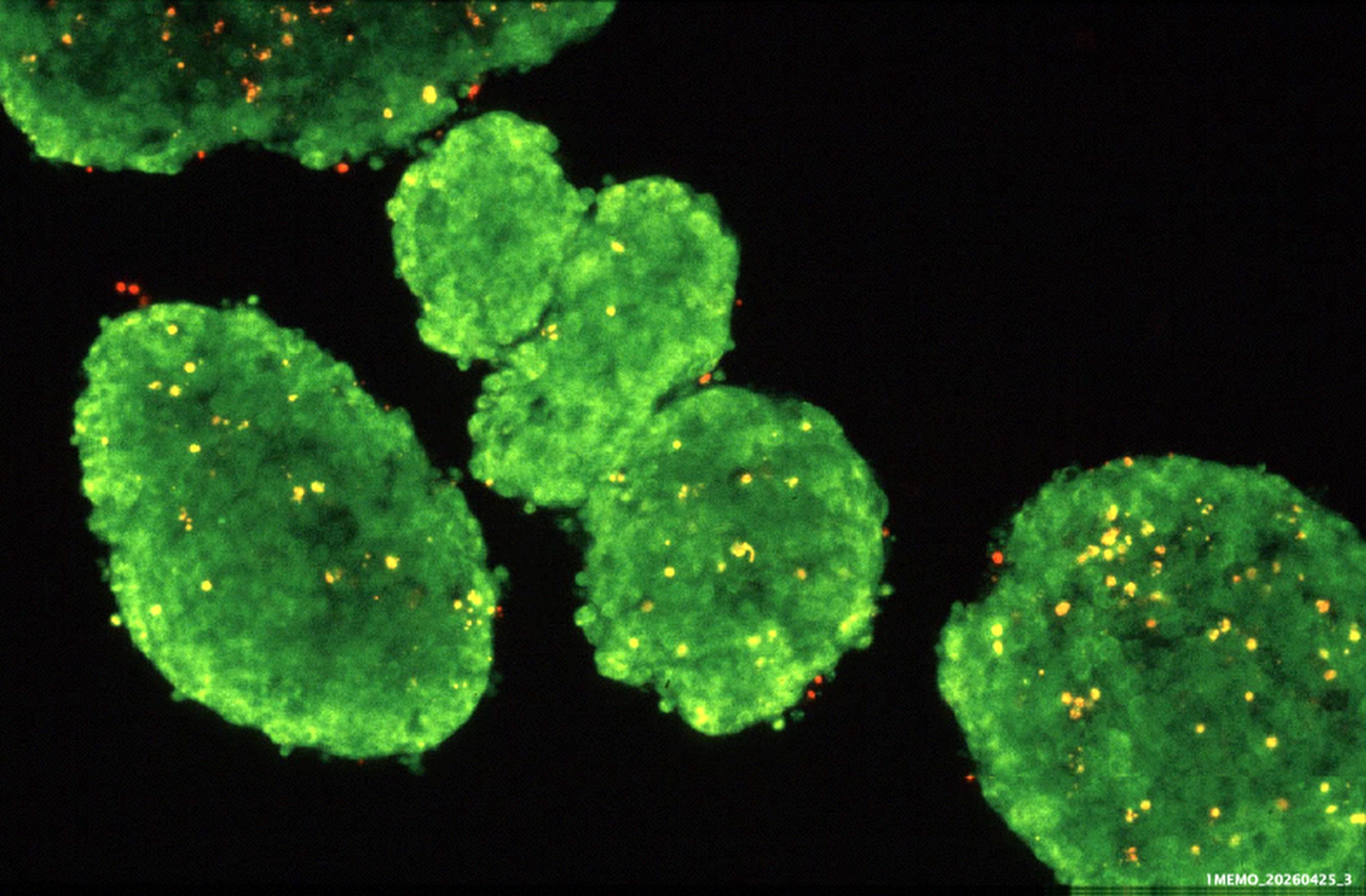
The viability was confirmed by staining these cultured islets with a mixture of two fluorescent dyes — acridine orange and propidium iodide (AO/PI). Fluorescence microscopy shows the live (green) cells , and few dead (red/yellow) cells in these islets.

Cynomolgus monkey islets purified in Iodixanol-UWS • 1MEMO_20260425_3 • Michel van der Burg • Miracles•Media • TakeNode 7666a0a1-7876-4c85-9bd6-30b4ae780028 • Islets cultured one day at 37°C. Fluorescence microscopy shows the live (green) and few dead (red/yellow) cells in these islets. Staining with a mixture of two fluorescent dyes —acridine orange and propidium iodide (AO/PI).

The strict biosafety and biosecurity precautions required for this work, especially due to the risk of infection via aerosols during trituration, sieving, and pouring of the large volumes of tissue and cell suspensions from these non-human primates, proved valuable preparation for the subsequent launch, later that month—March 1999—of human islet isolations from donor organs, in our provisional human islet laboratory at the Department of Surgery—pending the completion of the LUMC GMP facility with a cleanroom for our clinical islet laboratory, that I was preparing together with Amon Wafelman the executive head of the future GMP Facility.

I continued this project of rhesus islet isolation, purification and banking, with in vitro research into the immunogenicity of these purified islets, a year later (July-Dec 2000), coaching medical student Gabe Bleeker who corroborated the efficacy of our protocol in that second series of eight rhesus islet isolations (7). He would also assist me at the time in our islet laboratory with the automated ‘Ricordi’ method for human islet isolation, islet banking and quality control by transplants of aliquots of the human islets in nude mice.

Notes

* IEQ : One islet equivalent (IEQ), is defined as the volume of one islet with a 0.15 mm diameter. Because there a more smaller than large islets in the pancreas , the volume of islets is used to indicate islet yield, and expressedin number of ‘islet equivalents’.

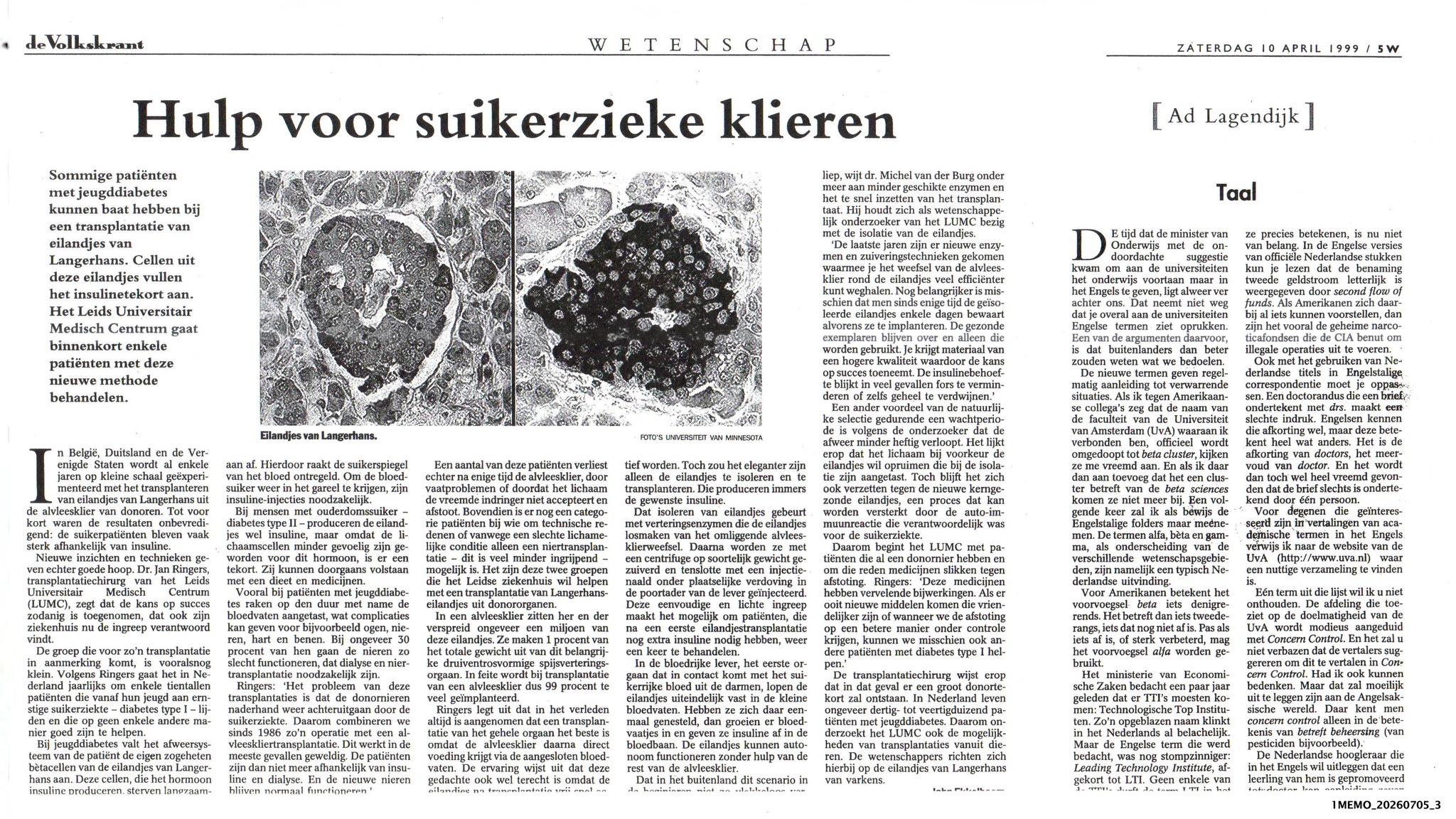
1. Ekkelboom J. Hulp voor suikerzieke klieren. In: Volkskrant April 10th 1999 https://www.volkskrant.nl/wetenschap/hulp-voor-suikerzieke-klieren~b7046616

2) Successful Islet Transplantation After Purification in Iodixanol-UWS • IPITA 1999 Sydney • @1MEMO 20260326 • Michel van der Burg • Miracles.Media • URL michelvanderburg.com/2026/03/26/

3) Innovative Islet Purification in Iodixanol-UWS • IPITA 97 • Michel van der Burg • Miracles.Media • @1MEMO 20250128 • URL michelvanderburg.com/2025/01/28/

4) Iodixanol-UWS Purification for Porcine Islet Transplantation • AIDSPIT 1998 • Michel van der Burg • Miracles.Media • @1MEMO 20250131 • TakeNode 1f185515-7aeb-44ac-b721-2cec76df67b7 • URL michelvanderburg.com/2025/01/31/

5) Human Islet Isolation • DRI Miami 1998 • Michel van der Burg • Miracles.Media • @1MEMO 20250204 • TakeNode 86e4a319-a769-44d5-8fa5-de2ca90ab63c • URL michelvanderburg.com/2025/02/04/

6) Efficacy of the novel iodixanol-UWS density gradient for human islet purification • Igls Aidspit 1999 • Michel van der Burg • Miracles.Media • 20241202 • URL michelvanderburg.com/2024/12/02/

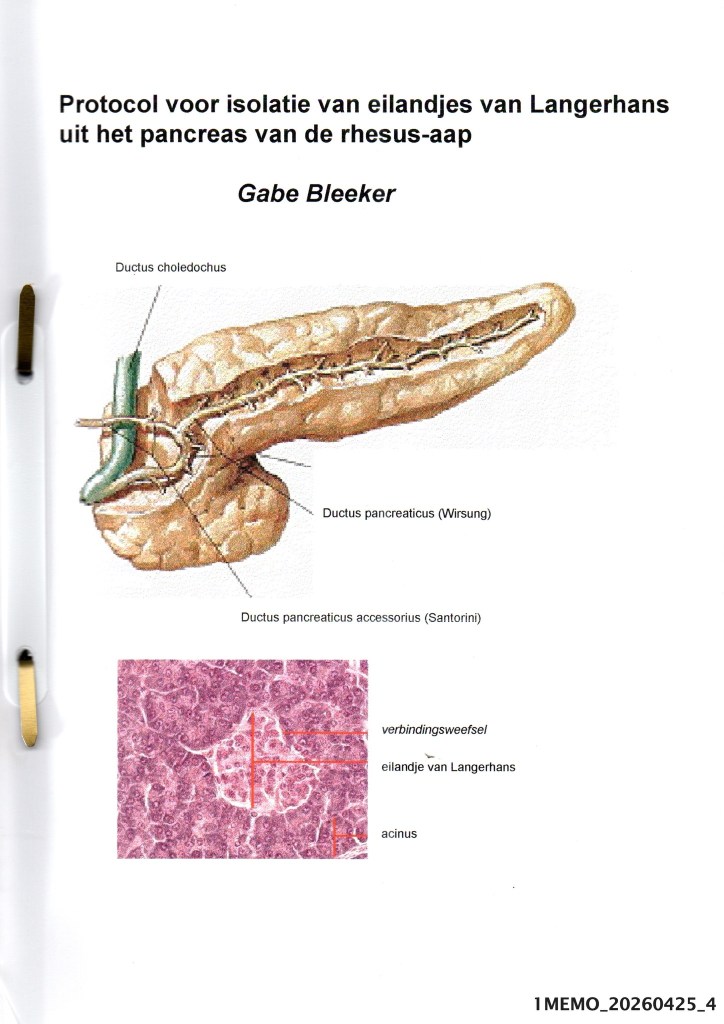
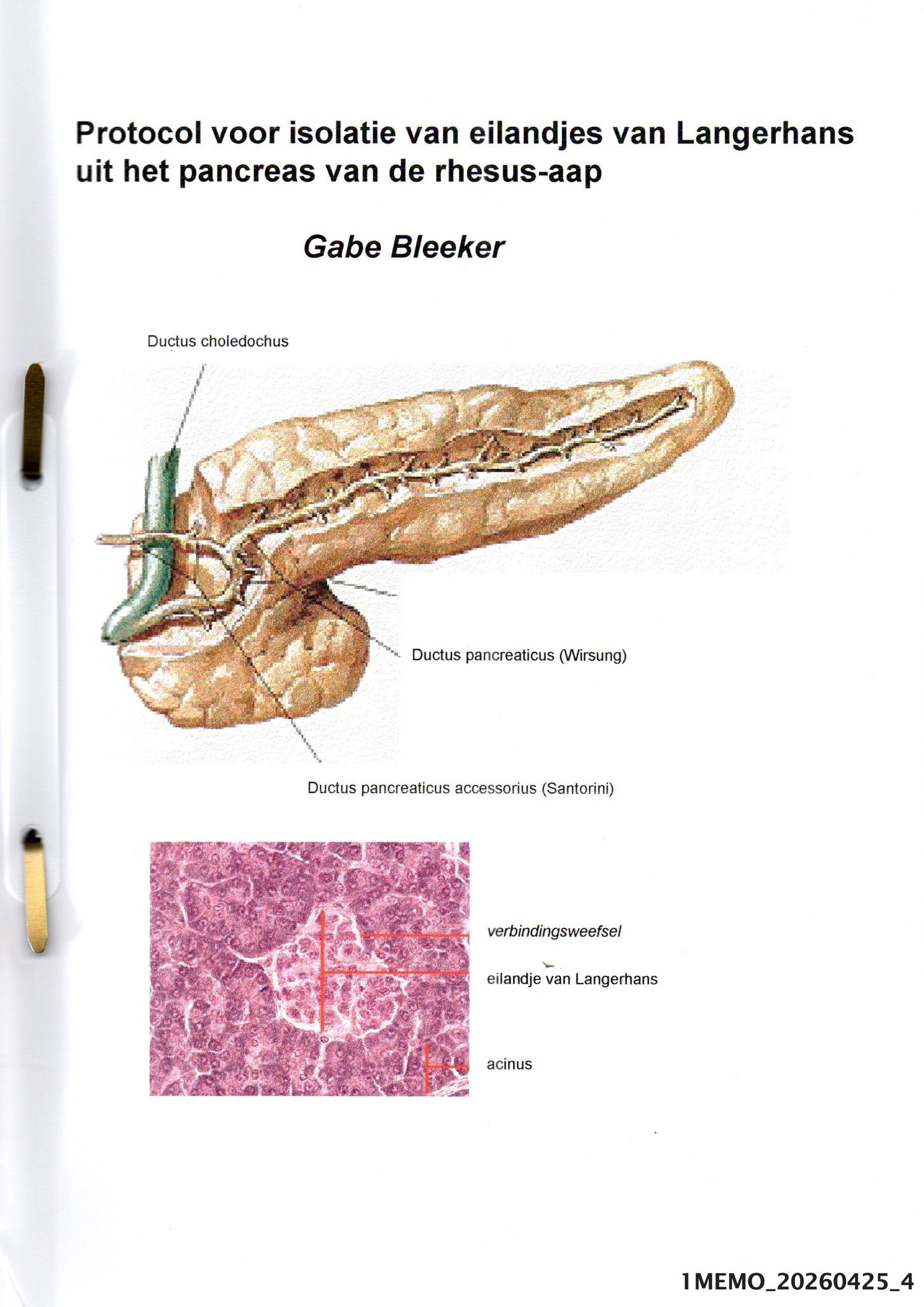
7) Protocol for the isolation of islets of Langerhans from the pancreas of the rhesus monkey (dutch : Protocol voor isolatie van eilandjes van Langerhans uit het pancreas van de rhesus-aap) • Studies on the isolation and immunogenicity/immunology of monkey (rhesus) islets • Gabe B. Bleeker (MSc student Medicine) at the Department of Surgery of the Leiden University and the BPRC – TNO centre.


Cover Bleeker Report Rhesus Islet Isolation • 1MEMO_20260425_4 • Michel van der Burg • Miracles•Media • TakeNode 96bd9197-71a5-4c19-9540-264b1ba74be4 • Protocol for the isolation of islets of Langerhans from the pancreas of the rhesus monkey. Cover research report, MSc student Medicine, Gabe Bleeker (Dec 2000).

#islets #islet #Langerhans #isolation #purification #culture #isletbank #QC #immunogenicity #GMP #facility #LUMC #Holland #Netherlands #Leiden #hospital #primate #human #monkey #rhesus #cynomolgus #macaque #donor #surgery #clinical #laboratory #optiprep #iodixanol #ViaSpan #density #gradient #UWS #pancreas #MLIC #UW #university #Wisconsin #transplantation #xeno #mouse #diabetes #man #history #research #1memo #michelvanderburg #Bleeker #Ricordi #DRI #Miami

Citation info : Primate Islet Isolation and Purification in Iodixanol-UWS • @1MEMO_20260425 • Michel van der Burg • Miracles.Media • URL michelvanderburg.com/2026/04/25/

Islet Isolation Assessment • 4th IPITA Amsterdam 1993 • @1MEMO 20260201

4th IPITA , Amsterdam, 1993 • Michel van der Burg • Miracles•Media • 1MEMO_20260201_11 • TakeNode 1c776460-e3a6-46df-8b8b-f43f30517021

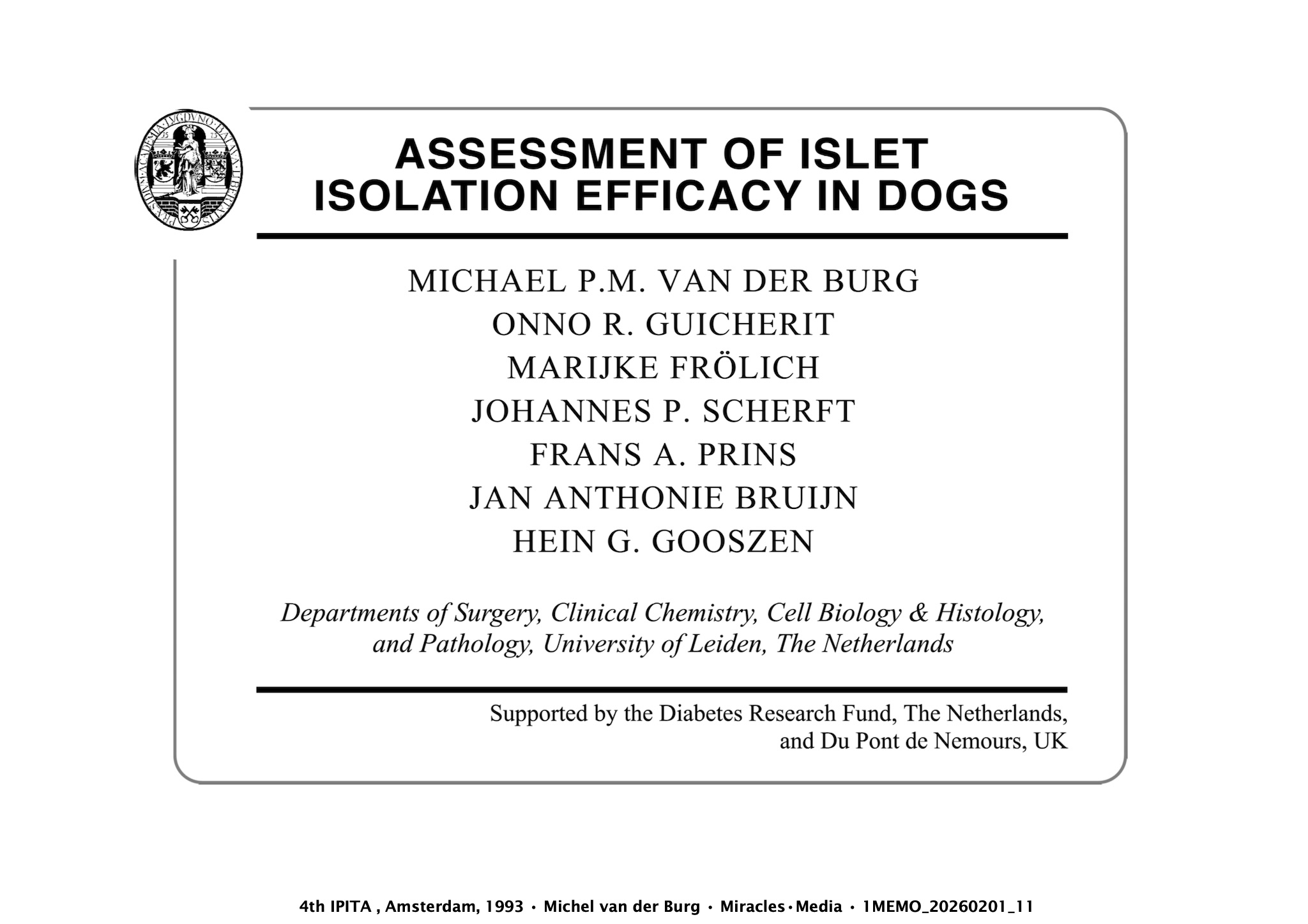
Slideshow (handout slides, partially remastered) of my talk titled ‘Assessment of islet isolation efficacy in dogs’ presented at the 4th International Congress on Pancreas and Islet Transplantation (4th IPITA), Amsterdam (The Netherlands) June 27–30, 1993 • Michel van der Burg • Miracles•Media • 1MEMO_20260201_1 • TakeNode 628b273c-b8e1-4e23-8f8b-1550c7960cb3 • PDF available below.

Text of talk ‘Assessment of islet isolation efficacy in dogs’ presented at the 4th International Congress on Pancreas and Islet Transplantation (4th IPITA), Amsterdam (The Netherlands) June 27–30, 1993 • Michel van der Burg • Miracles•Media • 1MEMO_20260201_12 • TakeNode 9bc525ba-dfdb-4d92-8af4-bdd21ee1faaf • PDF available below.

The proceedings paper delivered at the 4th IPITA is included below in the Notes , as well as references of the related full papers and related chapters of PhD thesis.

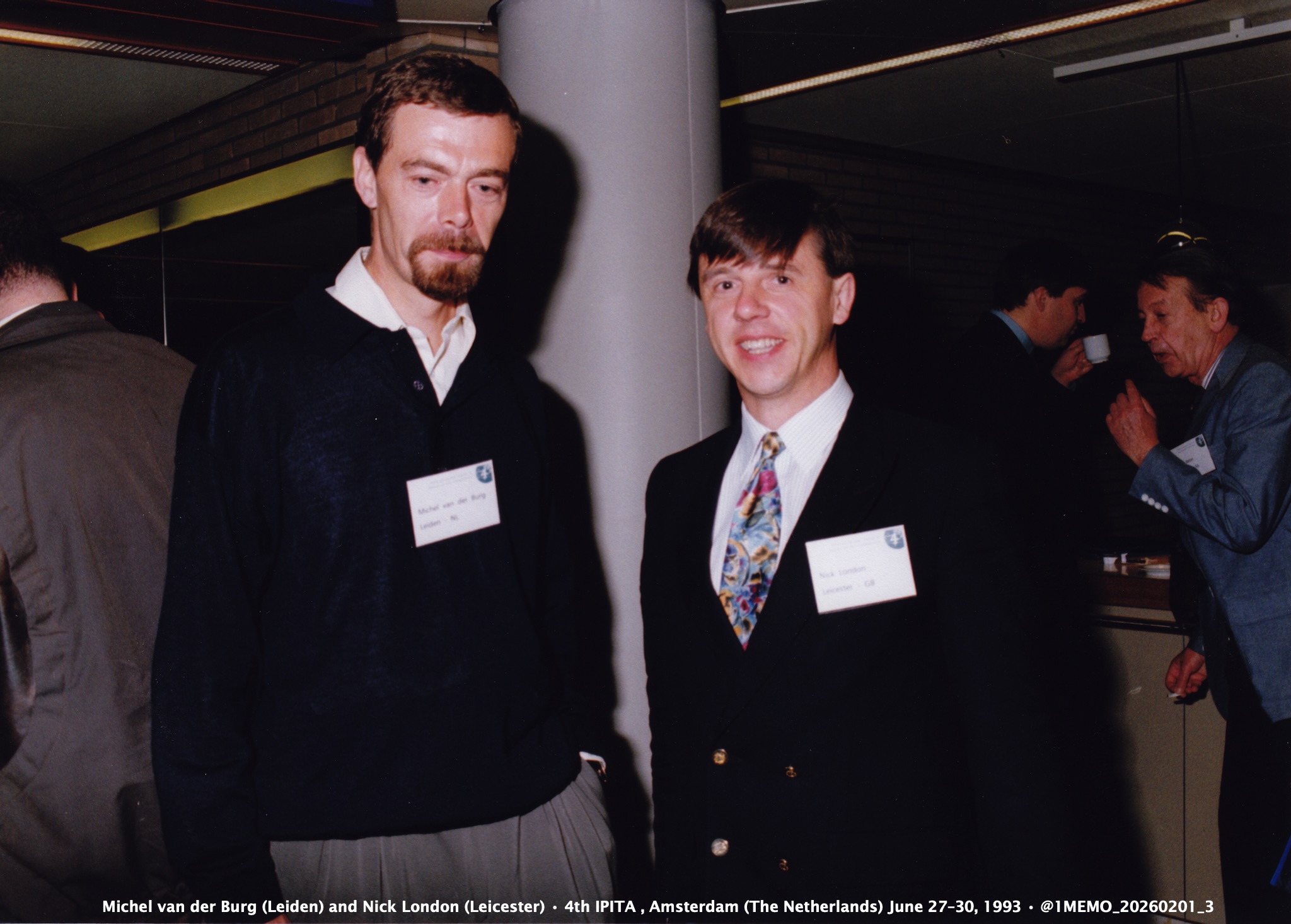
This IPITA meeting in Amsterdam was also a good opportunity to catch up with colleague Nick London (see photo) from the Leicester (UK) group discussing our Leiden and Leicester islet isolation work using the University of Wisconsin organ preservation solution (UWS). The Leicester group were one of the first groups to examine and adopt our novel method of islet isolation in UWS.


Several groups reported at this 4th IPITA symposium on the effects of using (modified) UW solution (UWS) during islet isolation : Leicester (pig, human, islets), Oxford (rat, rabbit islets), Minneapolis (human islets), Paris (pig islets), and Giessen (clinical human allo islet transplantation).

Michel van der Burg (Leiden) and Nick London (Leicester) • 4th IPITA , Amsterdam (The Netherlands) June 27–30, 1993 • Photo by Matthias Ohimer , Michel van der Burg • Miracles•Media • @1MEMO_20260201_3 • TakeNode c4451ac4-84fc-4068-823a-b475dc0bb35e • #islets #LUMC #transplant #IPITA #diabetes #Amsterdam #Leicester #Leiden

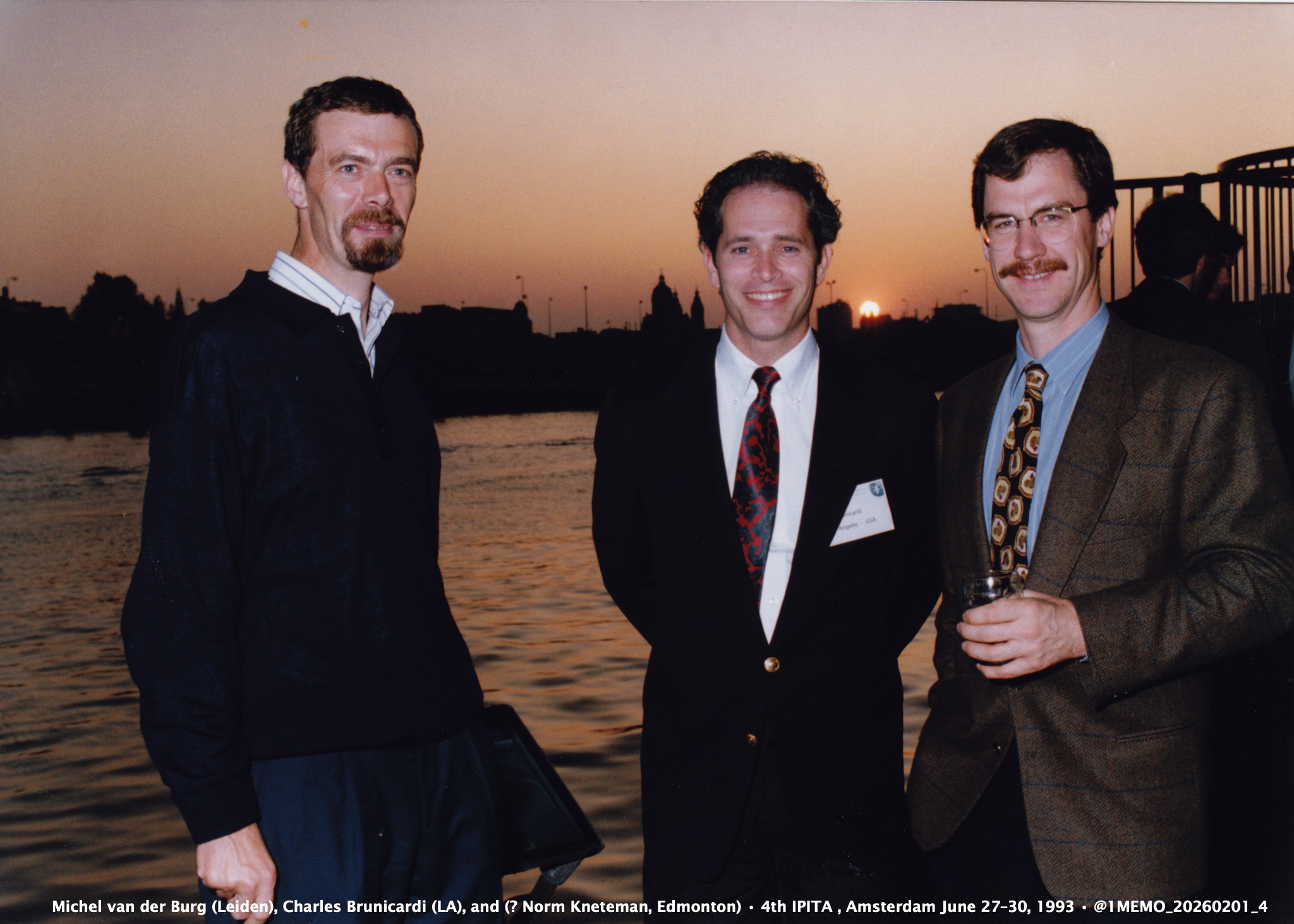
During the 4th IPITA, I discussed in detail the rationale of our UWS work, the important components of UWS, and basal solution for islet purification (Percoll-UWS) with Yoko Mullen (in particular) and her co-worker Charles Brunicardi (see photo) of the UCLA Islet Transplant Team (LA, USA)…contributing to the development of Yoko’s Los Angeles preservation solution #1 (LAP-1) patented in 1997 (see Notes, Patent US5679565A).

Michel van der Burg (Leiden), Charles Brunicardi (LA), and (? Norm Kneteman, Edmonton) • 4th IPITA , Amsterdam (The Netherlands) June 27–30, 1993 • Photo by Matthias Ohimer , Michel van der Burg • Miracles•Media • @1MEMO_20260201_4 • TakeNode 93930fd4-ee21-4b18-90ca-83e1731102e1 • #islets #LUMC #transplant #IPITA #diabetes #Amsterdam #Leiden #LosAngeles #LA #Edmonton

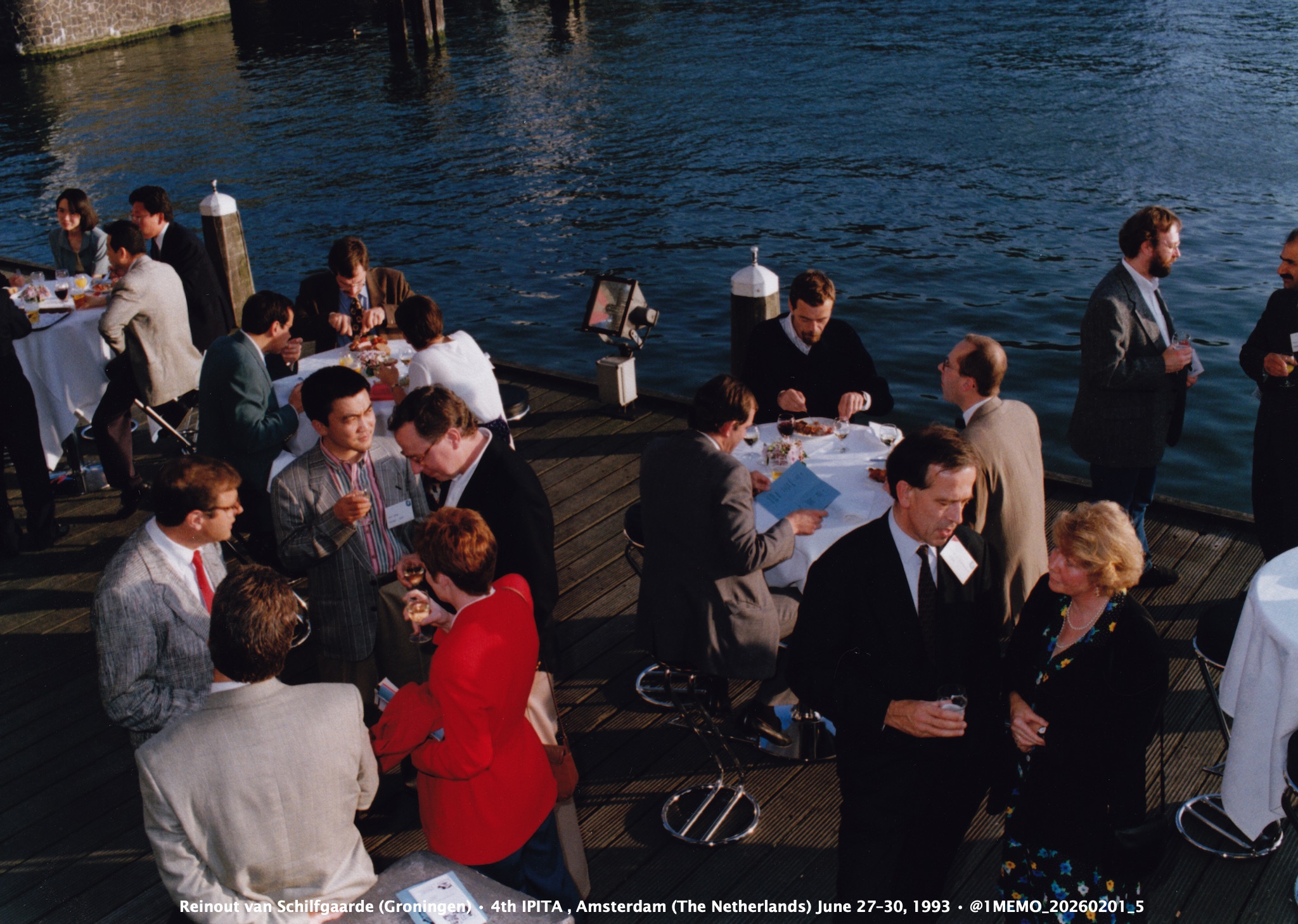
The official founding meeting of the IPITA was actually at this 4th International Congress on Pancreas and Islet Transplantation — June 27–30, 1993 in Amsterdam (The Netherlands) hosted by Dr. Reinout van Schilfgaarde (see photo).

Reinout van Schilfgaarde (Groningen) • 4th IPITA , Amsterdam (The Netherlands) June 27–30, 1993 • Photo by Matthias Ohimer , Michel van der Burg • Miracles•Media • @1MEMO_20260201_5 • TakeNode 9a713895-1dc6-462a-9621-1160ddeb2d8e • #islets #LUMC #transplant #IPITA #diabetes #Amsterdam #Leiden

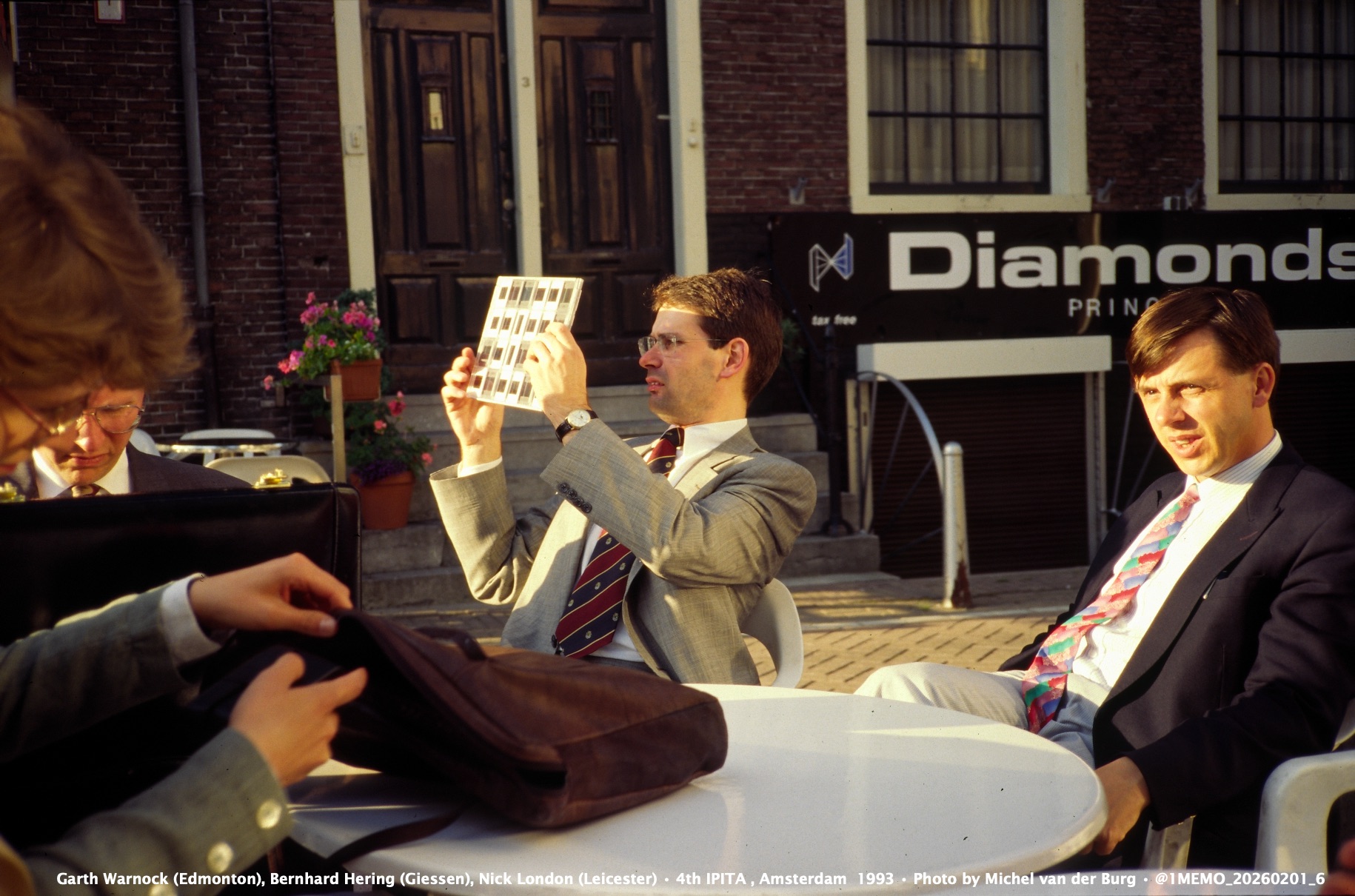
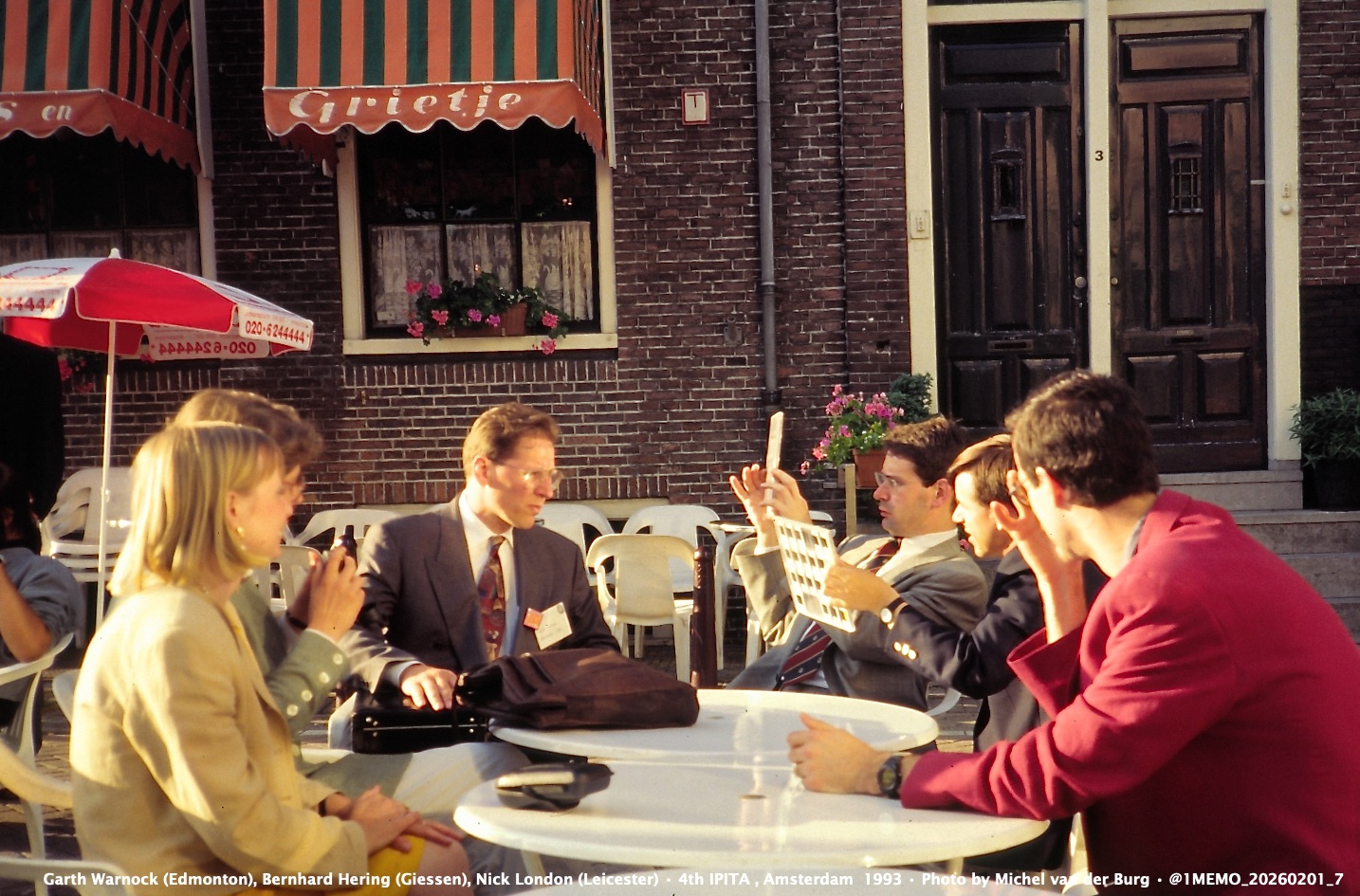
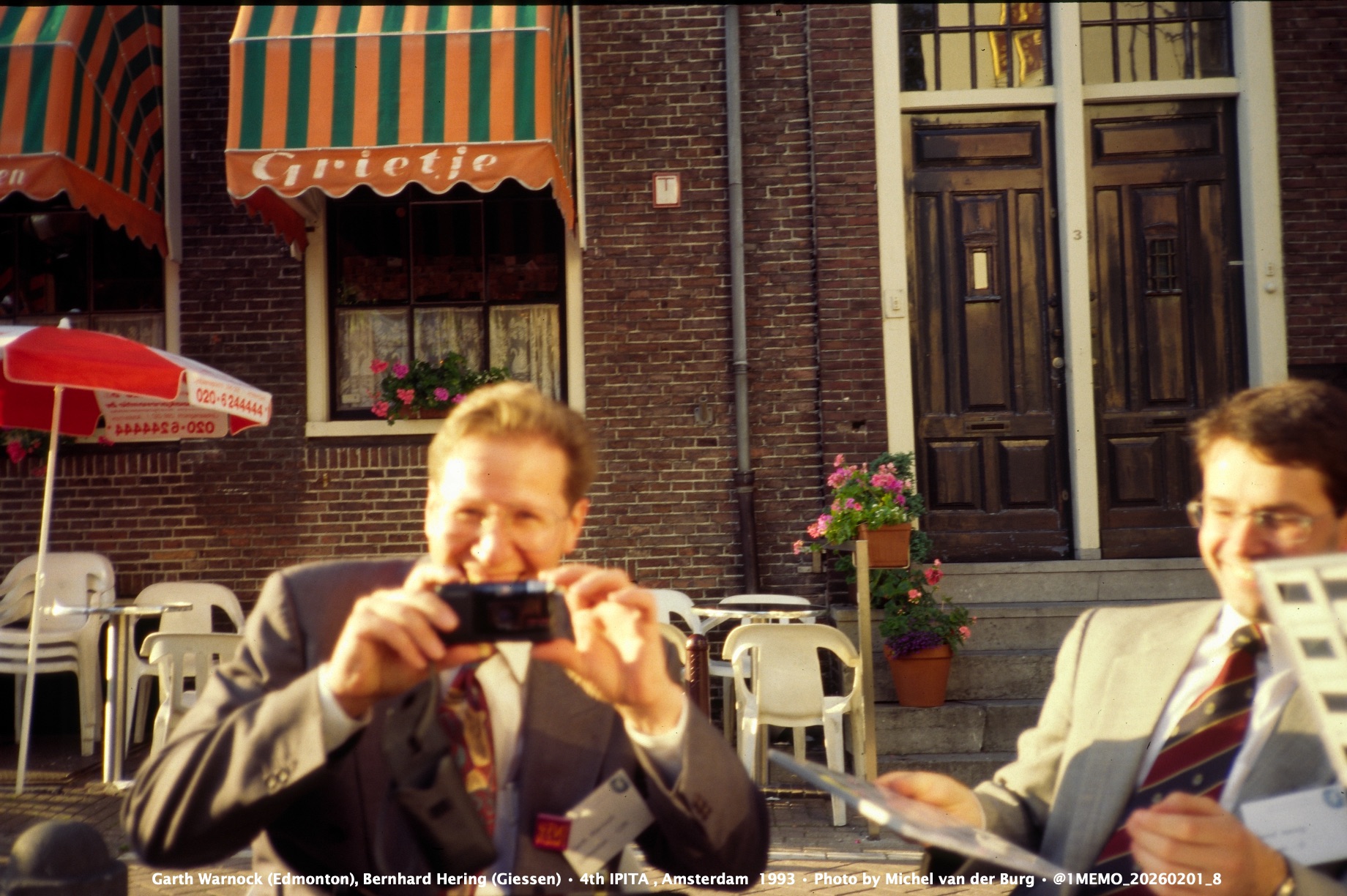
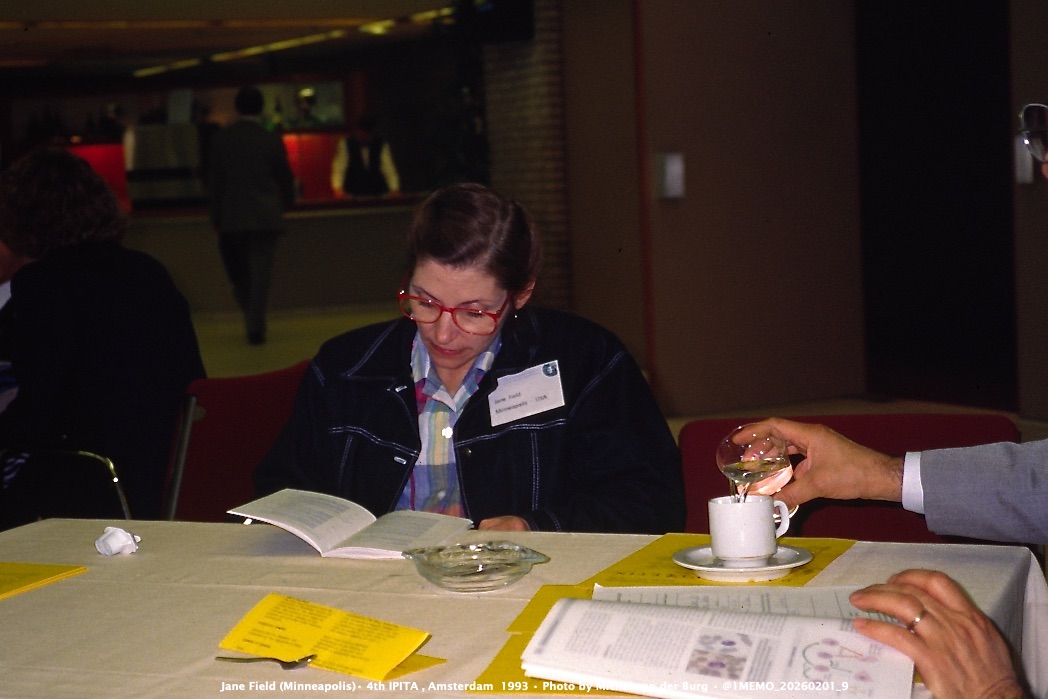
Below some of the photos I took during a break at the 4th IPITA in Amsterdam, near the Rijksmuseum (corner Spiegelgracht / Tweede Weteringdwarsstraat ) , and (Jane Field) at the congress venue (RAI Amsterdam).

Garth Warnock (Edmonton), Bernhard Hering (Giessen), Nick London (Leicester) • 4th IPITA , Amsterdam (The Netherlands) June 27–30, 1993 • Photo by Michel van der Burg • Miracles•Media • @1MEMO_20260201_6 • TakeNode 4a31bed0-8308-4a51-9291-06d53549ef3d • #islets #LUMC #transplant #IPITA #diabetes #Amsterdam #Leiden #Edmonton #Giessen #Leicester

Garth Warnock (Edmonton), Bernhard Hering (Giessen), Nick London (Leicester) • 4th IPITA , Amsterdam (The Netherlands) June 27–30, 1993 • Photo by Michel van der Burg • Miracles•Media • @1MEMO_20260201_7 • TakeNode ea3824e8-23da-4cbb-aeaa-04cbc1903c2b • #IPITA #Amsterdam #islets #LUMC #transplant #diabetes #Leiden #Edmonton #Giessen #Leicester

Garth Warnock (Edmonton), Bernhard Hering (Giessen) • 4th IPITA , Amsterdam (The Netherlands) June 27–30, 1993 • Photo by Michel van der Burg • Miracles•Media • @1MEMO_20260201_8 • TakeNode ffbe0d97-be31-4dc9-bc94-9e2b708ccb47 • #IPITA #Amsterdam #islets #LUMC #transplant #diabetes #Edmonton #Giessen #Leiden

Jane Field (Minneapolis) • 4th IPITA , Amsterdam (The Netherlands) June 27–30, 1993 • Photo by Michel van der Burg • Miracles•Media • @1MEMO_20260201_9 • TakeNode d1921eb6-2c38-49c2-9693-d288d940268d • #IPITA #Amsterdam #islets #LUMC #transplant #diabetes #Minneapolis #Leiden

Notes

Oral presentation 4th IPITA : Van der Burg MPM, Guicherit OR, Frölich M, Scherft JP, Prins FA, Bruijn JA, Gooszen HG. Assessment of islet isolation efficacy in dogs. 4th International Congress on Pancreas and Islet Transplantation, Amsterdam (The Netherlands) June 27–30, 1993.

Oral presentation (selection of slides Assessment of islet isolation efficacy in dogs). Van der Burg MPM. Workshop: Guidelines for the standardized assessment of retrieval and transplantation of islets. 4th International Congress on Pancreas and Islet Transplantation, Amsterdam (The Netherlands) June 27–30, 1993.

Proceedings paper 4th IPITA : Van der Burg MPM, Guicherit OR, Frölich M, Scherft JP, Prins FA, Bruijn JA, Gooszen HG. Morphometry of native and isolated islets: a new approach to isolation assessment. Transplant Proc. 1994 Apr;26(2):632-3. PMID: 7513459 . PDF available below

This slideshow had been presented earlier that year with a different title at the 12th Workshop of the AIDSPIT Study Group in Igls :
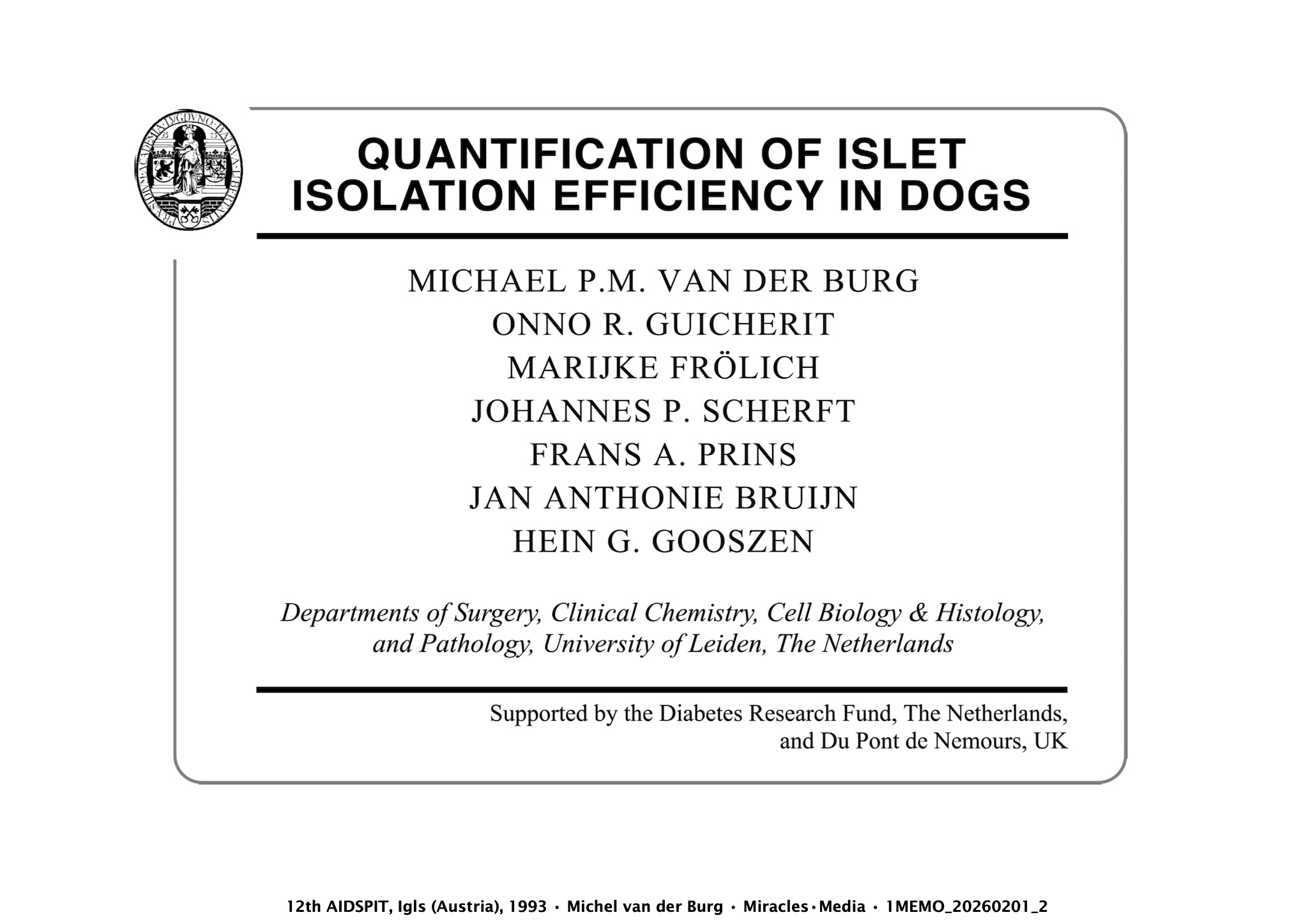
Oral presentation 12th AIDSPIT : Van der Burg MPM, Guicherit OR, Frölich M, Scherft JP, Bruijn JA, Prins FA, Gooszen HG. Quantification of islet isolation efficiency in dogs. 12th Workshop of the AIDSPIT Study Group of the European Association for the Study of Diabetes, Igls (Austria) January 24–26, 1993.

Title Slide (remastered) 12th AIDSPIT, Igls (Austria), 1993 • Michel van der Burg • Miracles•Media • 1MEMO_20260201_2 • TakeNode 2cfe23eb-cbb0-4942-afcb-56755ebcb467

Abstract 12th AIDSPIT : Van der Burg MPM, Guicherit OR, Frölich M, Scherft JP, Bruijn JA, Prins FA, Gooszen HG. Quantification of islet isolation efficiency in dogs (Abstract). Horm Metab Res 1993; 25: 52. 1MEMO_20260201_10 PDF available below.

Corresponding Full Papers (Thesis chapters)

Van der Burg MPM, Guicherit OR, Frölich M, Scherft JP, Bruijn JA, Gooszen HG. Impact of donor-related variables on islet isolation outcome in dogs. Diabetologia. 1994 Jan;37(1):111-4. doi: 10.1007/BF00428786. PMID: 8150223 . Article PDF Free download.

Van der Burg MPM, Guicherit OR, Frölich M, Scherft JP, Prins FA, Bruijn JA, Gooszen HG. Assessment of islet isolation efficacy in dogs. Cell Transplant. 1994 Jan-Feb;3(1):91-101. doi: 10.1177/096368979400300113. PMID: 8162296

Chapters (2,3) Doctoral Thesis (corresponding with full papers) : Van der Burg MPM. Pancreatic islet transplantation: studies on the technique and efficacy of islet isolation and transplantation. (Doctoral Thesis, Leiden University, 1994), Paperback (1994, Nov 9) Boskoop: Van der Burg (ISBN 9080216410); E-book (2022, Oct 25) Boskoop: Michel van der Burg | Miracles•Media ( ISBN 9789080216402). Retrieved (Dec 4th, 2025) from Leiden University Scholarly Publications, Persistent URL https://hdl.handle.net/1887/3486604 . PDF free download available via link.

Patent US5679565

Method of Preserving Pancreatic Islets , Mullen et al. United States Patent US5679565 . Download PDF https://patentimages.storage.googleapis.com/80/60/f6/744731dd250c48/US5679565.pdf

Online history of patent :
US5679565A – Method of preserving pancreatic islets – Google Patents URL https://patents.google.com/patent/US5679565A

Portfolio

Online Portfolio – Science : https://michelvanderburg.com/category/science/

#islet #IPITA #AIDPIT #Amsterdam #Igls #Innsbruck #UWS #density #purification #history #AIDSPIT #Leiden #Leicester #Netherlands #Austria #Langerhans #isolation #transplantation #pancreas #diabetes #insulin #donor #assessment #michelvanderburg #symposium #workshop #science #EPITAsymposium #EASD #ESOT #Edmonton #Giessen #Minneapolis

Citation info : Islet Isolation Assessment • 4th IPITA Amsterdam 1993 • Michel van der Burg • Miracles•Media • @1MEMO 20260201 • URL https://michelvanderburg.com/2026/02/01

Pancreas & Islet Transplantation Program • 20240912

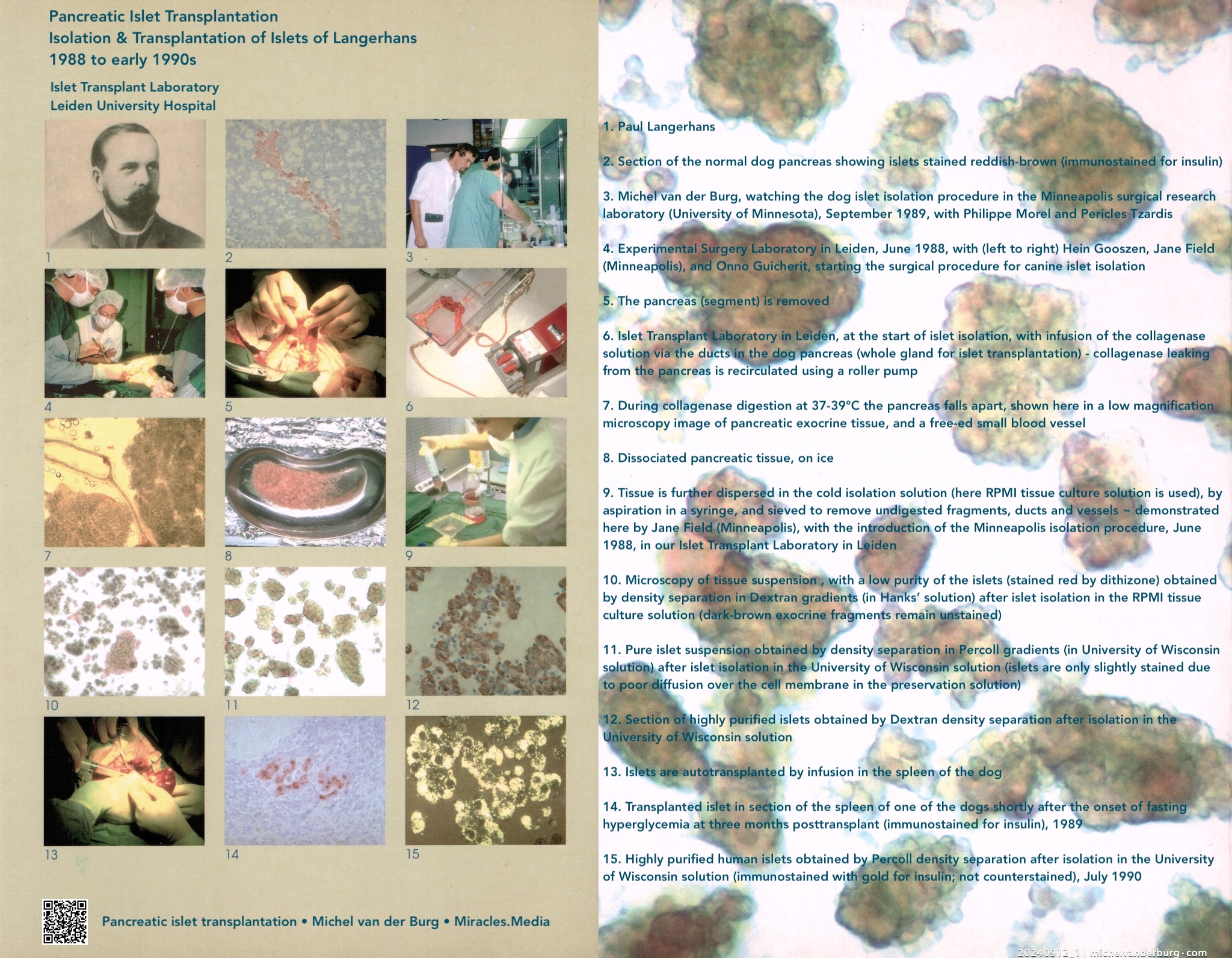
Pancreatic Islet Transplantation • Isolation & Transplantation of Islets of Langerhans • 1988 to early 1990s • Islet Transplant Laboratory • Leiden University Hospital • 20240912_1 (Note 1)

Grants

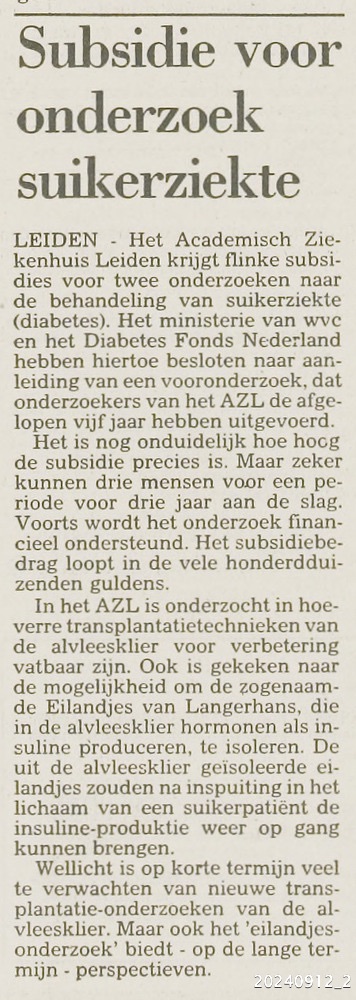
In 1988, we started a project with unique integration of two important trends in research into the treatment of diabetes by transplantation at the Leiden University Hospital (AZL) in Leiden, with major grants from the dutch Ministry of Welfare, Health and Culture (WVC) and the dutch Diabetes Fund (Diabetes Fonds Nederland).

Grants diabetes research • Newspaper Leidsch Dagblad, June 24, 1988 (Note 2)


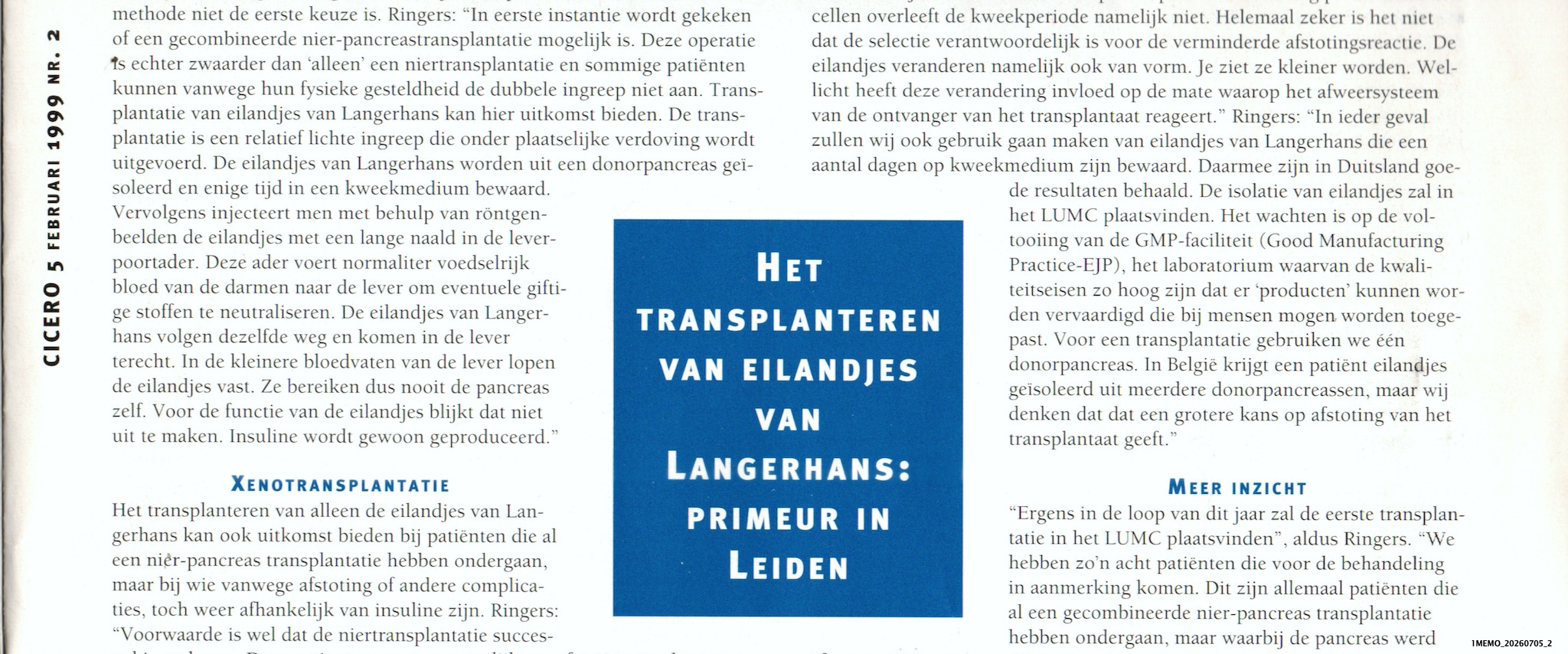
The generous grants were received — as reported June 24, 1988 in both the dutch newspaper Leidsch Dagblad (2) and in Cicero, the biweekly publication of the Leiden Medical Faculty and University Hospital (3), as a result of our preliminary research over the previous five years into improving the technique of pancreas transplantation, and more recently the development of a technique for isolating the Islets of Langerhans from the pancreas, which produce hormones such as insulin. The idea behind this is, that these isolated islets, after injection into the body, will restart and maintain insulin production.

Questions

What is the consequence of the loss of normal nerve connections to the islets during transplantation?
What are the consequences of transplantation of only a segment of the pancreas, or islet transplantation, when fewer islets are available?
What is the consequence after transplantation of the different insulin drainage route, where the insulin does not follow the normal path directly to the liver?
To what extent do transplantation procedures disrupt the normal architecture and interactions of islets, the pancreas, and other parts of the gastro-intestinal system, and the blood sugar regulation in the body?

Project

With the hope of answering these questions, the grants supported an ambitious new project supervised by Hein Gooszen, integrating two concomitant PhD projects for detailed islet function studies in both experimental pancreas transplantation, by Onno Guicherit (4) , as well as islet isolation by Michel van der Burg (5) in the same model.

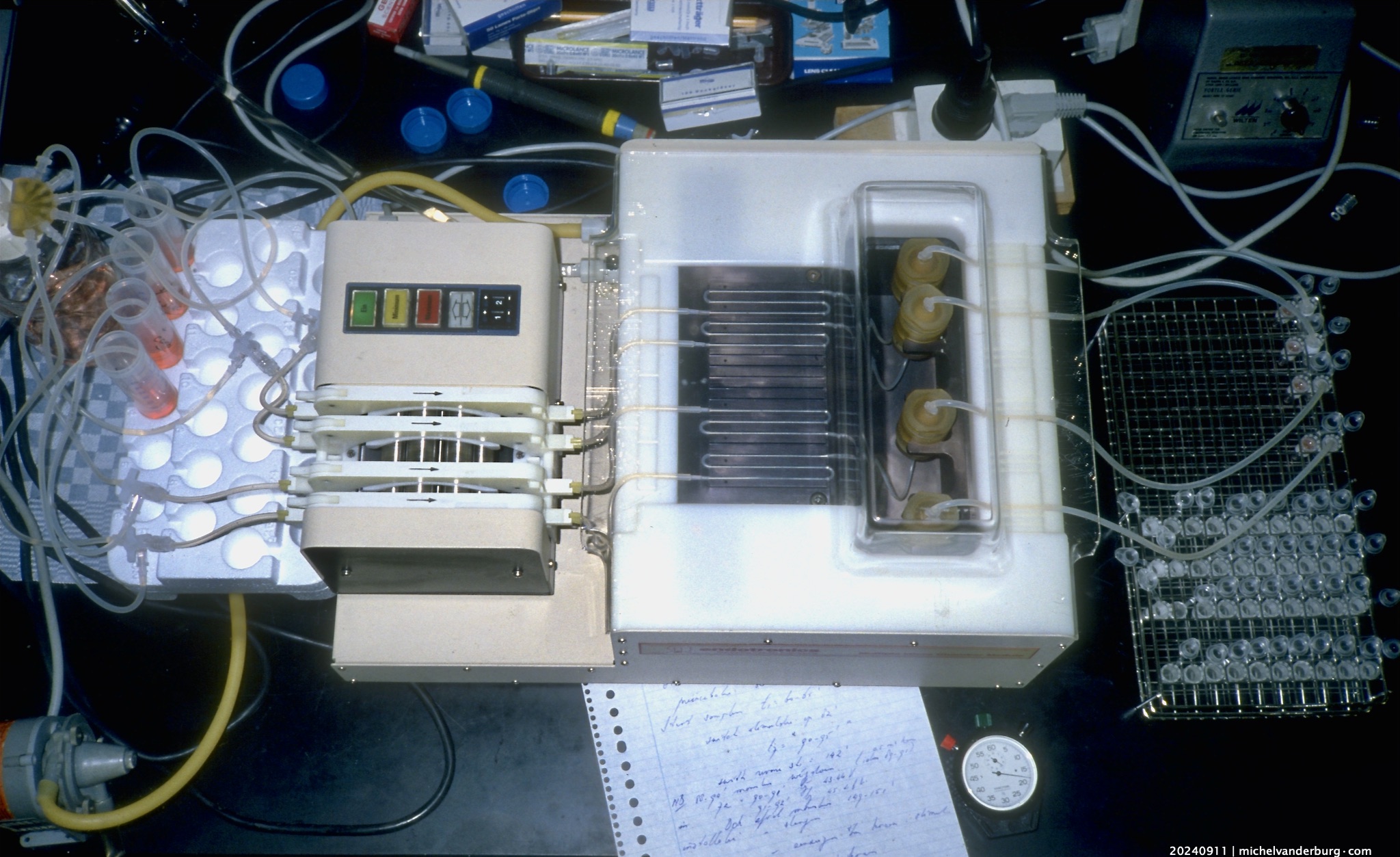
A special feature of the experimental design in this preclinical model is that the results of functional studies in the experimental animal can be compared with such functional studies with the isolated islets from the pancreas, where the direct effect on the islets is investigated during perifusion tests in our laboratory (6).

Monitoring insulin secretion by pancreatic islets in perifusion • 20240911 • Michel van der Burg • michelvanderburg•com | URL https://michelvanderburg.com/2024/09/11/monitoring-pancreatic-islets-in-perifusion-20240911/


Minneapolis method

That same month, June 1988, we began research to improve the method of islet isolation in our laboratory, with the assistance of Jane Field, who had come over that month at our invitation from Minneapolis, where she was a key member of the Surgical Research lab, University of Minnesota (led by David Sutherland).

The introduction of this Minneapolis method for islet isolation significantly improved the yield of isolated islets in our Islet Transplant Lab.

New concept : University of Wisconsin solution (UWS) for islet isolation

Next , early 1989 , our Islet Transplant Lab took a major step forward in a new approach to isolation and purification of the islets by replacing the islet isolation solution (the general used basic physiological salt solution or tissue culture solution) with a novel organ preservation solution : the University of Wisconsin solution (UWS). The method of choice nowadays in clinical islet transplantation centers. More on this introduction of UWS will soon be posted here. A reprint of a first poster presented in Minneapolis, Sep. 1989, is now online here (7).

Program

June 1989 our Surgery Department (Leiden University) started an additional project, for ‘auto’ transplantation of isolated islets : Isolation of the islets from the canine pancreas and transplantation of the isolated islets ca 4 hours later in the same animal (8).

Thus, from 1989, we studied the insulin secretion of the isolated islets in perifusion experiments in the laboratory (‘in vitro’) in comparison with both the islet function ‘in vivo’ after transplantation of the isolated islets, and in the concomitant pancreas transplantation experiments — in support of our clinical pancreas transplantation program in Leiden.

Notes

1) Pancreatic Islet Transplantation • Isolation & Transplantation of Islets of Langerhans • 1988 to early 1990s • Islet Transplant Laboratory • Leiden University Hospital • 20240912_1 • michelvanderburg•com | TakeNode 5b5ca362-2adf-497a-b2be-a83e47617017 | Image edit based on : Pancreatic islet transplantation • Michel van der Burg • Miracles.Media • Thesis Repository Leiden University https://hdl.handle.net/1887/3486604

Captions in Note 9

2) Subsidie voor onderzoek suikerziekte. Leidsch Dagblad, June 24, 1988 (leiden.courant.nu) • 20240912_2 • michelvanderburg•com

3) Diabetesonderzoek | AZL krijgt grote subsidies voor diabetesonderzoek | by Sylvia van Leeuwen in Cicero, June 24th, 1988 (ISSN 0920-2900), the biweekly publication of the Academic Hospital and Leiden Medical Faculty | 20240912_3 • michelvanderburg•com | Download PDF article below : file 20240912_3_CICERO

4) Onno R. Guicherit. Long-term metabolic sequelae of beta cell mass reduction, systemic venous drainage and denervation of the canine pancreas : experimental studies in relation to clinical pancreas transplantation. (Doctoral Thesis, Faculty of Medicine, Leiden University Medical Center (LUMC) , Leiden University)(S.l.: s.n.), (ISBN print: 9789090072319, 9090072314), 1994: 149 p. URL WorldCat https://search.worldcat.org/en/title/69433794

5) Michael P.M. van der Burg. Pancreatic islet transplantation: studies on the technique and efficacy of islet isolation and transplantation. (Doctoral Thesis, Faculty of Medicine, Leiden University Medical Center (LUMC) , Leiden University), Boskoop: M.P.M. van der Burg | Miracles.Media (ISBN electronic, pdf, 9789080216402 ; ISBN print 9789080216419, 9080216410), 1994: 192 p. URL Thesis Repository Leiden University https://hdl.handle.net/1887/3486604

6) Monitoring pancreatic islets in perifusion • 20240911 • Michel van der Burg • michelvanderburg•com | URL https://michelvanderburg.com/2024/09/11/monitoring-pancreatic-islets-in-perifusion-20240911/

7) Minneapolis 1989 Poster | 20240804 | Michel van der Burg | michelvanderburg•com | URL https://michelvanderburg.com/2024/08/04/minneapolis-1989-poster-20240804/

8) Islet Transplantation Breakthrough in Leiden University Hospital • 20240830 • Michel van der Burg • michelvanderburg•com | URL https://michelvanderburg.com/2024/08/30/islet-transplantation-breakthrough-in-leiden-university-hospital-20240830/

9) Pancreatic Islet Transplantation • Isolation & Transplantation of Islets of Langerhans 1988 to early 1990s • Islet Transplant Laboratory • Leiden University Hospital • 20240912_1 • michelvanderburg•com | TakeNode 5b5ca362-2adf-497a-b2be-a83e47617017 |

Captions Image 20240912_1 :

1. Paul Langerhans

2. Section of the normal dog pancreas showing islets stained reddish-brown (immunostained for insulin)

3. Michel van der Burg, watching the dog islet isolation procedure in the Minneapolis surgical research laboratory (University of Minnesota), September 1989, with Philippe Morel and Pericles Tzardis

4. Experimental Surgery Laboratory in Leiden, June 1988, with (left to right) Hein Gooszen, Jane Field (Minneapolis), and Onno Guicherit, starting the surgical procedure for canine islet isolation

5. The pancreas (segment) is removed

6. Islet Transplant Laboratory in Leiden, at the start of islet isolation, with infusion of the collagenase solution via the ducts in the dog pancreas (whole gland for islet transplantation) – collagenase leaking from the pancreas is recirculated using a roller pump

7. During collagenase digestion at 37-39°C the pancreas falls apart, shown here in a low magnification microscopy image of pancreatic exocrine tissue, and a free-ed small blood vessel

8. Dissociated pancreatic tissue, on ice

9. Tissue is further dispersed in the cold isolation solution (here RPMI tissue culture solution is used), by aspiration in a syringe, and sieved to remove undigested fragments, ducts and vessels ~ demonstrated here by Jane Field (Minneapolis), with the introduction of the Minneapolis isolation procedure, June 1988, in our Islet Transplant Laboratory in Leiden

10. Microscopy of tissue suspension, with a low purity of the islets (stained red by dithizone) obtained by density separation in Dextran gradients (in Hanks’ solution) after islet isolation in the RPMI tissue culture solution (dark-brown exocrine fragments remain unstained)

11. Pure islet suspension obtained by density separation in Percoll gradients (in University of Wisconsin solution) after islet isolation in the University of Wisconsin solution (islets are only slightly stained due to poor diffusion over the cell membrane in the preservation solution)

12. Section of highly purified islets obtained by Dextran density separation after isolation in the University of Wisconsin solution

13. Islets are autotransplanted by infusion in the spleen of the dog

14. Transplanted islet in section of the spleen of one of the dogs shortly after the onset of fasting hyperglycemia at three months posttransplant (immunostained for insulin), 1989

15. Highly purified human islets obtained by Percoll density separation after isolation in the University of Wisconsin solution (immunostained with gold for insulin; not counterstained), July 1990

Pancreatic islet transplantation • Michel van der Burg • Miracles.Media | QR code (link to Thesis Repository Leiden University) https://hdl.handle.net/1887/3486604

Citation info : Pancreas & Islet Transplantation Program • 20240912 | Michel van der Burg | michelvanderburg•com

Islet Transplantation Breakthrough in Leiden University Hospital • 20240830

Breakthrough Islet Transplantation • 20240830_1 • michelvanderburg•com • TakeNode e12ae9d5-6a93-444f-b5e2-8c83434d7d6e

“Breakthrough in research into treatment of diabetics. Discovery by doctors of Leiden University Hospital” …headlines the Dutch newspaper ‘Leidsch Dagblad’ (1).

The dutch newspaper ‘Leidsch Dagblad’ reports October 24, 1989, on a breakthrough in the treatment of diabetic patients…successful transplantation of the insulin producing ‘islets’ in dogs, after isolation of the islets ​​using the UW organ storage solution .

The first successful transplant June 13, 1989 was a big step. Generally multiple pancreases are needed for an adequate number of purified islets for one transplant. Here the dog’s pancreas was used for the isolation of islets, that were injected back in the animals’ spleen.

‘The breakthrough in the research came when Van der Burg came up with the idea of ​​using the UW organ storage solution ( UWS ) — developed several years ago at the University of Wisconsin — for the preservation of the islets. This turned out to yield good results. The yield of pure islets could be increased using this method.’

Cicero

News based on story published Sep. 15th, 1989 by journalist Sylvia Van Leeuwen in Cicero, the biweekly publication of the Academic Hospital and Leiden Medical Faculty (2).


Ploeg, Gooszen and Van der Burg (left to right) discuss the achieved results, Monday Sep 4, 1989 at the Department of Surgery, University Hospital Leiden. Photo Tejo Ringers • 20240830_2 • michelvanderburg•com • TakeNode 3fc69a06-04bf-4f0d-bc77-cedb6d7b7f75

One more thing

We reported long-term function of the islet transplants (3,4). Failure after 3.5 years of a well-functioning islet transplant is puzzling. Nowadays, in clinical islet transplantation, failure of long-term functioning grafts in diabetic patients is still puzzling. Therefore, note (data not published before), that body weight of this autografted animal had increased to almost 150%, from 12.5 kg at the time of islet transplantation, to 18.0 kg at the time of graft failure 3.5 years later (Dec. 1992) — obviously, with an increased insulin demand that may have contributed to graft failure.

Notes

1) Doorbraak in onderzoek naar behandeling suikerpatiënten. Ontdekking door artsen Leids Academisch Ziekenhuis. (EN tr. “Breakthrough in research into treatment of diabetics. Discovery by doctors of Leiden University Hospital”) | by Gert Visser, in Leidsch Dagblad, Oct 24, 1989 | Dutch newspaper, URL https://leiden.courant.nu/issue/LD/1989-10-24/edition/0/page/15

The background in the image here (20240830_1), is the original color slide of the ‘Islets of Langerhans’ showing in the newspaper.

2) ‘Eilandjes’ getransplanteerd | by Sylvia van Leeuwen in Cicero, Sep. 15th, 1989 (ISSN 0920-2900), the biweekly publication of the Academic Hospital and Leiden Medical Faculty | 20240830_3 • michelvanderburg•com | Download PDF article below : file 20240830_3_CICERO

3) Function and survival of intrasplenic islet autografts in dogs. In : Pancreatic islet transplantation (doctoral thesis, 1994) by Michel van der Burg. ISBN 9789080216402. Scholarly Publications repository of Leiden University. URL https://scholarlypublications.universiteitleiden.nl/access/item%3A3486614/view

4) Van der Burg MPM, Guicherit OR, Jansen JBMJ, Frölich M, Lamers CBHW, Lemkes HHPJ, Bruijn JA, Gooszen HG. Function and survival of intrasplenic islet autografts in dogs. Diabetologia 39, 37–44 (1996). https://doi.org/10.1007/BF00400411

5) Van der Burg MPM, Gooszen HG, Ploeg RJ, Guicherit OR, Scherft JP, Terpstra JL, Bruijn JA, Frölich M. Pancreatic islet isolation with UW solution: a new concept. 4th Congress of the European Society for Organ Transplantation, Barcelona (Spain) November 1–4, 1989.

6) The islet transplant news was first reported by me at an invited lecture July 8, 1989 for the Anglo Danish Dutch Diabetes Group meeting in St Edmund Hall, University of Oxford, Oxford (UK) :
Van der Burg MPM, Gooszen HG, Scherft JP, Terpstra JL, Frölich M, Guicherit OR, Lemkes HHPJ, Bruijn JA. The isolation of canine pancreatic islets for transplantation. Seventh Annual Meeting Anglo Danish Dutch Diabetes Group, Oxford (UK) July 5–9, 1989.

7) Leiden Islet Laboratory History • 20240803 | Michel van der Burg | michelvanderburg•com

Citation info : Islet Transplantation Breakthrough in Leiden University Hospital • 20240830 • Michel van der Burg • michelvanderburg•com

Pancreatic islet transplantation Thesis Repository Leiden University | 20221125

Pancreatic islet transplantation Thesis Repository Leiden University | 20221125 | Michel van der Burg | Miracles•Media

Pancreatic islet transplantation , the doctoral thesis by Michel van der Burg – digital publication ISBN 9789080216402 – is freely available (Open Access) now in the Scholarly Publications repository of Leiden University. Persistent URL of this record https://hdl.handle.net/1887/3486604

The dissertation ‘Pancreatic islet transplantation’ was published first as a paperback in 1994 ( ISBN paperback 9789080216419 ) — and obviously that is considered virtually inaccessible in this digital age. Though it is still available ‘new’ — collectors item 😉
Last October the digital edition ISBN eBook (pdf) 9789080216402 has been produced and first released by the author / publisher Michel van der Burg at Miracles•Media as a free download , available from October 25th, 2022.

TAGS #repository #scholarly #publications #Leiden #University #pancreatic #islets #islet #isolation #beta @cells #doctoral #thesis #dissertation #digital #addendum #stellingen #propositions #ISBN9789080216402 #publish #science #donor #pancreas #insulin #therapy #clinical #Langerhans #Wisconsin #solution #UWS #purification #density #gradient #percoll #iodixanol #separation #transplantation #medicine #biology #diabetes #IDDM #laboratory #research #cure #LUMC #dissertation #PhD #Doctor #Philosophy #publisher #scan #ebook #book #ISBN #9789080216402 #9789080216419 #Holland #Netherlands #TakeNode #1Memo #michelvanderburg #MiraclesMedia

Stellingen | Addendum e-Book ISBN_9789080216402 | 20221026

Stellingen | Addendum e-Book ISBN_9789080216402 | 20221026 | Michel van der Burg | Miracles•Media

Free download available now of the Addendum e-book (pdf) ‘Propositions | Stellingen (dutch)’ belonging to the dissertation ‘Pancreatic islet transplantation’ by Michel P.M. van der Burg (addendum eBook ISBN 9789080216402) .

Download available at Miracles.Media page https://miracles.media/pancreatic-islet-transplantation-ebook-isbn-9789080216402/

Note : The Dutch dissertation system has a tradition of accompanying the generally very specialised PhD thesis with ten or more propositions (other ‘theses’), that should be ‘defensible’, and while at least some should be related to the dissertation, others generally reflect the PhD candidate’s broader interests, and the last one is often playful.

TAGS #addendum #stellingen #propositions #ebook #transplantation #islets #technology #thesis #medicine #ISBN9789080216402 #book #release #distibution #cover #FrenchFlap #flap #publish #blurb #science #donor #pancreas #insulin #therapy #clinical #isletsofLangerhans #isolation #University #Wisconsin #solution #UWS #density #gradient #separation #biology #diabetes #IDDM #laboratory #research #cure #Leiden #University #LUMC #dissertation #PhD #DoctorofPhilosophy #publisher #scan #ISBN9789080216419 #Holland #Netherlands #TakeNode #MiraclesMedia #1Memo #michelvanderburg