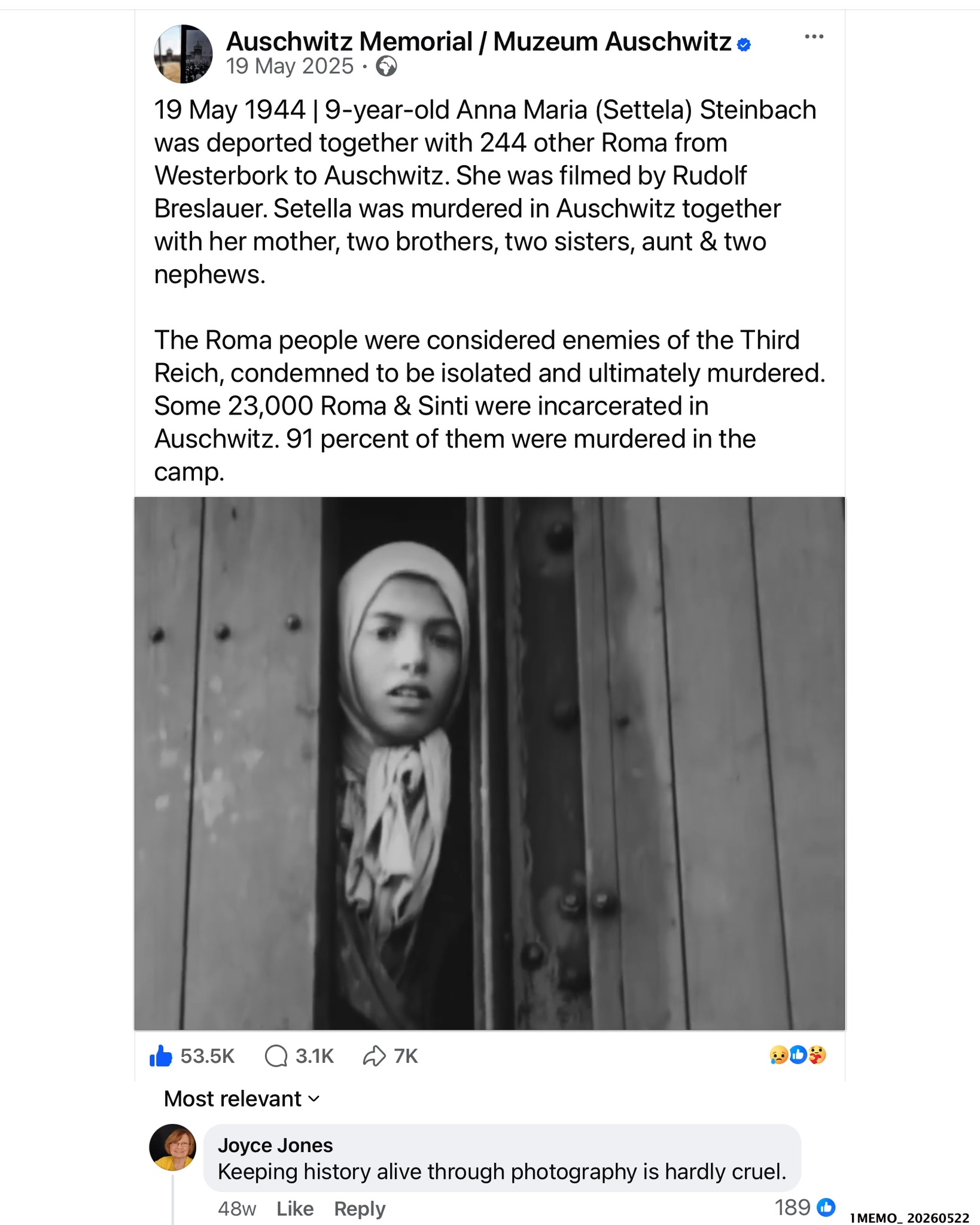
Deportation of Dutch Roma to Auschwitz – 19 May 1944 • 9-year-old Anna Maria (Settela) Steinbach was deported together with 244 other Roma from Westerbork to Auschwitz (1,2) • Source : Settela•Com • Collection Auschwitz Museum • URL https://fb.watch/Hgg5lusc-8/
The Auschwitz Museum acquired the short film ‘Settela’ from Settela•Com (1) in the Auschwitz Memorial Collection (3), and is succesfully screening the film each year since 2019 on the 19th May at the Auschwitz Memorial / Muzeum Auschwitz facebook page .
Last year’s post of the film ‘Settela’ , 19th May 2025 at the Auschwitz Memorial / Muzeum Auschwitz facebook page, accumulated by now one million views, and over 3000 comments (Image 1MEMO_20260522).
The film was created in an attempt to keep the scene on screen longer on the one hand, and to preserve the natural and historical original on the other. Thus a compilation was created, showing the same scene twice. The film ends with the original 3 seconds clip selected from the Westerbork film footage shot by Jewish prisoner Rudolf Breslauer (4), and the film starts with that same clip , digitally slowed down 10× in post-production.
This film was created and first online in 2017 (5) , and published (antedated) as the first post (1) shortly after the start May 19, 2019, of the online journal Settela•Communications — short Settela•Com (6).
More on the Roma in Auschwitz , online at the Auschwitz Museum (7).
Citation info : Settela Film Auschwitz Museum • 20260522 | Michel van der Burg | Settela•Com | ISSN 2949-9313 | CC BY 4.0 | URL https://settela.com/2026/05/22
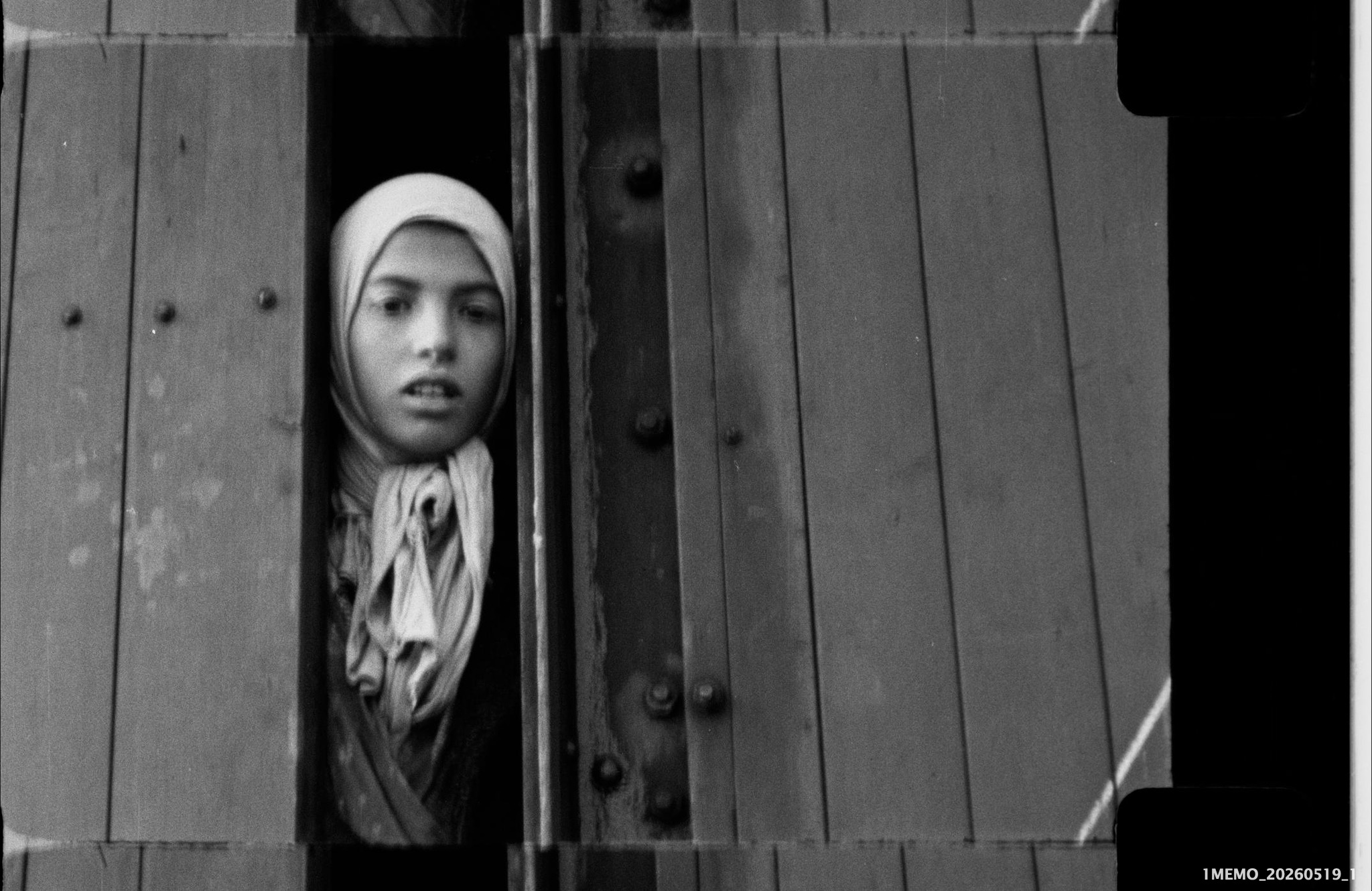
Settela Steinbach — The Girl with the Headscarf • 1MEMO_20260519_1 • Settela•Com • Frame from camera original film reel of the Westerborkfilm (1).
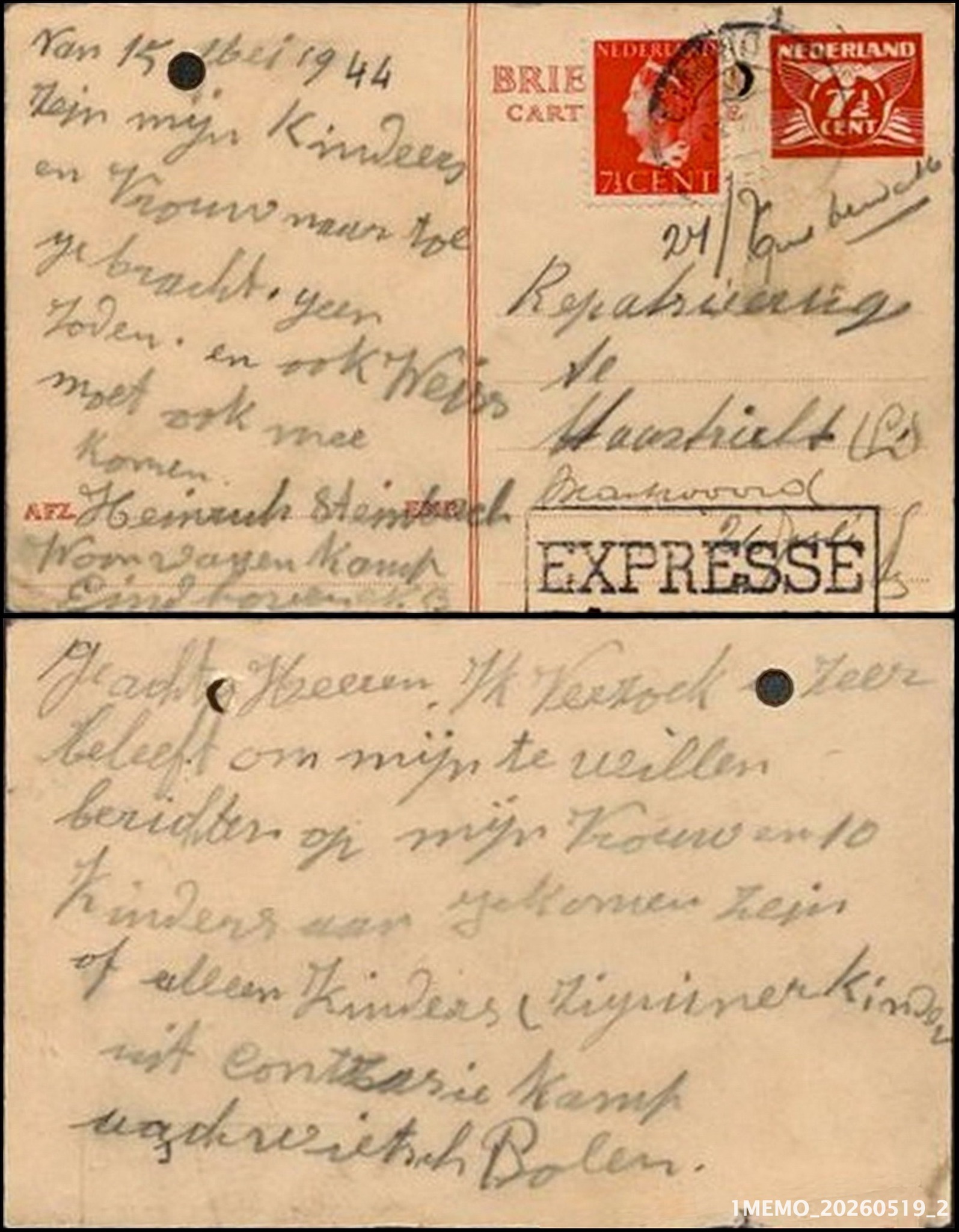
On May 19, 1944, at the Westerbork transit camp, a glimpse of Sinti girl Settela Steinbach wearing a headscarf appears between the sliding doors of a cattle car awaiting deportation to Auschwitz (1,2,3). In May 1945, her father, Moeselman Steinbach, wrote to “Repatriation” in the Netherlands: “…I very politely request you to inform me whether my wife and 10 children have arrived, or only children (Gypsy children) from the Auschwitz concentration camp in Poland.” (4).
The 9-year-old dutch Sinti-girl Anna Maria ‘Settela’ Steinbach peeks outside , at the last moment just before the sliding door is closed , standing inside a cattle car with 74 people on May 19 , 1944 in the Westerbork transit camp in Holland , when this deportation train leaves for Auschwitz-Birkenau – where Settela is murdered a few months later in one of the gas chambers (5).
While Settela peeks outside , her mother cries behind her in that cattle car : “Get out of there, or soon your head gets in between!”
She is wearing a headscarf made from a torn sheet because the Nazis shaved her head upon arrival at Westerbork transit camp on May 16, 1944, following the “Gypsy raid” carried out that same day at the Zwaaikom caravan site in Eindhoven, the Netherlands (6).
Settela Film • 20220630
Settela was filmed only a few seconds by the Jewish prisoner filmmaker Rudolf Breslauer as part of a documentary film being made in 1944 on the Westerbork camp .
Those seconds , also in slow-motion are shown in the 2022 Settela Film • 20220630 (7)
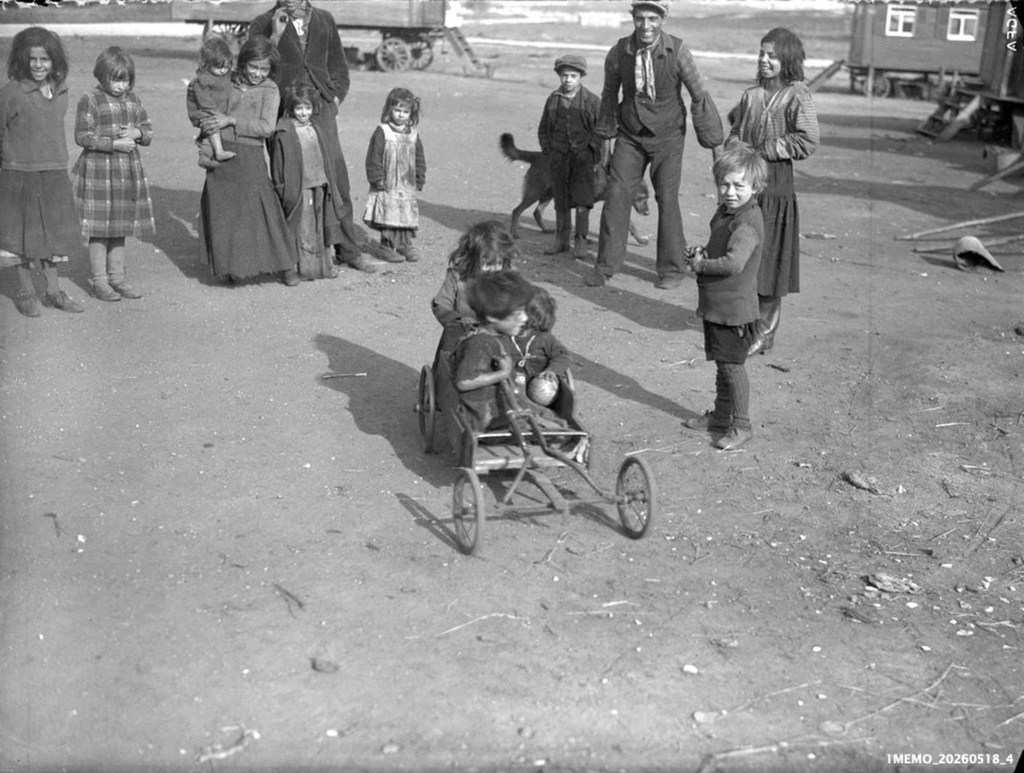
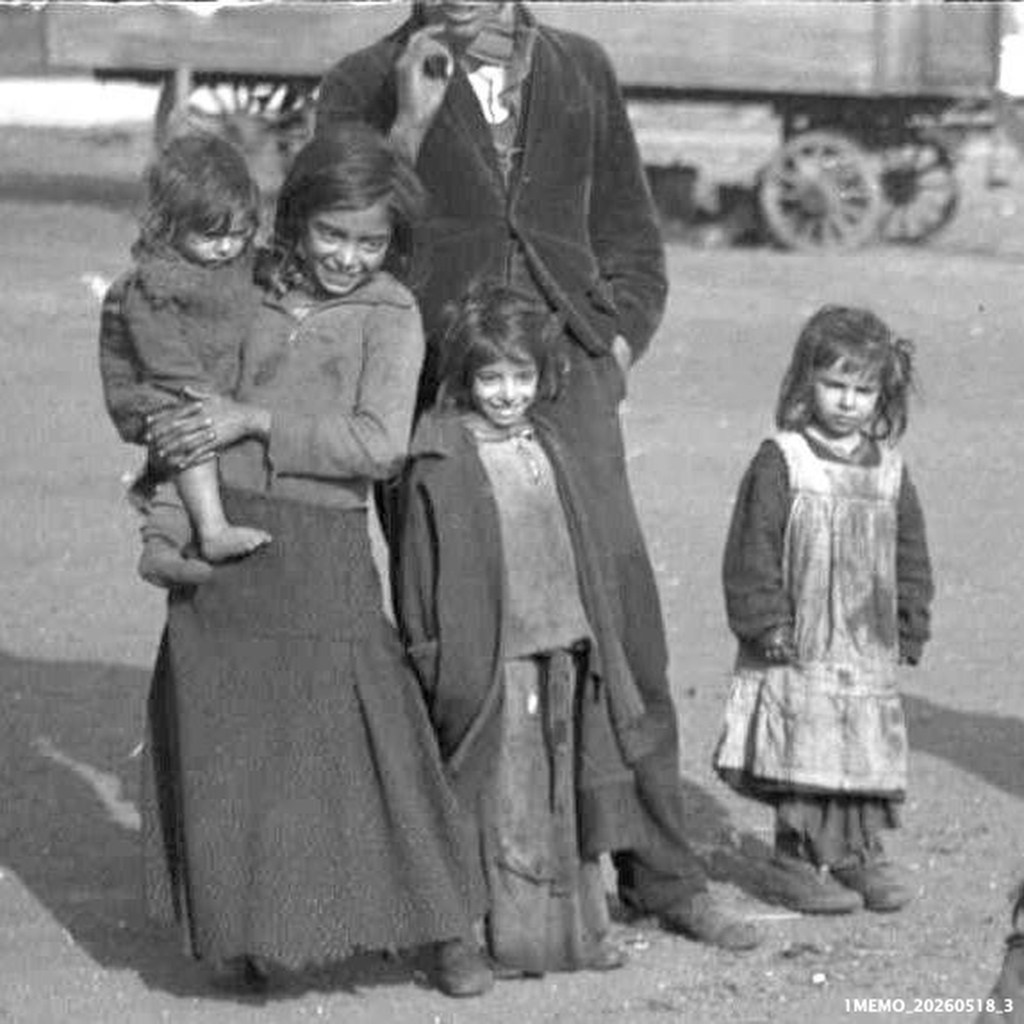
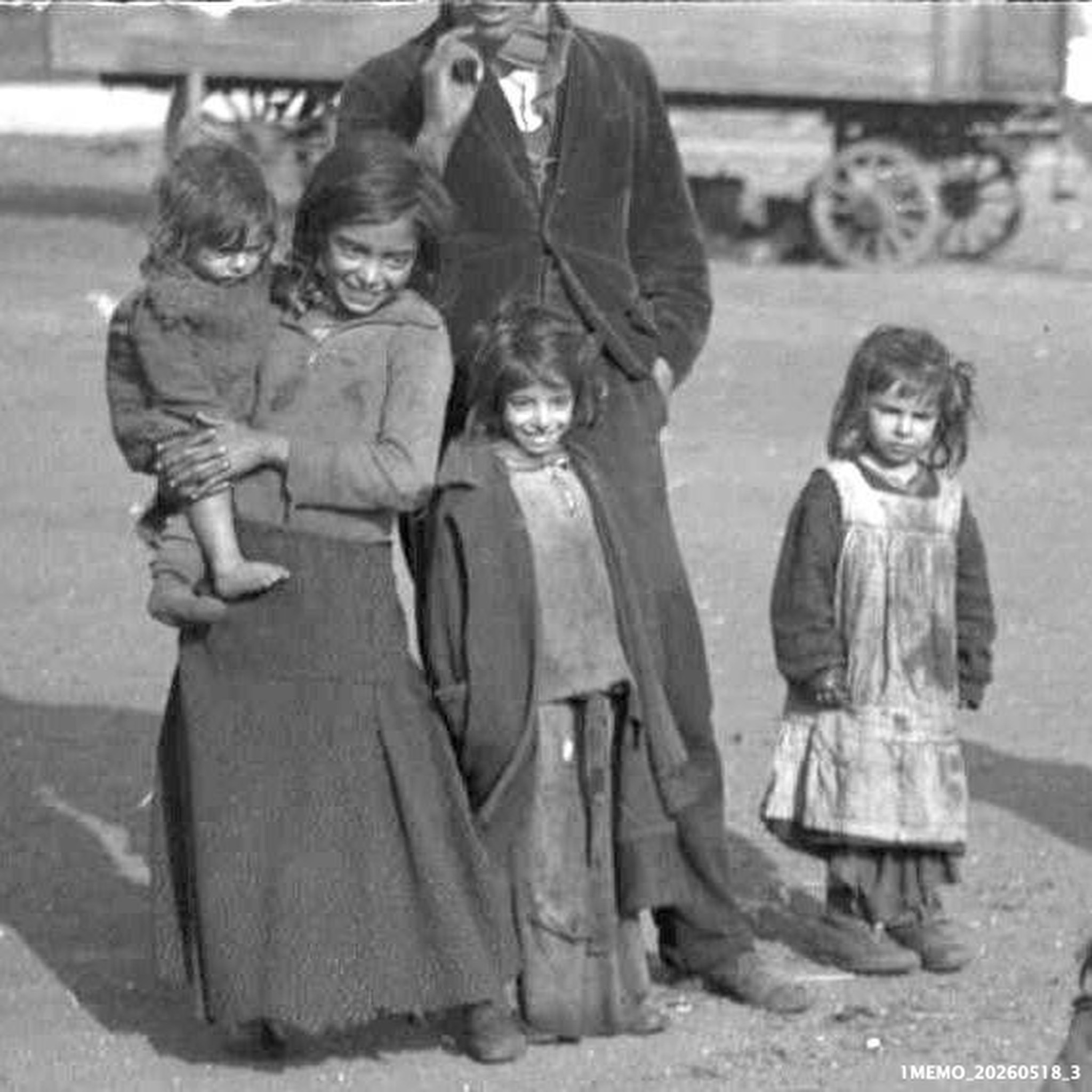
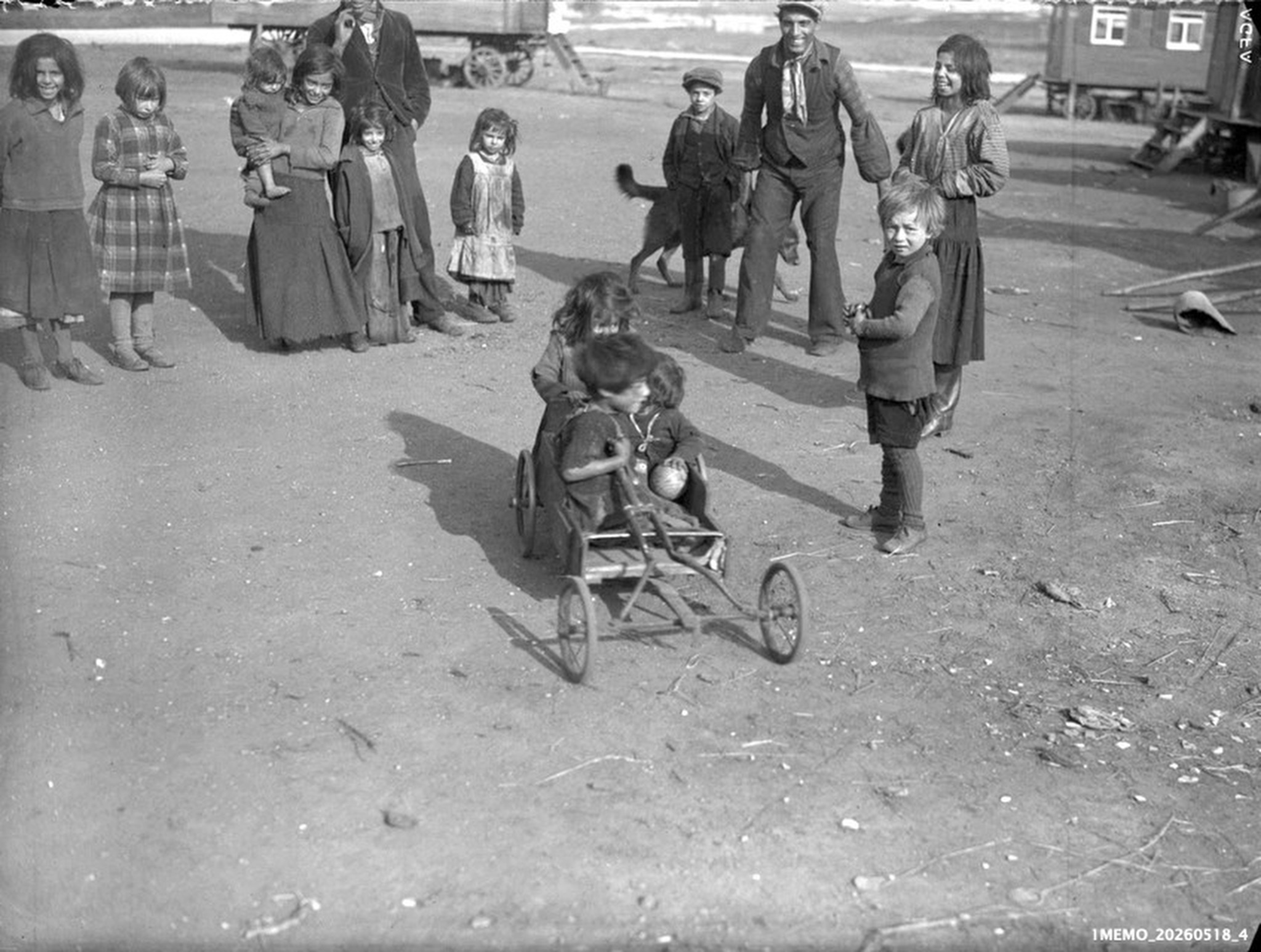
The toddler Settela in the arms of her older sister Elisabeth Steinbach at the Heksenberg Sinti caravan site in 1935 • Photo Jan de Jong • 1MEMO_20260518_4
Anna Maria (‘Settela’) Steinbach was born 23 December 1934 in Buchten, Netherlands, and photographed at age ~1 , in the arms of her older sister Elisabeth Steinbach, with others of the Steinbach family, and other families, at the nearby Sinti caravan site ‘Heksenberg’, October 1935, by photographer Jan de Jong (8) • 1MEMO_20260518_4
Settela was deported together with her brothers and sisters (Willy “Celestinus”, Willem, Elisabeth, Johanna, Philibert, Florentina, Willem, Anna), and mother Toetela (Emilia) Steinbach (born 23 March 1902 in Antwerp, Belgium), with other Steinbach and other nomad families – all together ca 245 Sinti and Roma and ca 450 Jews – on May 19th 1944 from the dutch Camp Westerbork to the Auschwitz and Bergen-Belsen camps (5,6).
Toetela’s eldest child Moekela (Magdalena; born 14 Sep 1922) had gone to Belgium and had been deported earlier – 15 Jan 1944 – with her 6 months old baby Jeanette – Toetela’s granddaughter – on the Z-Transport from transit camp Kazerne Dossin in Mechelen to Auschwitz, were they were murdered on arrival.
Settela’s father Heinrich (‘Moeselman’) Steinbach (born Nov 11, 1901 in Gründorf in Germany) died alone of grief June 6, 1946 in Maastricht in the Netherlands – his wife and 10 children had not survived the camps.
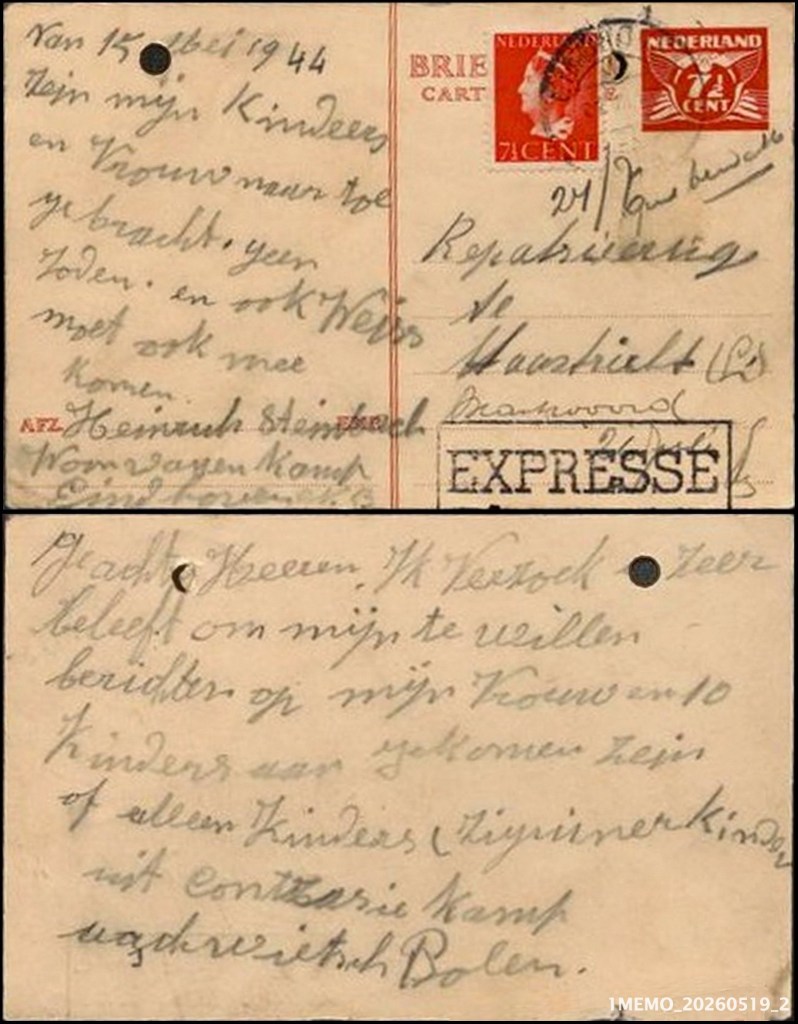
To : “Repatriation” in Maastricht (Netherlands) — “Dear Sirs, I very politely request you to inform me whether my wife and 10 children have arrived, or only children (Gypsy children) from the Auschwitz concentration camp in Poland. From May 15, 1944, my children and wife were taken there; no Jews. And Weiss had to come along too. — Heinrich Steinbach. Caravan site Eindhoven , North Brabant” • 1MEMO_20260519_2 • Settela•Com
One year earlier , May 22, 1945, two weeks after the liberation of Holland, Heinrich Steinbach — living at the caravan site in Eindhoven (North Brabant, Netherlands) — inquires about the fate of his wife and ten children on a postcard written to the “Repatriation” in Maastricht (Netherlands). The text on the postcard reads — translated from dutch (4) :
“Dear Sirs, I very politely request you to inform me whether my wife and 10 children have arrived, or only children (Gypsy children) from the Auschwitz concentration camp in Poland.
From May 15, 1944, my children and wife were taken there; no Jews. And Weiss had to come along too.
4 – May 1945 Postcard Heinrich Steinbach • 1MEMO_20260519_2 • Settela•Com | ISSN 2949-9313 | Source : Collectie HCL, archief Militair Gezag, Maastricht.
‘Moeselman’ Heinrich Steinbach — living at the caravan site in Eindhoven (North Brabant, Netherlands) — inquires about the fate of his wife and ten children on a postcard written to the “Repatriation” in Maastricht (Netherlands). The dutch text on the postcard reads :
“Geachte Heeren, Ik verzoek u zeer beleeft om mijn te willen berichten op mijn vrouw en 10 kinders aan gekomen zein of alleen kinders (zigeunerkinders) uit contrasie kamp uaschwietsch Polen.
Van 15 mei 1944 zein mijn kindeers en vrouw naar toe gebracht, geen joden. En ook Weiss moet ook mee komen. Heinrich Steinbach. Woonwagenkamp Eindhoven N.B.”
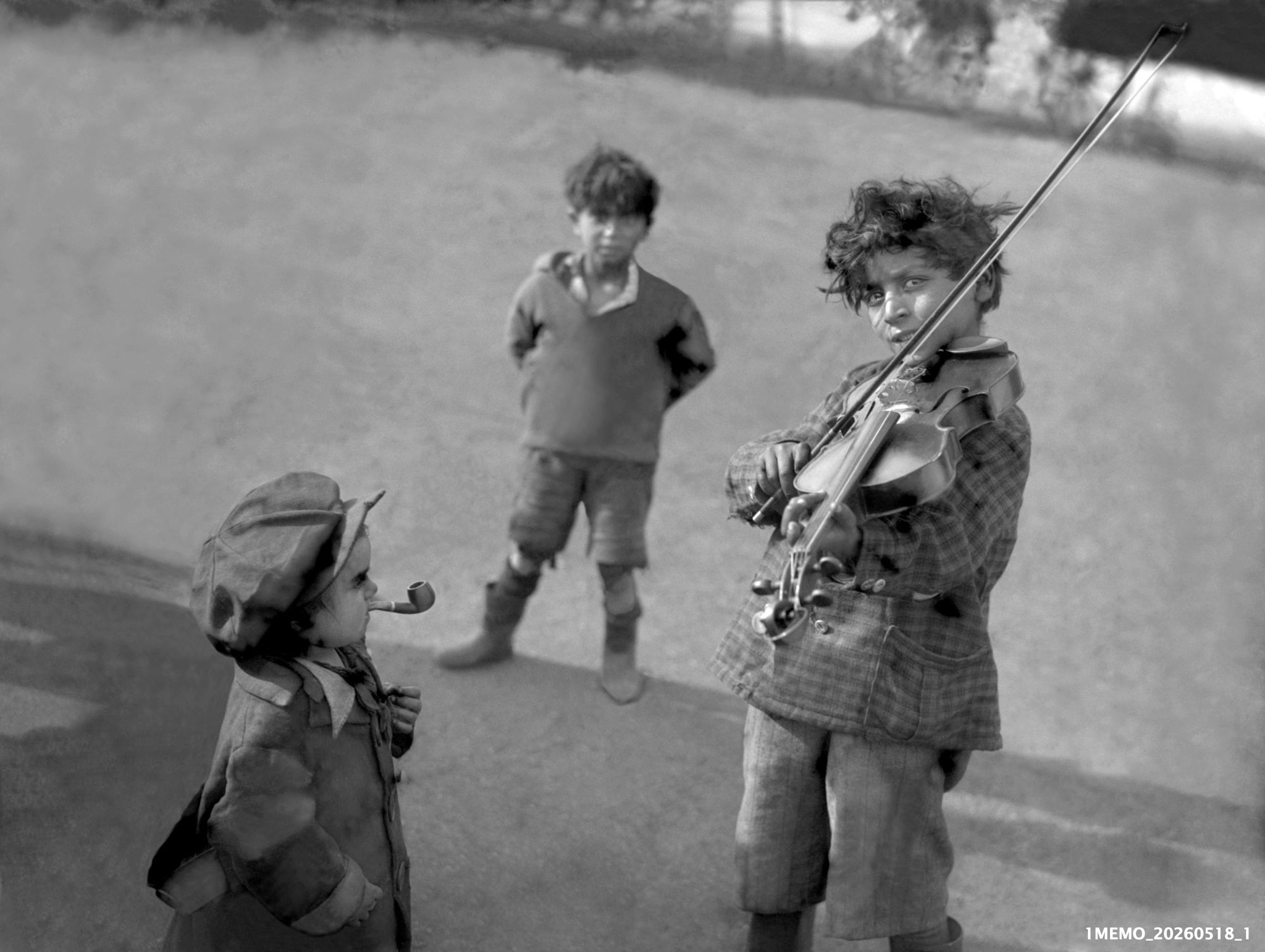
Willy Steinbach plays the violin at the Sinti caravan site Heksenberg in 1935 • Photo Jan de Jong • 1MEMO_20260518_1
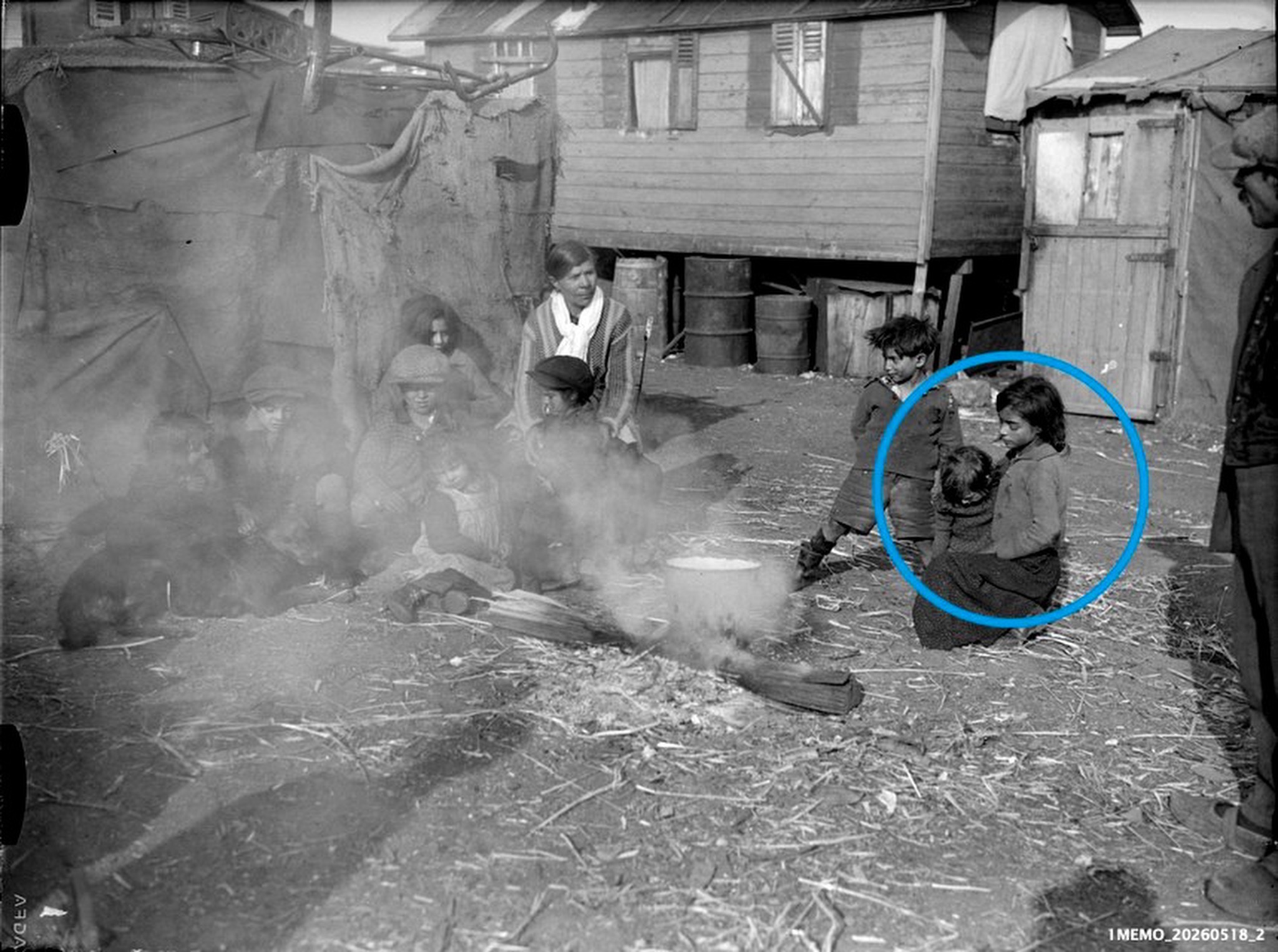
In 1935 the nomadic Sinti families Steinbach — musicians — were photographed by Dutch photographer Jan de Jong at their caravan pitch on the heath around the Heksenberg hill in Brunssum, Limburg, Netherlands (1).
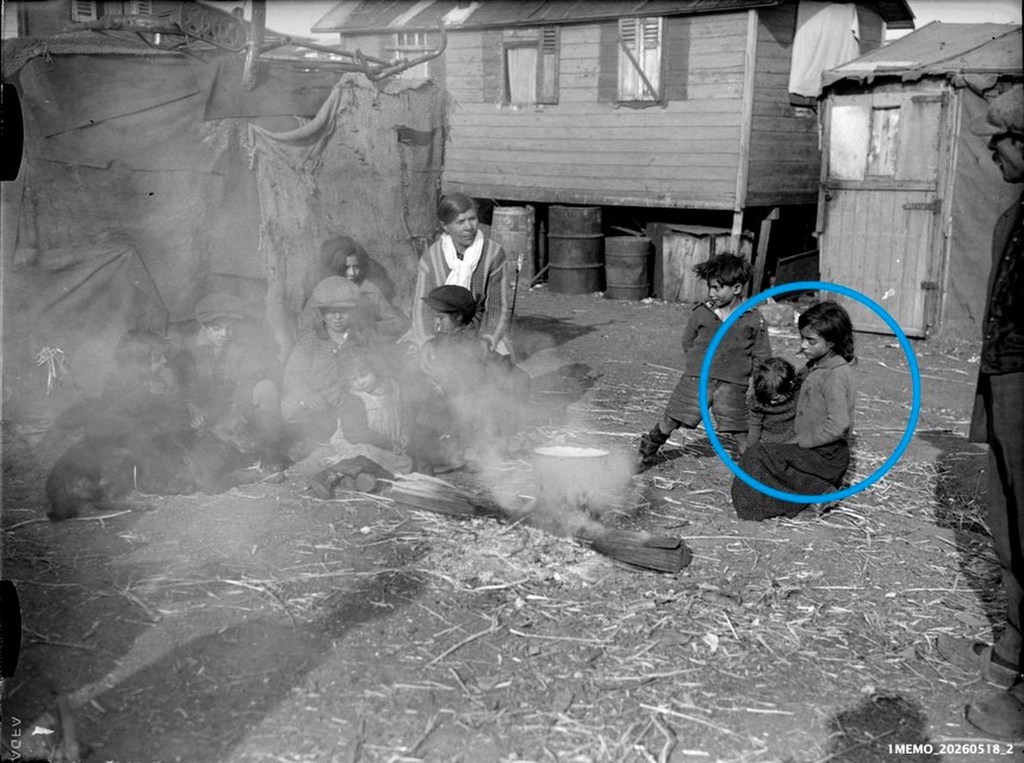
The boy with the violin is Willy Steinbach, an older brother of Settela Steinbach. The other 3 prints from the glass negatives that Jan de Jong made at the Heksenberg site in 1935 also show the Steinbach family, among others, with toddler Settela in the arms of her older sister Elisabeth Steinbach.
The toddler Settela in the arms of her older sister Elisabeth Steinbach (circled in blue) at the Heksenberg Sinti caravan site in 1935 • Photo Jan de Jong • 1MEMO_20260518_2
The toddler Settela in the arms of her older sister Elisabeth Steinbach at the Heksenberg Sinti caravan site in 1935 • Photo Jan de Jong • 1MEMO_20260518_3
The toddler Settela in the arms of her older sister Elisabeth Steinbach at the Heksenberg Sinti caravan site in 1935 • Photo Jan de Jong • 1MEMO_20260518_4
Settela Steinbach became known as the girl with the headscarf, featured a few seconds in the Westerbork film by Werner Rudolf Breslauer showing the deportation of the Steinbachs’ and other nomad families — all together ca 245 Sinti and Roma, and ca 450 Jews — on May 19th 1944 from the dutch transit camp Westerbork to Auschwitz (1,2).
Almost certainly, three Jewish people have been recognized in the unique Westerbork film from 1944 (1). This time it concerns the 9-year-old boy Israël Wijnschenk, his father Max Wijnschenk, and his grandmother Betje Kokernoot-van Furth, who all lived in Utrecht (Holland).
Last week, the Dutch public broadcaster NOS (2) reported the news from the Utrecht (Dutch) news site Nieuws030 (3) that it is very likely that three people were recognized again in this film made by the Jewish prisoner and filmmaker Rudolf Breslauer showing the deportation of Jews, Roma and Sinti by train in Camp Westerbork on May 19, 1944.
Image researcher Koen Hulsbos — who previously identified an Amsterdam couple in this deportation train (4) — thought he recognized the young Israël Wijnschenk, a pupil at the time of the Joodse (Jewish) School Utrecht, and presented this to Victor Frederik, researcher of the Joodse School (5,6). The boy, the man, and the woman seem to belong together, and were recognized from family photos, also by family members.
It is certain that Max and his wife Chel (not in the images) returned to Utrecht after the war, their children Israël and his sister Kitty were murdered. Grandma Betje was also gassed in Auschwitz.
A portrait of Israël Wijnschenk is shown at the site of Joods Monument (7).
According to the transport list, there were two other children in that wagon, Joseph Beugeltas (11 years old) and Manfred Studzinsky (7 years old). Joseph Beugeltas appeared to have blond hair, and could not have been it (6). To be completely sure, the researchers are still looking for a photo of Manfred Studzinsky, for comparison…
October 15, 2024 — Watch free online the full documentary “The Jews of Corfu” – a film by Mirjan Gjergjevica & Maria Boua (1) .
Documentary “The Jews of Corfu” – a film by Mirjan Gjergjevica & Maria Boua
The Jews of Corfu – Review
The Jews of Corfu – a population group that was an important part of the island, contributed to the formation of its history. But the tragic events that befell them were added to the black page of human history. The film The Jews of Corfu (2021) is a powerful documentary by Mirjan Gjergjevica (direction, cinematography, editing, production) & Maria Boua (script, music, sound, production) with narration by Yannis Andriotis and stories told by Zaharias Matathias • Linos Sousis • Nina Vital. Powerful — both visually and the sound — filmed in an innovative way, combining ambient sound and stories told outdoors with the Mediterranean background, in public spaces, the streets, and Corfu synagogue – with an excellent film score – that is especially impressive how it manages to accompany the viewer in scenes of holocaust atrocities. The history of the Corfiot Jews – a mixture of Pugliese (from south Italy) and Romaniote (from Greece) is told in vivid detail from the Middle Ages to today. I watched this fast paced film twice, last premiere weekend, to fully grasp the whole picture ~ Michel van der Burg – Monday , March 14, 2022 (2).
Film festivals & education & online
The free public release of the film was announced last Saturday (Oct 12, 2024) by filmmaker Mirjan Gjergjevica (3) :
“It is with great pleasure and honor that we present to public our documentary, The Jews of Corfu. This work has been screened in many festivals around the world, from America to Australia, and has been lovingly embraced by schools and universities. Now, we are happy to share this freely with you all. I warmly thank all the main contributors who contributed to the realization of this documentary: Maria Boua, Christiana Latsa, Yiannis Andriotis, Anthi Kyrtsoglou, Giorgos Zumbos and all those who helped directly or indirectly. We hope this documentary continues to convey its message to even more people and be a way to learn about the history of the Jews of Corfu.”
Mirjan added in an update Oct 13, 2024 :
“We would like to clarify that the present publication of the documentary is not related to the recent war events that are taking place. We condemn all forms of violence and conflict, and we strongly advocate peace and reconciliation among the peoples. “
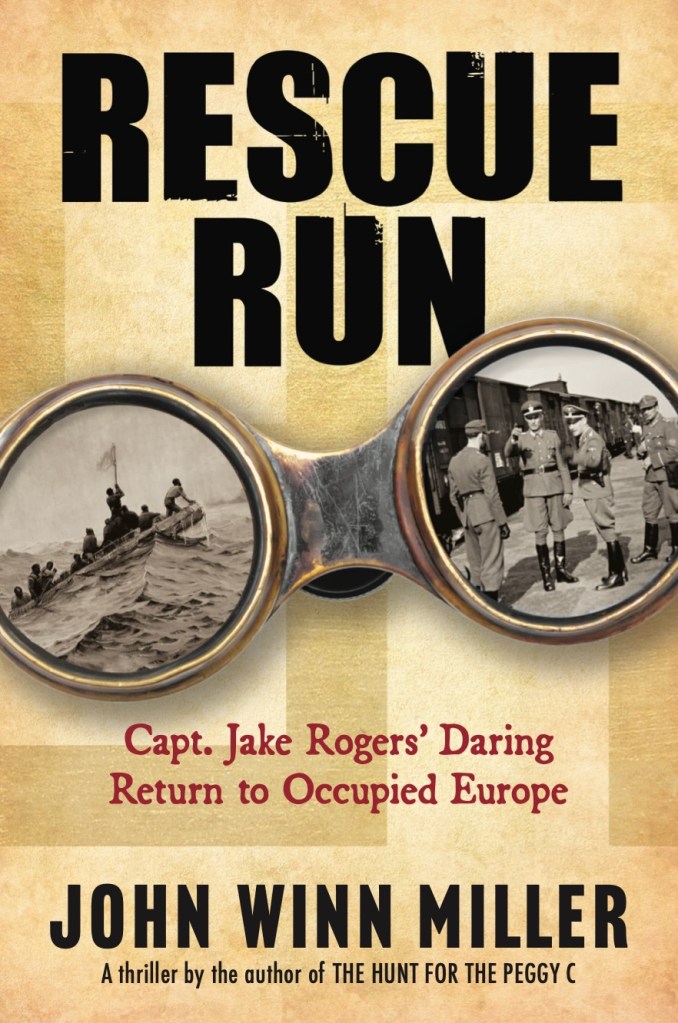
RESCUE RUN : Capt. Jake Rogers’ Daring Return to Occupied Europe • John Winn Miller
After escaping the treacherous waters of WWII, Captain Jake Rogers leads his crew on a daring mission across Nazi-occupied Europe to rescue the father of his beloved, entangled in a web of espionage, betrayal, and relentless pursuit.
Review of John Winn Miller’s novel ‘Rescue Run’
John Winn Miller, a veteran of investigative journalism for decades, masterfully weaves historical detail into his World War II novel Rescue Run. The story follows American ship’s captain Jake Rogers, who, after his U.S. Liberty ship carrying war supplies is wrecked in the North Atlantic, first lands in Ireland. He then sets out with a few of his loyal men on a perilous mission to rescue the father of Miriam Maduro, the love of his life, from the Westerbork transit camp in Nazi-occupied Holland.
A gruelling journey follows from Amsterdam across Nazi-occupied Europe to Spain – on foot, by train, and by boat – via a long series of hiding places, historical locations and events, aided by well-known and lesser-known resistance organisations and historical figures, besieged by con men, double agents, gangsters and pursued by a ruthless Dutch bounty hunter.
As a non-native English speaker, I initially struggled a bit with the first few chapters, particularly the maritime terms and rich language used in the sea adventure with the Liberty ship, besides the introduction of the many characters. However, once past those pages, the novel became a true page-turner. The gripping, almost cinematic narrative had me finishing the book in just two or three days, despite also spending some time online searching for even more historical context, for example when Rogers is helped by the Dutch resistance group ‘Groep 2000’ led by Jacoba van Tongeren, and when characters like Etty Hillesum and Audrey Hepburn appear in the story.
Blending Fiction and Nonfiction
I rarely read fiction these days — almost exclusively occupied with non-fiction — but John Miller’s work intrigued me. I was curious to see how he managed to incorporate the reality of Nazi-occupied Europe, and in particular the Westerbork transit camp, into fiction. The result is exceptional. The blend of fiction and nonfiction strengthens the narrative, bringing the past vividly to life. Miller also provides an extensive set of notes at the end of the book, offering in-depth background information on the events and historical figures featured in the story, detailing also what happened to them after the events of the novel.
I especially appreciate how John Winn Miller brings the wartime past to life in Rescue Run, with accuracy and rich detail, from multiple perspectives. His cinematic storytelling draws readers into a narrative that inspires further exploration of this history.
Michel van der Burg, filmmaker, editor of Settela•Com
Notes
Additional Information:
Title:Rescue Run: Capt. Jake Rogers’ Daring Return to Occupied Europe
John Winn Miller is an award-winning investigative reporter, foreign correspondent, editor, publisher, screenwriter, indie movie producer and novelist. | Photo Bancroft Press. | More info at Miller’s website URL https://www.johnwinnmiller.com
John Winn Miller
Though Rescue Run is a sequel to Miller’s first novel, The Hunt for the Peggy C, no prior knowledge of the first book is required. A summary of the prequel is included for new readers or those needing a refresher.
Westerbork Film Frame
This review was prompted by my contribution of a still (image below) from the Westerbork film for Rescue Run’s jacket/cover, in collaboration with designer Christine Van Bree , and author John Winn Miller. John kindly provided me with a link for a free download of the Advance Reader Copy on the BookSirens’ platform. Since I’m documenting the Westerbork film through the online magazine Settela•Com, I happily accepted BookSiren’s invitation to join the review team.
Deportation | 20240225 | Settela•Com | Commander Albert Gemmeker oversees the deportation of Jews, Sinti, and Roma from the Westerbork transit camp May 19, 1944 | Frame 7426 from Deportation Westerbork Film | 20210719 | Settela•Com | ISSN 2949 9313
Citation info : Review RESCUE RUN • 20240927 • Michel van der Burg • Settela•Com • ISSN 2949-9313
Filmmaker Rudolf Breslauer also filmed two of his children in the Westerborkfilm…
Stefan (left) & Ursula Breslauer, children of Rudolf Breslauer, the filmmaker of the Westerbork film at the farm of Camp Westerbork in 1944 – identified by the dutch photographer Sake Elzinga, who received Breslauer’s family photo albums last year when the family of Ursula – the only survivor – visited an expo on Breslauer in the Westerbork museum in the Netherlands.
Camp commander (SS-Obersturmführer) Albert Gemmeker ordered the Westerbork film , made by the German Jewish prisoner, photographer, Rudolf Breslauer in the spring of 1944.
Today 80 years ago – March 5, 1944 – the camp is an ‘Arbeitslager’ – a work camp – when Rudolf Breslauer starts filming the daily life of the Westerbork prisoners — inside : in the barracks, for example a religious service, cabaret, workshops, factories, aircraft and battery recycling, medical care, and outside the barracks : construction of a greenhouse, a football match, women working out, chopping wood, incoming transports, and eventually also the departure of a deportation train. After Breslauer films the deportation of Jews, Roma and Sinti to Bergen-Belsen and Auschwitz on May 19, 1944 the filming stops. The haunting image of the 9-year-old dutch Sinti-girl Settela, standing in the closing doors of the goods train, and the unique footage of that deportation train that leaves the Westerbork camp, became iconic after the war.
Deportation Breslauer family
Werner Rudolf Breslauer , his wife Bella Weihsmann, sons Stefan and Max Michael (Mischa), and daughter Ursula were deported autumn 1944 from Westerbork to Theresienstadt and Auschwitz. Only Ursula survived.
Stefan & Ursula Breslauer in Westerborkfilm | 20240305 | Settela•Com | Frame 127475 from Westerbork Film 🎦 2021 | 20220302 | Settela•Com | ISSN 2949 9313 | Footage filmed by Rudolf Breslauer in 1944, courtesy of NIOD | Sound and Vision
Scene with Stefan & Ursula Breslauer, starting at 56:13 in the 1986 RVD edition of the Westerborkfilm: Stefan & Ursula Breslauer in Westerbork Film RVD | 20240305 | Settela•Com | URL https://youtube.com/clip/UgkxfNzA72JeGgVoOFp_VTI4EQQr3yTwXu6_
Settela Film | 20220630 | Michel van der Burg | Settela•Com
Deportation Westerbork Film | 20210719 | Michel van der Burg | Settela•Com