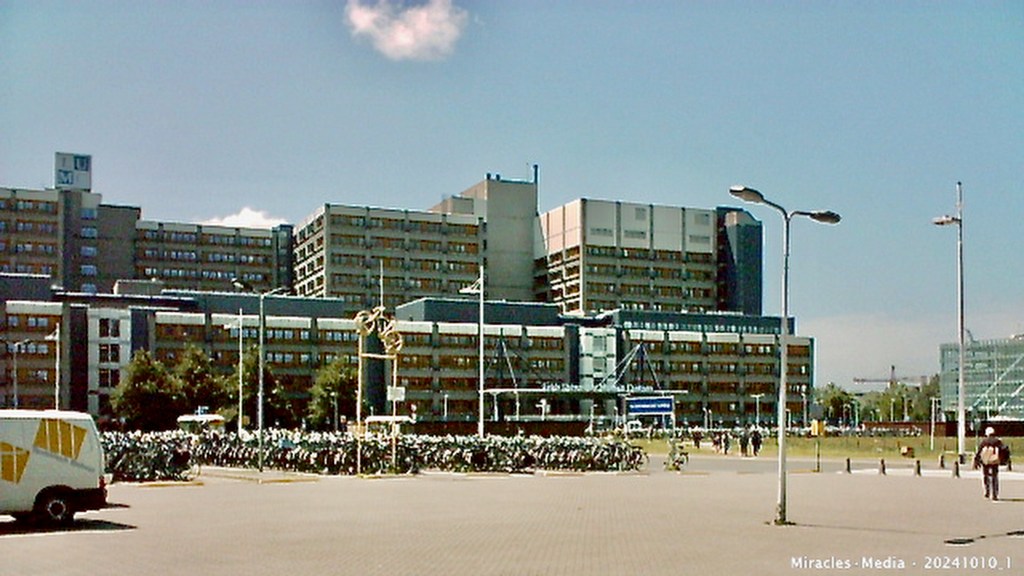
LUMC, 11 June 2003, Leiden, Holland • Michel van der Burg • Miracles•Media • 20241010_1 • TakeNode 2d46097b-ca09-442d-9cf5-fc347a27fc46 | Image shot using the Konica Revio C2 – my first digital camera.
While searching my archive today, I encountered the Press release Sep 27, 2001 of the dutch National Health Care Institute (CVZ), advicing the Ministry of Health, Welfare and Sport (VWS) to grant permission for Transplantation of Islets of Langerhans in the Leiden University Medical Center (LUMC).
Greek Poster • Michel van der Burg • Miracles•Media • 20241009
Funny. LibreOffice Vanilla Issue.
Greek characters appeared in this poster originally designed with english text and produced on a Macintosh computer and Imagewriter dotmatrix printer, September 3, 1990, using the MacDraw II application, with graphs from Cricket Graph. That 1990 Mac file was remastered today in LibreOffice Vanilla (other minor issues in graphs not corrected). Generally LibreOffice does a great job with these ancient files. I recently posted several of such posters at site michelvanderburg.com. However, some of the posters retrieved from my archive show up with Greek characters when opened in LibreOffice, like this poster produced in English (with roman characters). Those problematic posters have in common that the Apple Chicago font was used – the interface font in Apple’s early versions of Mac OS from 1984 to 1997. Clearly LibreOffice cannot handle this Chicago font correctly. I have not found a solution for this. Text in other posters, produced with Helvetica, had only minor issues in LibreOffice, Helvetica italics text appeared as regular Times.
The original poster and abstract (below) were presented at the 8th International Symposium on Gastrointestinal Hormones, in Timmendorfer Strand Baltic Sea (FRG) September 4–8, 1990.
Abstract
Contribution of gut factors to canine isolated islet function M.P.M. van der Burg, O.R. Guicherit, J.B.M.J. Jansen, C.B.H.W. Lamers, J.P. Scherft, M. Frölich, H.G. Gooszen. Departments of Surgery, Gastroenterology. Endocrinology and Cel Biology. University Hospital, Leiden, The Netherlands. Techniques for isolating islets of Langerhans from the large mammalian pancreas have improved to the point where islet transplantation as a therapeutical approach to human diabetes has become more realistic. The quality of metabolic control is however largely unknown. We studied canine isolated-islet function both in vivo after autotransplantation, as well as in vitro by perifusion. Five normal dogs underwent total pancreatectomy. Islets were isolated from the excised pancreas by collagenase digestion, dispersion and purification with filtration and density gradients. Isolated islets were autotransplanted into the spleen of the dog by retrograde venous infusion. Graft function was assessed up to 3 mo by determining the glucose and insulin response to an intravenous glucose injection (IVGTT), i.v. arginine injection during 35 mM glucose clamp (AT), and a meal. In addition (n = 4) the in vitro insulin response of overnight cultured canine islets was studied by perifusion with cholecystokinin (CCK-33) and glucose-dependent insulinotropic polypeptide (GIP). The islet dose at transplantation ranged from 3500 – 13000 islets/kg b.w. One animal became overtly hyperglycemic (fasting glucose 18 mM) within 7 days after receiving 3500 islets/kg b.w. The other grafts (> 6000 islets/kg b.w.) were successful (fasting glucose <7mM) but demonstrated, compared to pre-operative values, a 50% reduced glucose clearance and insulin response at IVGTT, and a 90% reduced insulin secreting capacity at AT. Postprandially hyperglycemia (~ 10 mM) and in contrast to i.v. glucose and arginine, a normal insulin response was observed. The in vitro insulin response at 7.5 mM glucose to equimolar (0.1-1- 10 nM) concentrations of either CCK, GIP or both, demonstrated a sustained dose-response to GIP (up to 5x basal values) and a significant albeit small and transient effect of CCK as of 1 nM. No synergistic effect was observed. In dogs ‘one-to-one’ transplantation was successful in 4/5 recipients of isolated islets. The difference in the effect of islet transplantation on the insulin response to intravenous glucose or – arginine and a meal, may be related to the postprandial, hyperglycemia enhanced, activation of the entero-insular axis, especially GIP.
Van der Burg MPM, Guicherit OR, Jansen JBMJ, Lamers CBHW, Scherft JP, Frölich M, Gooszen HG. Contribution of gut factors to canine isolated islet function (Abstract). Digestion 1990; 46 (Suppl 1): 14–15. https://doi.org/10.1159/000200356
PDF abstract shown below – file 20241009_1_Digestion.pdf
Citation info : Greek Poster • Michel van der Burg • Miracles•Media • 20241009 • URL michelvanderburg.com/2024/10/09 | TakeNode 10afaddd-08b7-4dcd-ad7a-43228420ad59
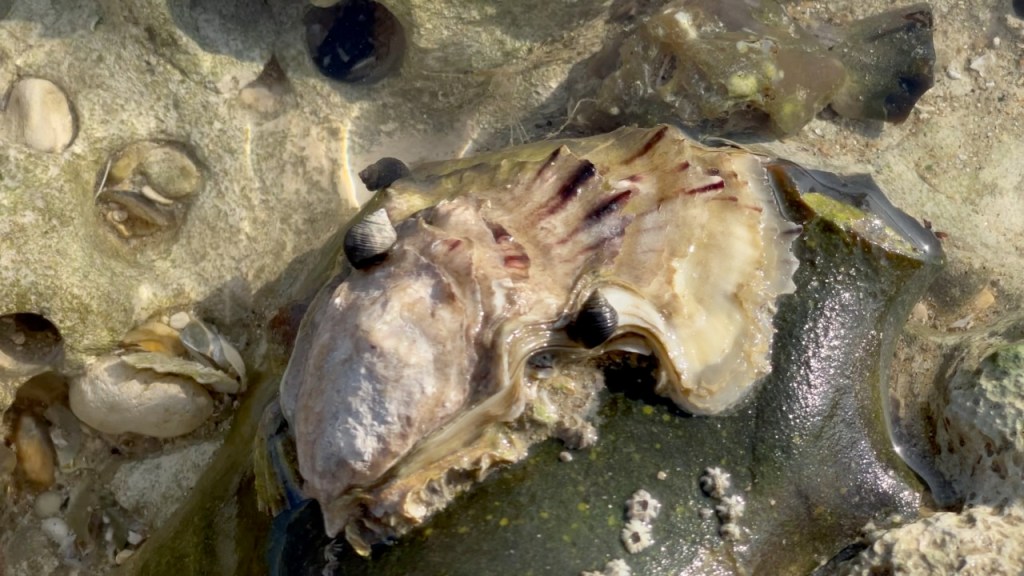
Discovering shellfish along the Normandy – Picardy coast at low tide on the foreshore of the chalk cliffs of the Falaises d’Ault, France … the last week of last summer.
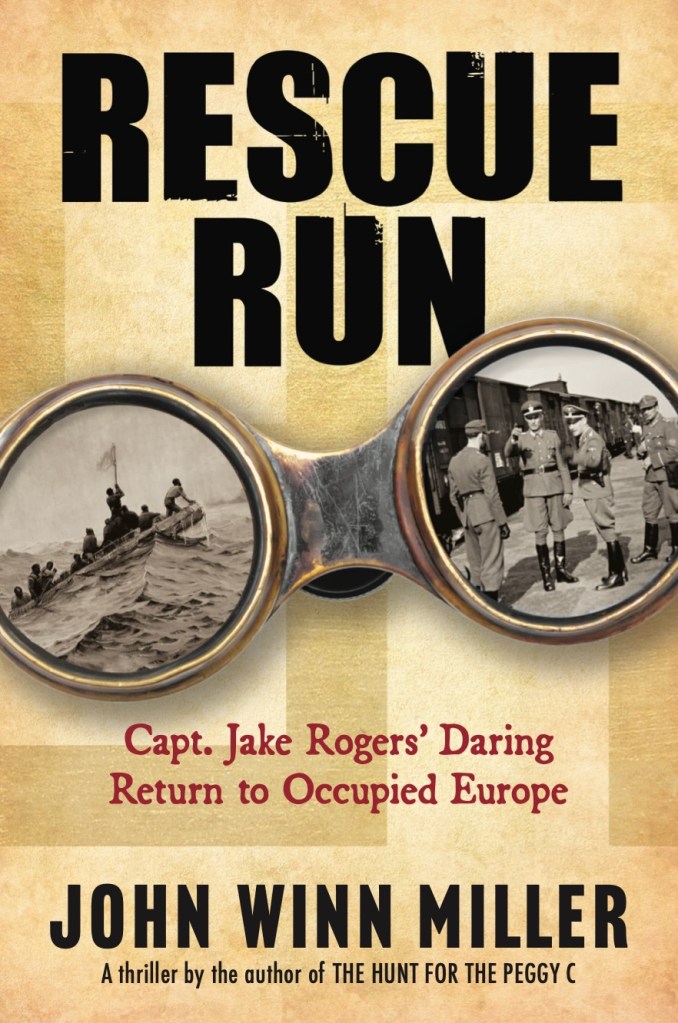
RESCUE RUN : Capt. Jake Rogers’ Daring Return to Occupied Europe • John Winn Miller
After escaping the treacherous waters of WWII, Captain Jake Rogers leads his crew on a daring mission across Nazi-occupied Europe to rescue the father of his beloved, entangled in a web of espionage, betrayal, and relentless pursuit.
Review of John Winn Miller’s novel ‘Rescue Run’
John Winn Miller, a veteran of investigative journalism for decades, masterfully weaves historical detail into his World War II novel Rescue Run. The story follows American ship’s captain Jake Rogers, who, after his U.S. Liberty ship carrying war supplies is wrecked in the North Atlantic, first lands in Ireland. He then sets out with a few of his loyal men on a perilous mission to rescue the father of Miriam Maduro, the love of his life, from the Westerbork transit camp in Nazi-occupied Holland.
A gruelling journey follows from Amsterdam across Nazi-occupied Europe to Spain – on foot, by train, and by boat – via a long series of hiding places, historical locations and events, aided by well-known and lesser-known resistance organisations and historical figures, besieged by con men, double agents, gangsters and pursued by a ruthless Dutch bounty hunter.
As a non-native English speaker, I initially struggled a bit with the first few chapters, particularly the maritime terms and rich language used in the sea adventure with the Liberty ship, besides the introduction of the many characters. However, once past those pages, the novel became a true page-turner. The gripping, almost cinematic narrative had me finishing the book in just two or three days, despite also spending some time online searching for even more historical context, for example when Rogers is helped by the Dutch resistance group ‘Groep 2000’ led by Jacoba van Tongeren, and when characters like Etty Hillesum and Audrey Hepburn appear in the story.
Blending Fiction and Nonfiction
I rarely read fiction these days — almost exclusively occupied with non-fiction — but John Miller’s work intrigued me. I was curious to see how he managed to incorporate the reality of Nazi-occupied Europe, and in particular the Westerbork transit camp, into fiction. The result is exceptional. The blend of fiction and nonfiction strengthens the narrative, bringing the past vividly to life. Miller also provides an extensive set of notes at the end of the book, offering in-depth background information on the events and historical figures featured in the story, detailing also what happened to them after the events of the novel.
I especially appreciate how John Winn Miller brings the wartime past to life in Rescue Run, with accuracy and rich detail, from multiple perspectives. His cinematic storytelling draws readers into a narrative that inspires further exploration of this history.
Michel van der Burg, filmmaker, editor of Settela•Com
Notes
Additional Information:
Title:Rescue Run: Capt. Jake Rogers’ Daring Return to Occupied Europe
John Winn Miller is an award-winning investigative reporter, foreign correspondent, editor, publisher, screenwriter, indie movie producer and novelist. | Photo Bancroft Press. | More info at Miller’s website URL https://www.johnwinnmiller.com
John Winn Miller
Though Rescue Run is a sequel to Miller’s first novel, The Hunt for the Peggy C, no prior knowledge of the first book is required. A summary of the prequel is included for new readers or those needing a refresher.
Westerbork Film Frame
This review was prompted by my contribution of a still (image below) from the Westerbork film for Rescue Run’s jacket/cover, in collaboration with designer Christine Van Bree , and author John Winn Miller. John kindly provided me with a link for a free download of the Advance Reader Copy on the BookSirens’ platform. Since I’m documenting the Westerbork film through the online magazine Settela•Com, I happily accepted BookSiren’s invitation to join the review team.
Deportation | 20240225 | Settela•Com | Commander Albert Gemmeker oversees the deportation of Jews, Sinti, and Roma from the Westerbork transit camp May 19, 1944 | Frame 7426 from Deportation Westerbork Film | 20210719 | Settela•Com | ISSN 2949 9313
Citation info : Review RESCUE RUN • 20240927 • Michel van der Burg • Settela•Com • ISSN 2949-9313
High tide at the foreshore of the chalk cliffs in Ault , Picardy, France
Soft light summer sea color palette, with gulls and once in a while a pair of dragonflies, in the last week of summer at the chalk cliffs of Ault , Picardie, France.